The Darling of the Family — History & Facts
What holds the viewer first is not the dog’s glossy coat or the carved chair, but the alert, expectant posture—a moment of quiet loyalty, as if the animal awaits a signal from an unseen master. The light falls softly across the dog’s white fur, drawing the eye to the gentle intelligence in its gaze. Every detail is chosen to reinforce a sense of belonging: the scarlet tassel around the neck matches the ribbon on the closed book, while the table’s draped cloth and the orderly arrangement of books hint at a household where learning and affection coexist.
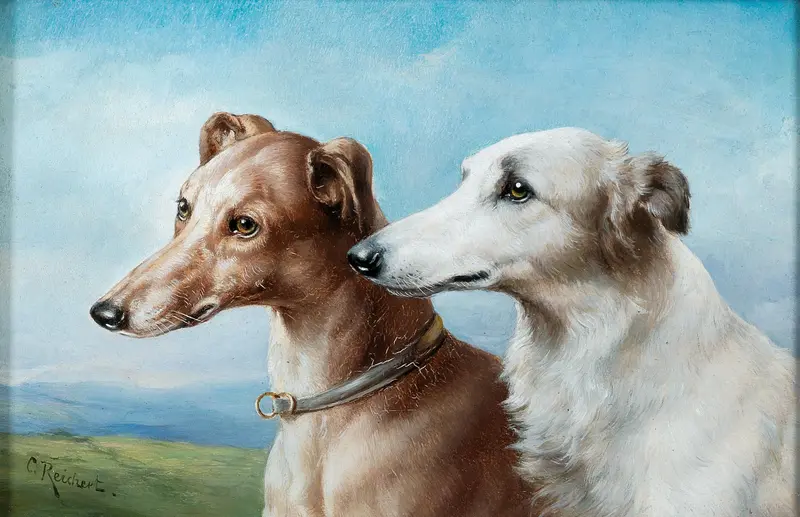
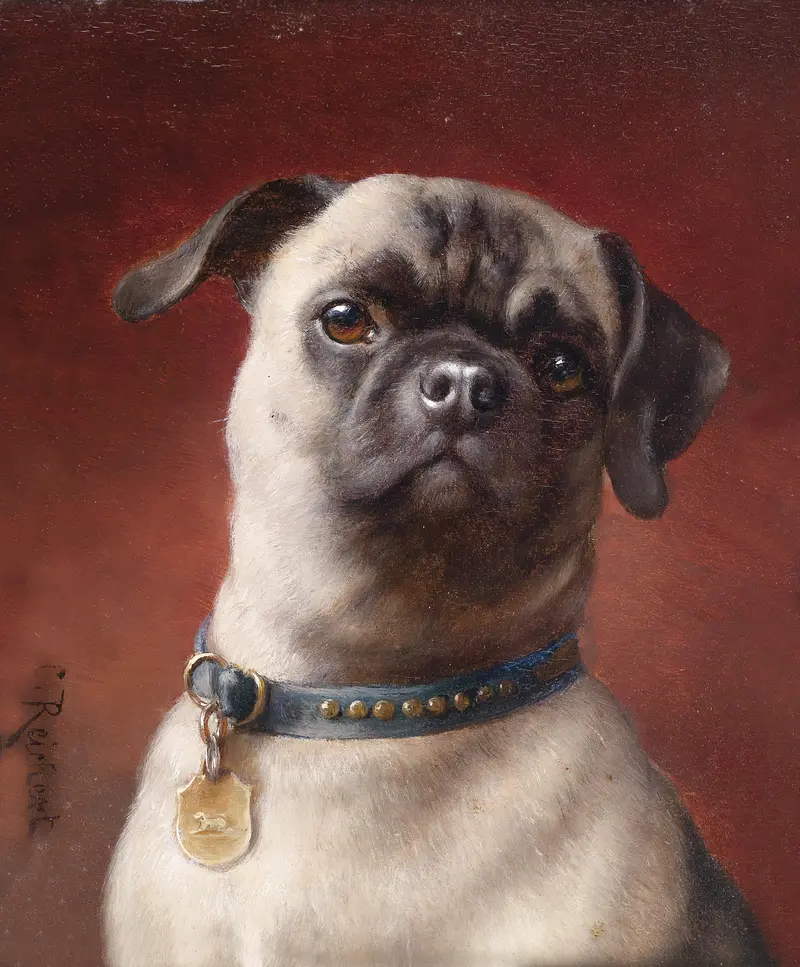
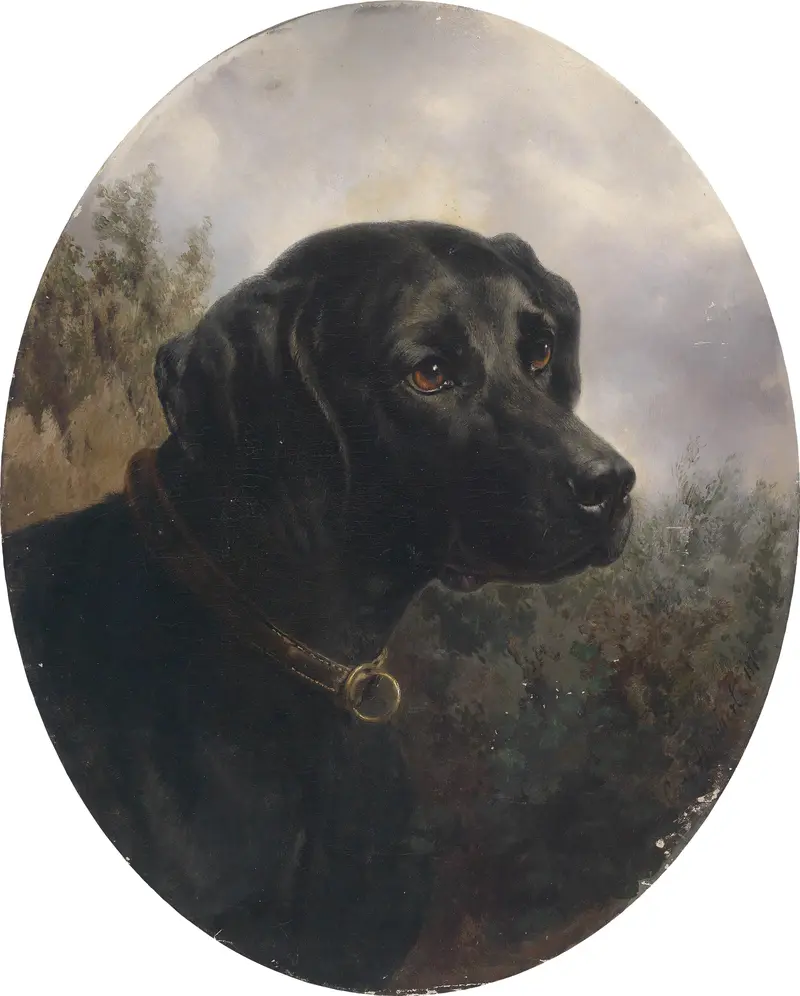
The chair’s elaborate scrollwork, echoed in the careful brushwork of the animal’s curls, sets up a visual conversation between the treasured pet and the cherished objects of the room. Painted in 1915, The Darling of the Family by Carl Reichert belongs to a tradition of intimate domestic scenes that flourished in late nineteenth- and early twentieth-century Europe. At a time when family portraits often included beloved animals, such works were commissioned to celebrate loyalty, gentleness, and the comforts of home. Reichert, known for his meticulous animal studies, here captures not only the likeness but the spirit of companionship that defined the era’s ideal of family life.
History has kept few traces of this specific painting, now in the Dorotheum collection, but its quiet charm invites us to linger, imagining the stories that unfold just beyond the frame.