Zwei Windhunde — History & Facts
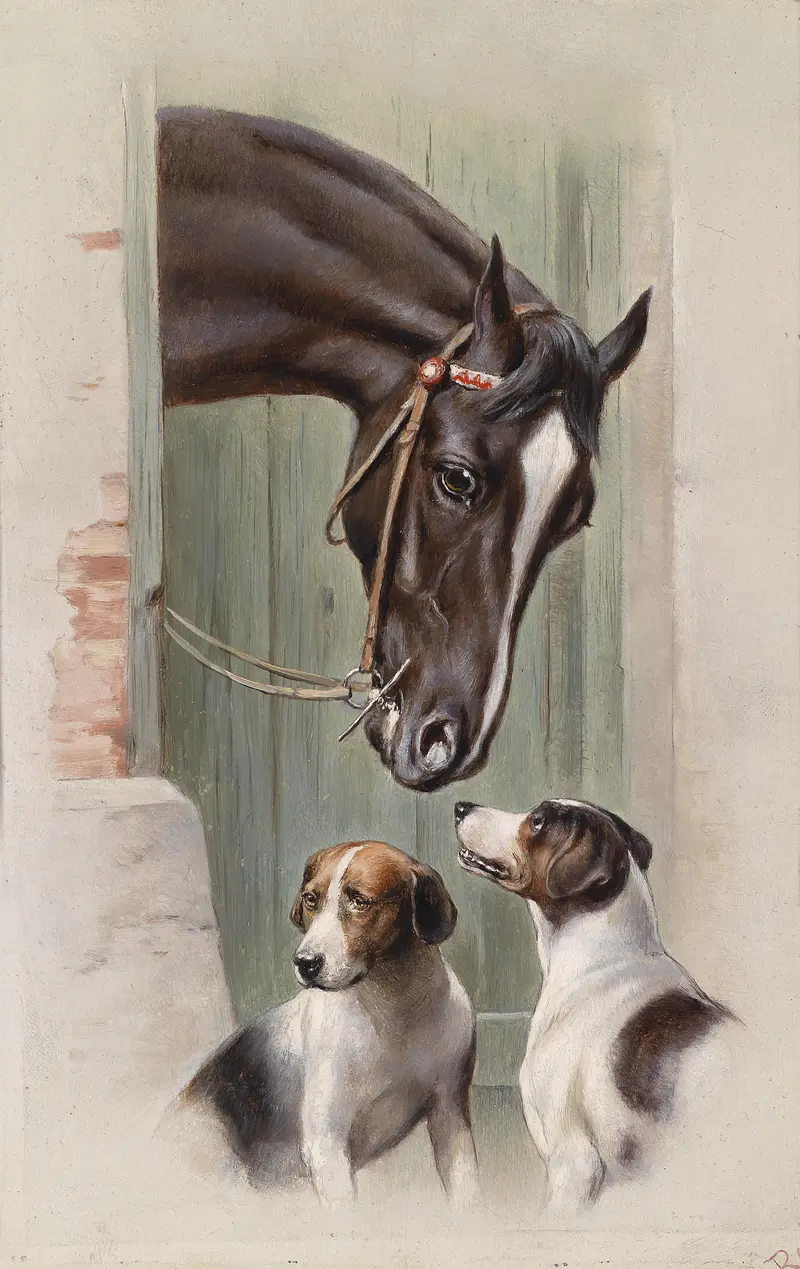
What holds the viewer here is not action, but the charged stillness between two windhounds, their long muzzles and alert eyes angled toward something just beyond the frame. The artist, Carl Reichert, chooses a moment of poised attention, the dogs’ bodies cropped close so that every bristle of fur and glint of light in their eyes is magnified. The soft blue sky and rolling green distance behind them serve as a gentle stage, but all narrative energy is concentrated in the contrast between the animals: one russet, one pale, both rendered with a precision that makes their individuality unmistakable.
The collars hint at domestication, yet the tension in their gaze belongs to the wild. Reichert’s handling of light—catching on the white dog’s muzzle, glancing off the brown’s glossy coat—guides the eye from one animal to the next, inviting us to imagine the world they see. Painted by 1918, Zwei Windhunde belongs to a tradition that prized animal portraiture as a marker of status and affection, especially among the European elite who favored such breeds for hunting and companionship. In the late nineteenth and early twentieth centuries, artists like Reichert found steady demand for works that celebrated the character and beauty of prized dogs, often commissioned to commemorate beloved pets or signal the owner’s refined taste.
While little is recorded about the specific journey of this painting, its presence in the Dorotheum’s collection today speaks to the enduring appeal of such images. The careful realism and quiet dignity of these hounds invite us to linger, searching their faces for stories that, like so many from their era, remain just out of reach.