
The Death of Bohdan Khmelnytsky ( ) — History & Facts
A room thick with ritual and the gravity of final moments draws the viewer into The Death of Bohdan Khmelnytsky by Taras Shevchenko. The eye is led first to the right, where an aged figure reclines in a high-backed chair, surrounded by kneeling attendants and a woman offering a vessel—an image of power in its twilight. The light, carefully concentrated around this central group, isolates the dying leader in a pool of illumination, while the surrounding figures recede into the half-shadow of ceremony and mourning.
Banners, crosses, and icons crowd the space, their presence signaling the intertwining of faith, authority, and nationhood. The composition’s processional rhythm, with its flags and clergy, presses the sense of a state funeral, while the careful arrangement of hands—clasped, gesturing, blessing—turns the scene into a tableau of farewell. This work belongs to the turbulent decades of the early nineteenth century, when artists across Eastern Europe turned to historical subjects to explore questions of identity, memory, and loss. In the 1830s and 1840s, history painting was a vehicle for both official commemoration and subtle dissent, often commissioned by institutions or private patrons eager to anchor their present in the drama of the past.
Taras Shevchenko, best known as both artist and poet, was part of this movement, his works gathered in later Soviet editions such as the 1961 Kyiv collection cited here. History has kept few traces of the specific journey of this painting, but its somber palette and ceremonial detail speak to an era when the past was summoned not just to instruct, but to mourn and to warn. The longer one lingers, the more the silent gestures and dim corners invite questions about what is remembered—and what is left unsaid.
More Artworks by Taras Shevchenko
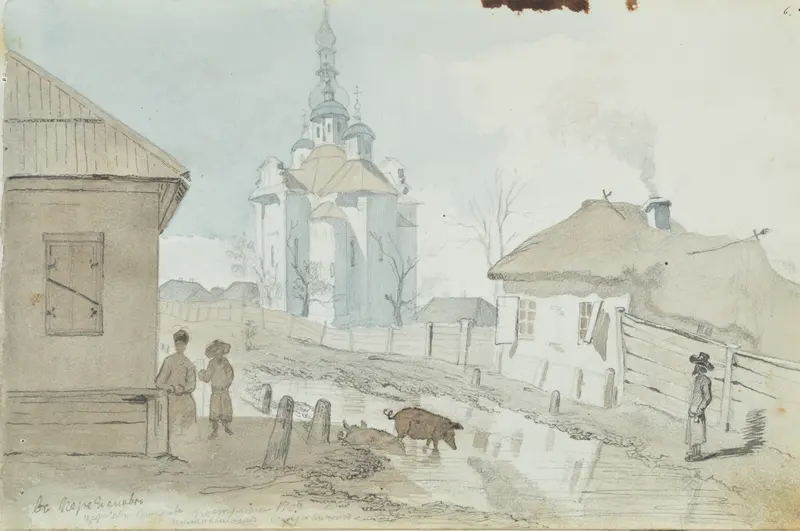
1845 Sh Sketchbook f.06r
Taras Shevchenko

1845 Sh Sketchbook f.04r
Taras Shevchenko

1848 Bilia vohnu
Taras Shevchenko
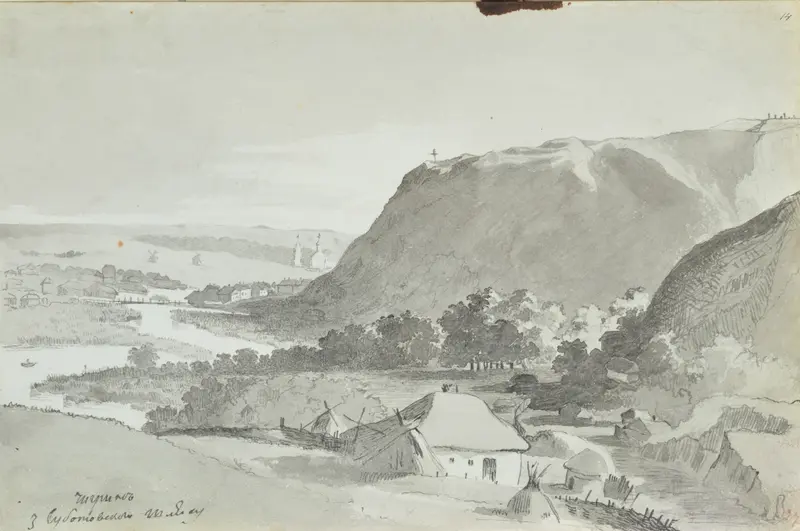
1845 Sh Sketchbook f.14r
Taras Shevchenko
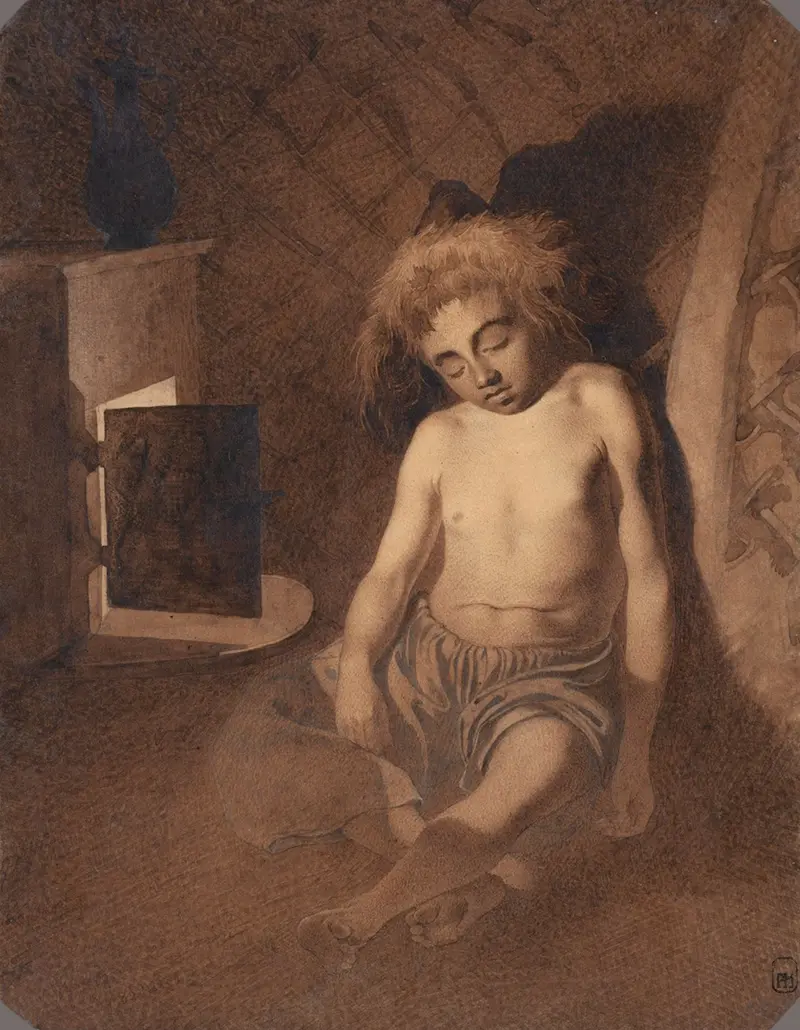
1848 Hlopcyk zasnuv
Taras Shevchenko
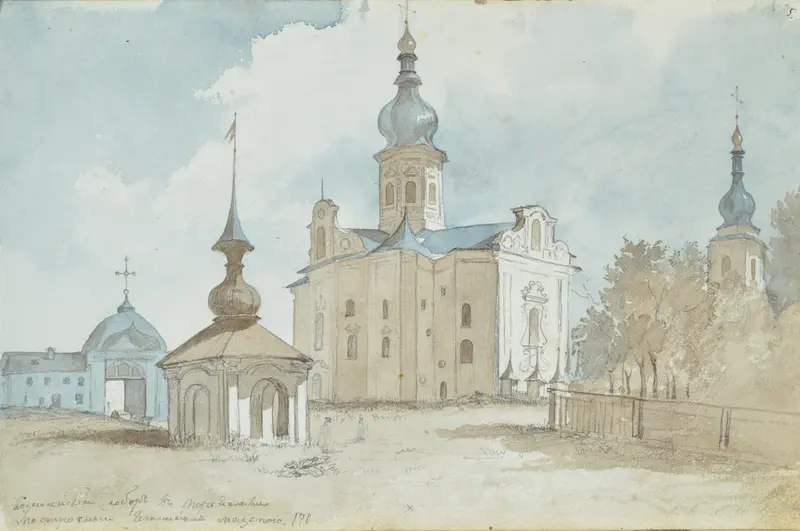
1845 Sh Sketchbook f.05r
Taras Shevchenko
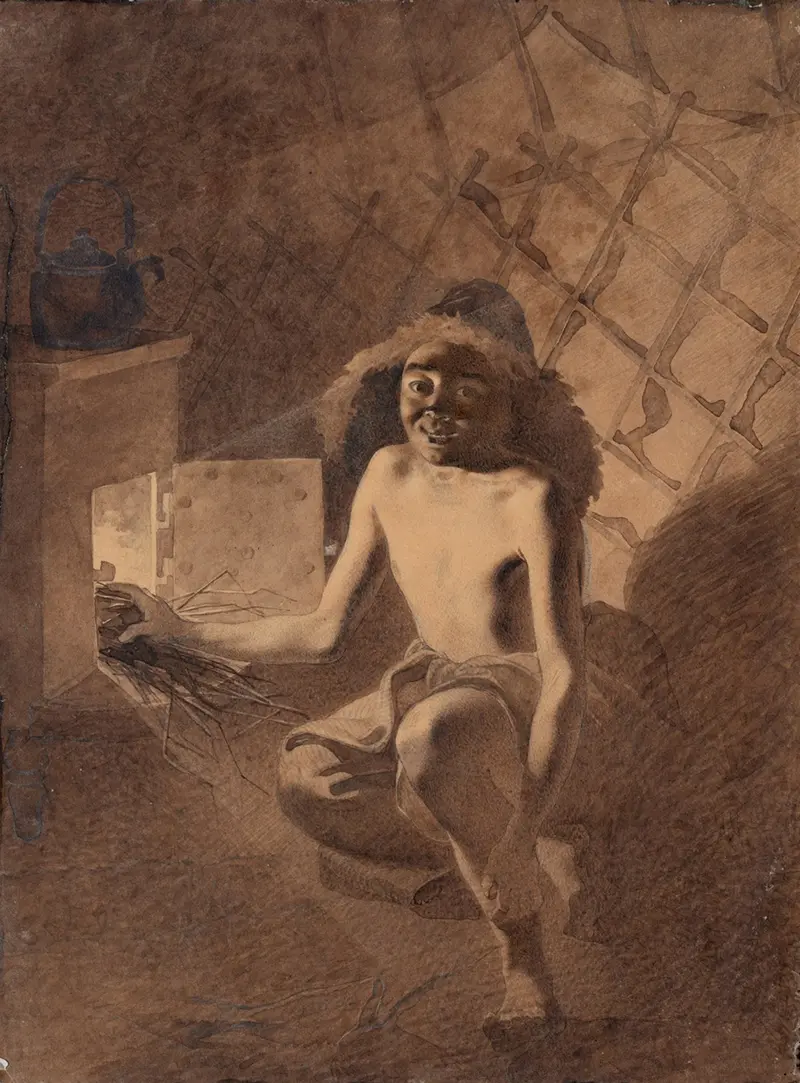
1848 Hlopcyk rozpalije
Taras Shevchenko
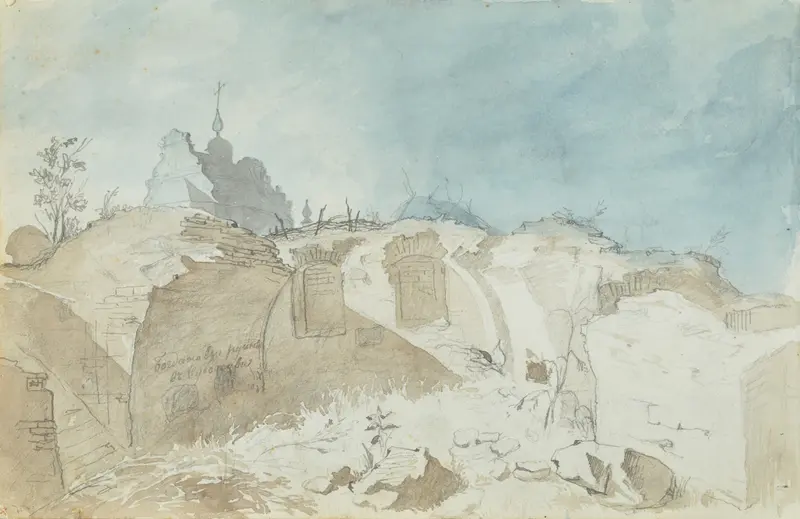
1845 Sh Sketchbook f.12v
Taras Shevchenko
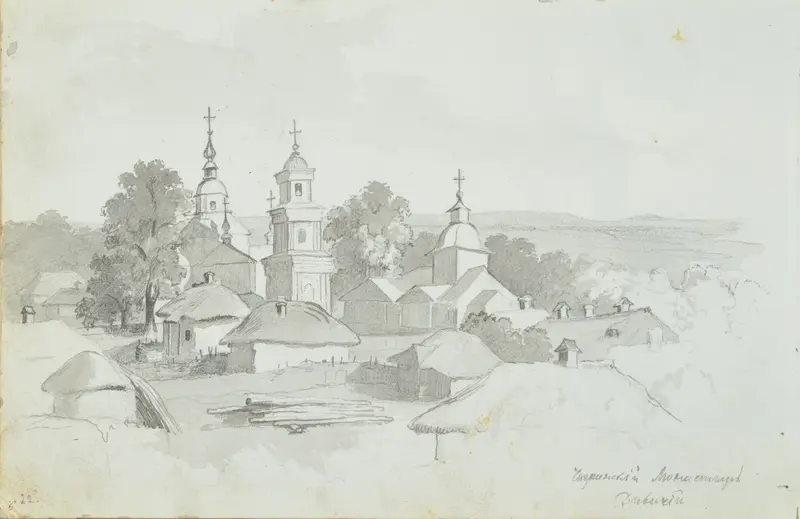
1845 Sh Sketchbook zz f.11v
Taras Shevchenko
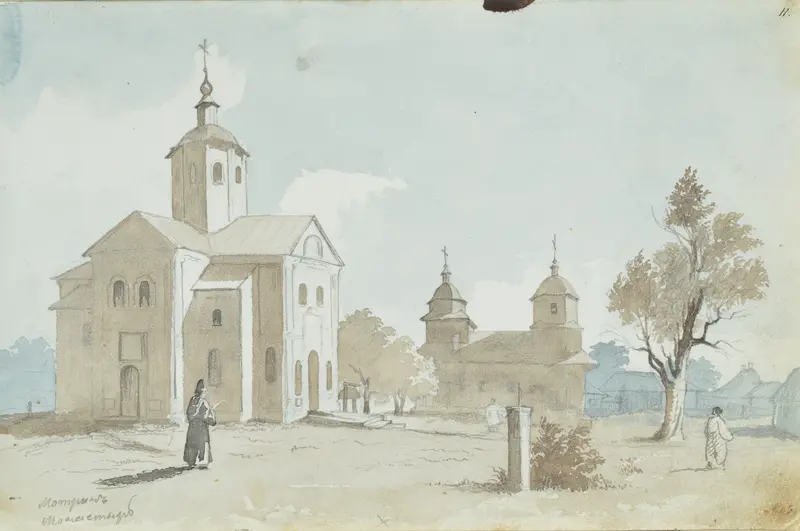
1845 Sh Sketchbook f.11r
Taras Shevchenko





