The Death of the First Born — History & Facts
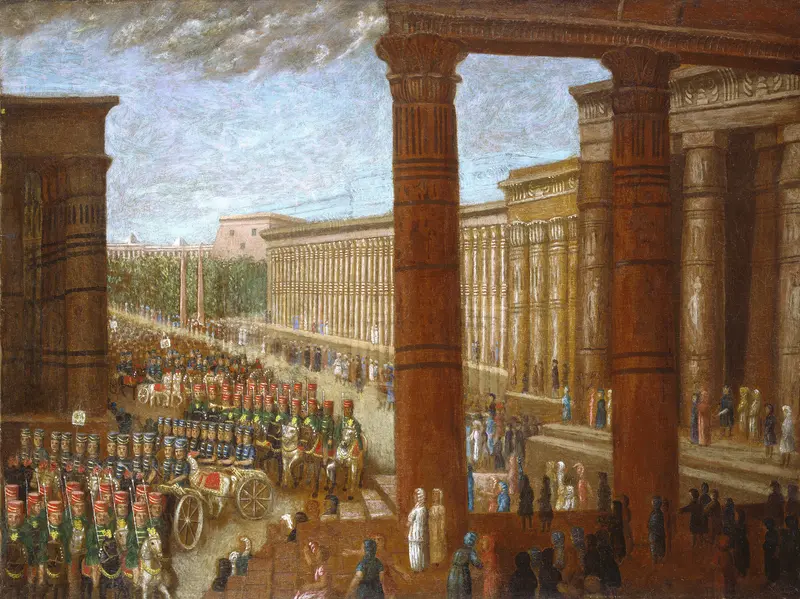
The Death of the First Born by Erastus Salisbury Field is an oil painting executed between 1865 and 1880. The work presents a large, elaborately decorated interior supported by rows of monumental columns, with numerous figures in varied states of distress and mourning. The artist employs a symmetrical composition, with the architectural elements receding toward a vanishing point at the center, creating a sense of depth and grandeur. The scene is populated by groups of figures, many of whom are shown kneeling or embracing lifeless bodies, while others raise their arms in grief or prayer.
The lighting is dramatic, with hanging chandeliers illuminating the central aisle and casting shadows among the columns. The palette consists of muted earth tones, punctuated by brighter accents in the costumes and furnishings, emphasizing the solemnity of the event depicted. The Metropolitan Museum of Art received this painting in 1966 as a gift of Edgar William and Bernice Chrysler Garbisch. The work dates from a period late in Field's career, when he often drew upon biblical and historical themes for his large-scale compositions.
The subject, the death of the Egyptian firstborn, was a common motif in nineteenth-century American art, reflecting both religious interests and the period's fascination with ancient settings.