The Death of the Hare — History & Facts
The forest floor lies still, a tapestry of dappled light and shadow that clings to the edges of the scene. In the center, the lifeless form of a hare sprawls, its soft fur now dull against the rich ochres and greens of the underbrush. A hunter stands nearby, poised and tense, his hand resting lightly on the grip of his bow, the weight of the moment palpable in the air. Look to the left at the vibrant foliage, each leaf painted with meticulous detail that draws your eye to the contrasting stillness of the slain animal.
Notice how the light cascades through the trees, illuminating the hunter’s figure while casting deep shadows that wrap around the hare. Wootton's brushwork captures a vivid realism that evokes both admiration for nature and a somber reflection on mortality, inviting the viewer to confront the cycle of life and death in a single frame. The juxtaposition of life and death is striking; the hunter’s alert demeanor starkly contrasts with the hare’s lifelessness. The vibrant greens symbolize the vitality of nature, yet they frame a tragic end, inviting contemplation on the hunter’s role in this narrative.
Shadows linger not just in the landscape but also in the moral implications of the scene—how the act of hunting intertwines with survival and the beauty of the natural world. Created in the early 18th century, this painting reflects John Wootton's dedication to landscape artistry during a time when Britain was experiencing a shift towards naturalism in art. Little is known about the exact date, but Wootton was active during a period that favored grand, pastoral scenes, often highlighting moments of human interaction with nature. This work embodies the tension between admiration and consequence, a poignant reminder of the era’s evolving artistic sensibilities.
More Artworks by John Wootton
Browse all →
Classical landscape: morning
John Wootton

A Fox Hunt
John Wootton
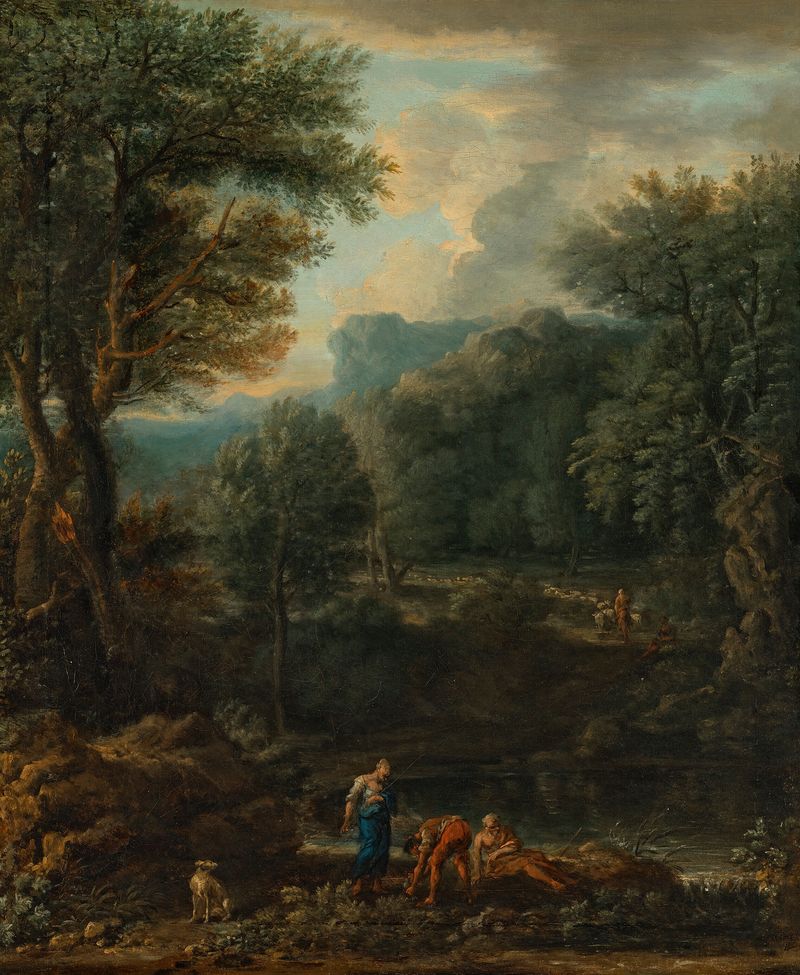
An Italianate landscape
John Wootton
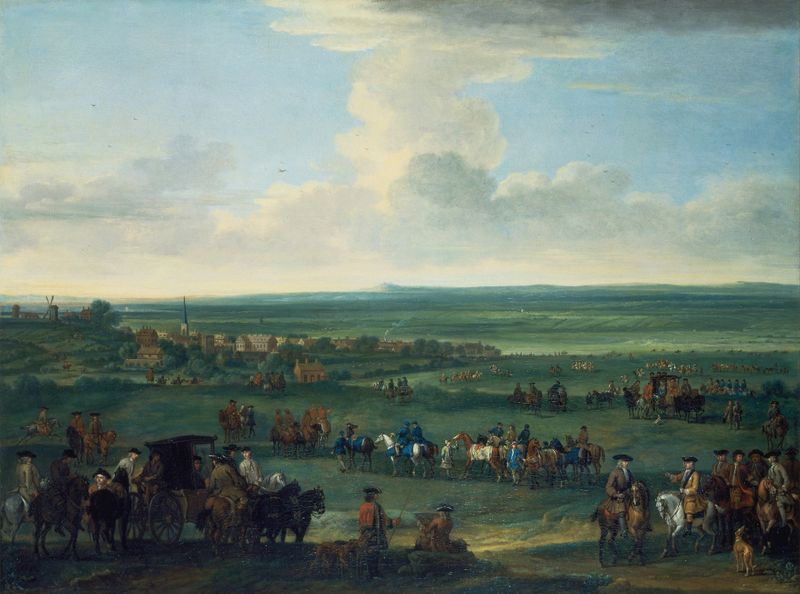
George I at Newmarket, 4 or 5 October, 1717
John Wootton

Classical Landscape with Figures and Animals; Sunset
John Wootton

Lord Portmore Watching Racehorses at Exercise on Newmarket Heath
John Wootton
Classical Landscape
John Wootton

Classical Landscape: Evening
John Wootton
Classical Landscape with Gypsies
John Wootton

Classical Landscape
John Wootton