
George I at Newmarket, 4 or 5 October, 1717 — History & Facts
In George I at Newmarket, the realm of illusion intertwines with reality, inviting us to contemplate the fleeting essence of power and spectacle. The canvas captures a moment of regality and ambition, where the past and present converge through rich hues and meticulous detail. Look to the left where the figure of George I commands attention, draped in elaborate garments that shimmer under the soft daylight. The artist’s brushwork reveals a dazzling array of colors, each stroke breathing life into the fabric, while the surrounding spectators lean in, their expressions etched with a mix of admiration and envy.
Notice how the delicate positioning of the horses and carriages creates a dynamic tension, drawing your gaze toward the racing spectacle — a visual echo of the monarch's desire for triumph. Beneath the surface, the painting embodies a deeper commentary on the transient nature of power. The horses symbolize both speed and ambition, racing forward yet tethered to the earth, alluding to the fleeting grasp of authority. The crowd, a tapestry of expressions and postures, collectively reflects the societal hierarchy, where admiration can quickly morph into resentment.
The shadows cast between figures evoke a sense of competition and rivalry, underscoring the inherent fragility of royal status. In 1717, Wootton painted this work during a period marked by political tension and the consolidation of George I's rule in Britain. As the new Hanoverian king sought to establish his presence, Newmarket served as a significant backdrop for royal patronage of horse racing, capturing both the cultural and social shifts of the time. Yet, amid this vibrant scene, the artist also subtly critiques the very illusions that power creates, reminding us of the delicate nature of legacy.
More Artworks by John Wootton
Browse all →
Classical landscape: morning
John Wootton

A Fox Hunt
John Wootton
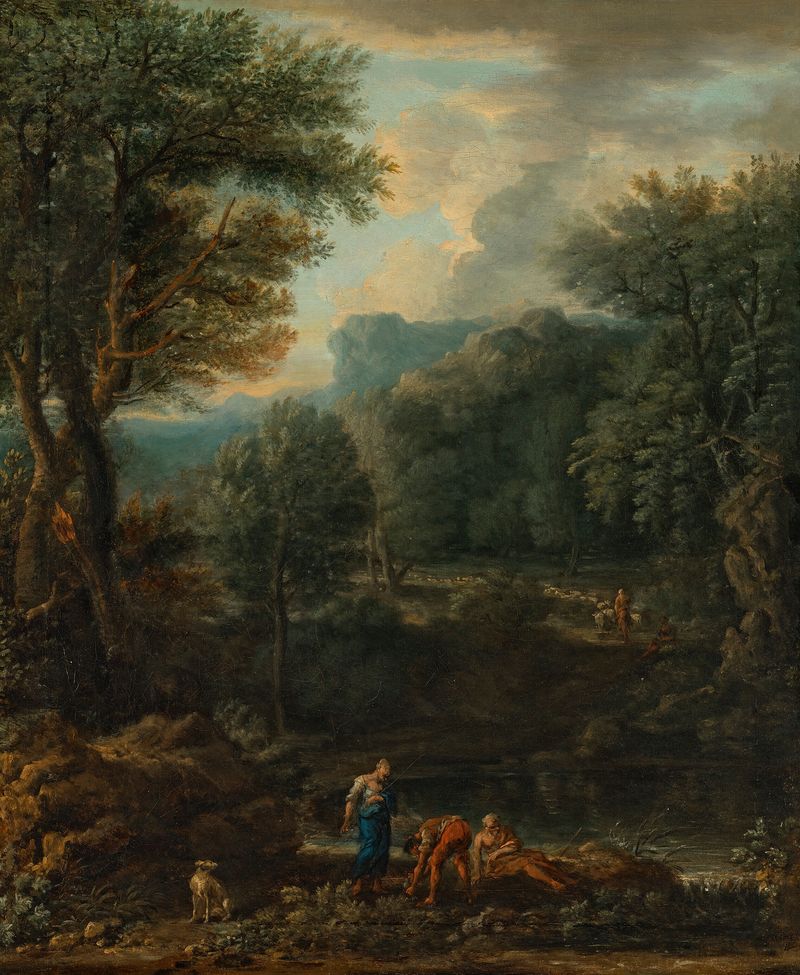
An Italianate landscape
John Wootton

Classical Landscape with Figures and Animals; Sunset
John Wootton

Lord Portmore Watching Racehorses at Exercise on Newmarket Heath
John Wootton
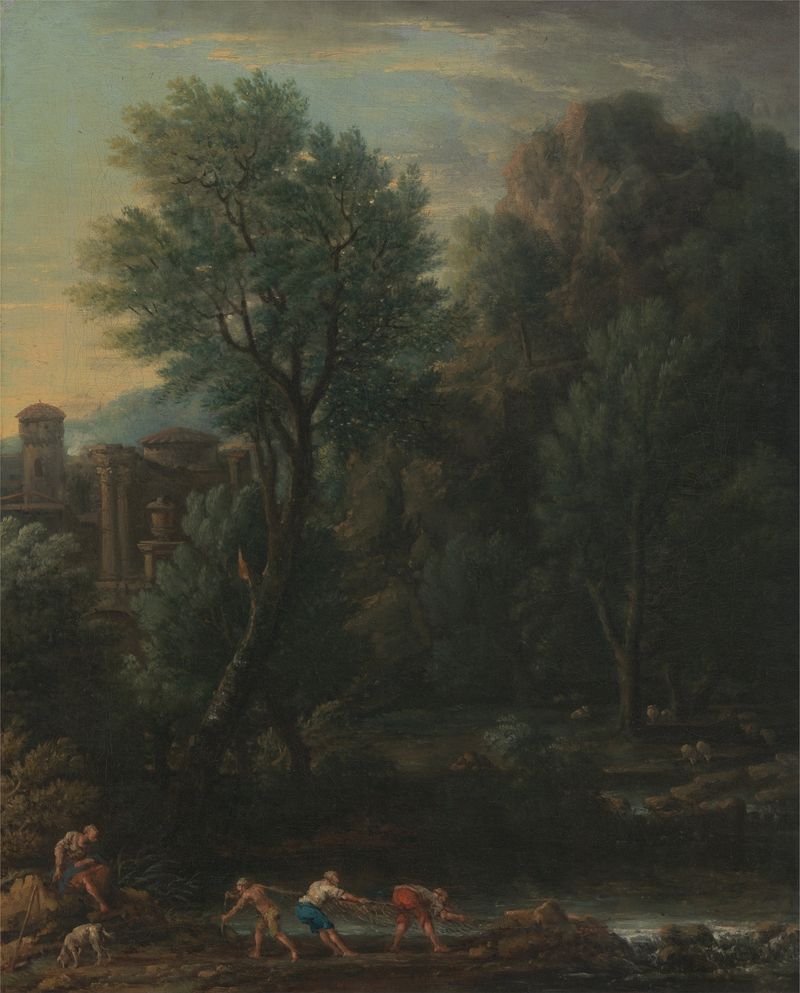
Classical Landscape
John Wootton

Classical Landscape: Evening
John Wootton
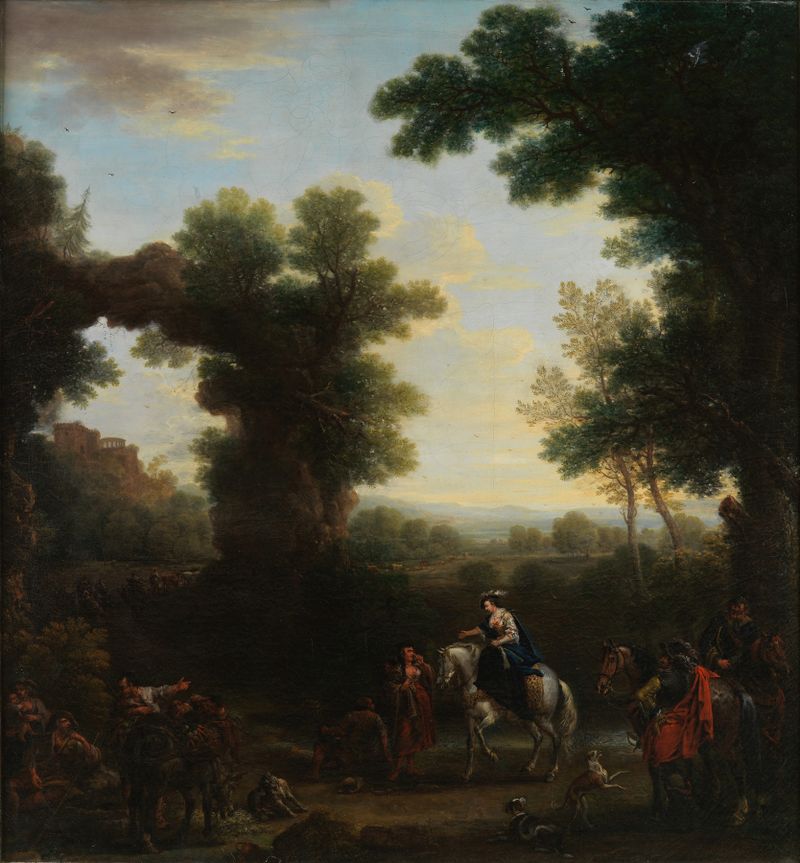
Classical Landscape with Gypsies
John Wootton

Classical Landscape
John Wootton
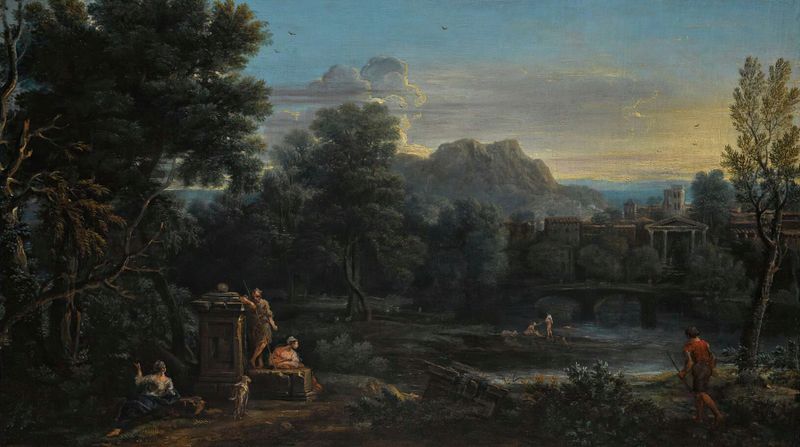
A wooded classical landscape with figures resting in the foreground and bathing in the river, a town beyond
John Wootton
More Historical Art
Browse all →
The Night Watch Militia Company of District II under the Command of Captain Frans Banninck Cocq
Rembrandt van Rijn

Lincoln Memorial
Henry Bacon

The Third of May 1808
Francisco de Goya

Isaac and Rebecca, Known as ‘The Jewish Bride’
Rembrandt van Rijn

The Charge of the Mamelukes (1814)
Francisco de Goya

De vier ruiters van de apocalyps
Albrecht Dürer