
Classical Landscape — History & Facts
In the delicate balance between nature and memory, we find a landscape that speaks to our inherent longing for what once was. Look to the horizon, where rolling hills meet a sky painted in soft pastels of dawn. The light veils the earth, casting a gentle glow over the textured foliage, while subtle shadows hint at the passage of time. The composition leads your eye through a winding path, inviting you to wander as if exploring a familiar yet distant place.
Notice how the artist captures the vibrancy of greens and browns, each hue resonating with the warmth of nostalgia, enhancing the landscape’s inviting aura. Beneath the tranquility lies a poignant tension between beauty and impermanence. Each element, from the scattered trees to the tranquil water, whispers of loss—the fleeting moments we can never reclaim. The depth of the sky and the serenity of the scene evoke a sense of yearning, as the natural world stands in stillness, silently mourning what has been lost to time.
These layers of emotion transform the landscape into a canvas of remembrance, encouraging reflection on what lies beyond our grasp. Created after 1725, this piece emerges from a period when John Wootton was establishing himself as a significant voice in English landscape painting. It reflects the era’s growing appreciation for the natural world amid the shifts of the Enlightenment. As societal changes took root, Wootton’s work encapsulated both the beauty of the countryside and the inevitable passage of time, situating him within a rich tradition that revered the landscape as a mirror of human experience.
More Artworks by John Wootton
Browse all →
Classical landscape: morning
John Wootton

A Fox Hunt
John Wootton
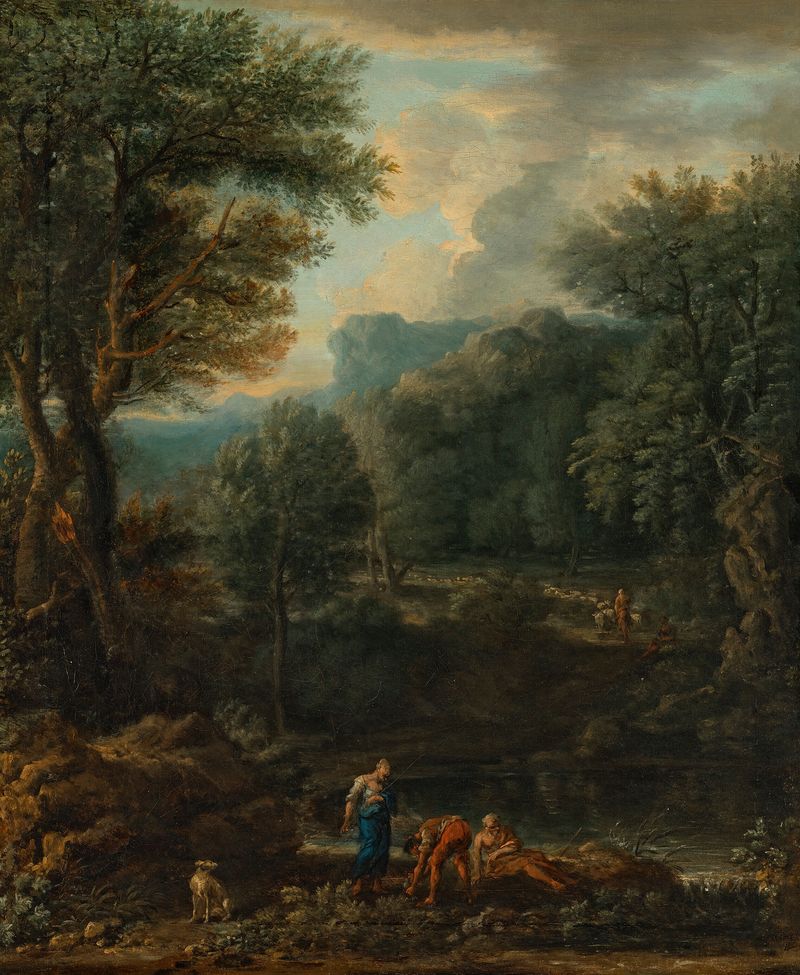
An Italianate landscape
John Wootton
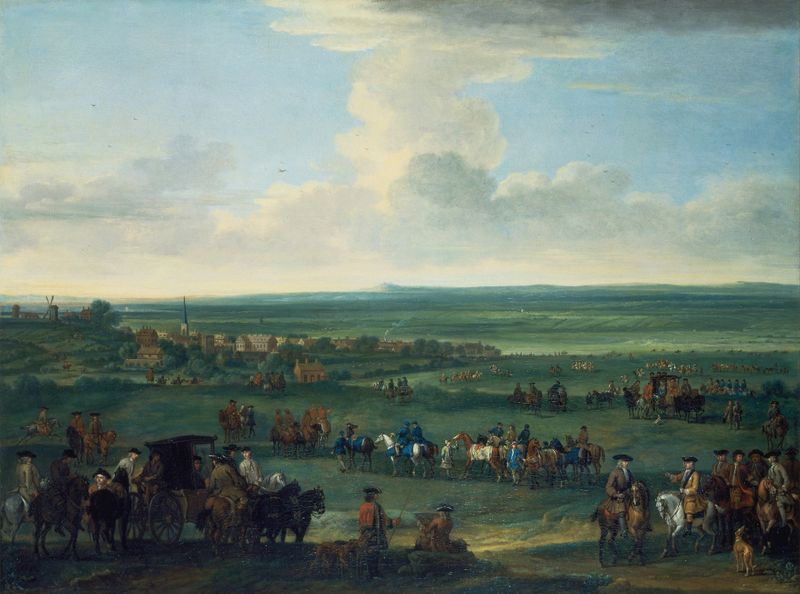
George I at Newmarket, 4 or 5 October, 1717
John Wootton

Classical Landscape with Figures and Animals; Sunset
John Wootton

Lord Portmore Watching Racehorses at Exercise on Newmarket Heath
John Wootton

Classical Landscape: Evening
John Wootton
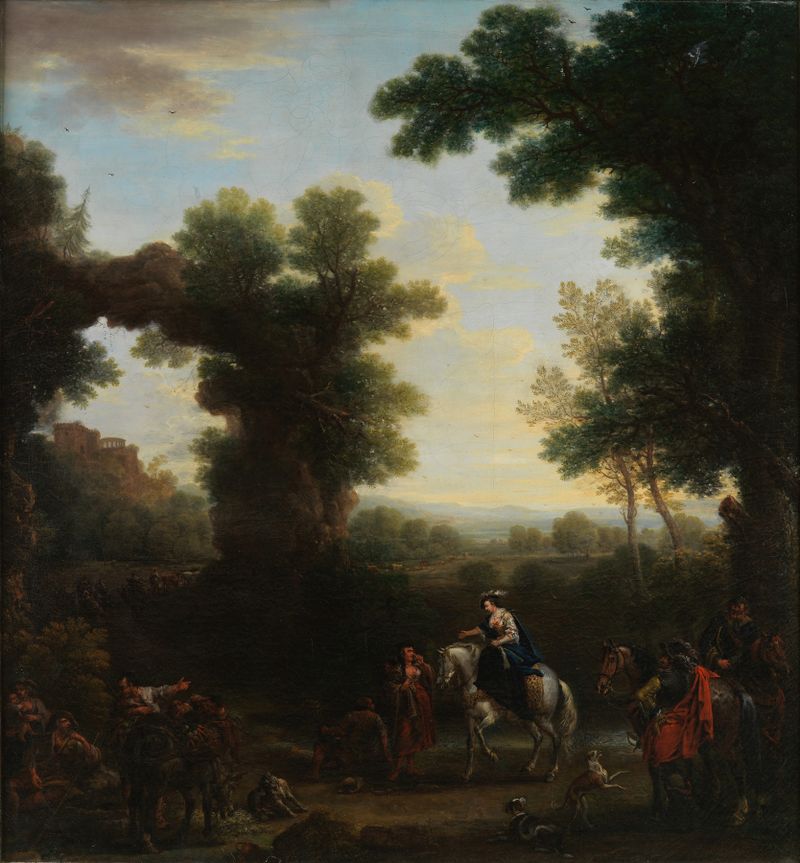
Classical Landscape with Gypsies
John Wootton

Classical Landscape
John Wootton
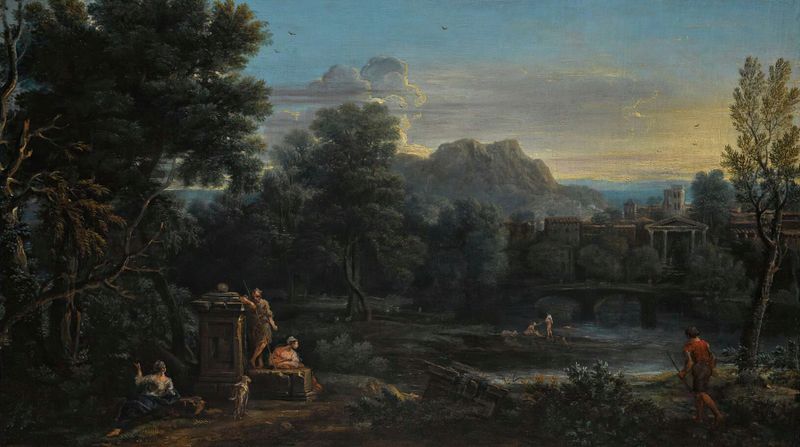
A wooded classical landscape with figures resting in the foreground and bathing in the river, a town beyond
John Wootton





