
An Italianate landscape — History & Facts
This statement resonates deeply with the essence captured within An Italianate Landscape. Look to the horizon, where rolling hills meet a serene sky; the soft, golden light bathes the landscape in warmth, inviting you to wander. Focus on the intricate details in the foreground, where the lush greenery contrasts with the tranquil water, reflecting hues of blue and green. Notice how the artist employs delicate brushwork, creating a sense of movement and life amidst the stillness, guiding your eyes to the distant mountains that cradle the scene in an embrace. Yet, there’s a tension beneath this idyllic façade.
The richness of the colors speaks to abundance, but the shadows lurking in the valleys hint at a deeper, unspoken history of struggle. Here, the interplay of light and dark not only enhances the visual depth but evokes a sense of longing, as if the landscape holds secrets of joy and sorrow intertwined. This duality invites the viewer to reflect on the transient nature of beauty itself, suggesting a rich narrative beneath the surface. Created during an era when the English landscape painting gained prominence, this work showcases Wootton's affinity for the Italianate style, a blend of pastoral charm and classical ideals.
While the exact date of creation is unknown, it likely emerged in the early 18th century when England was hungry for the picturesque beauty of the continent, mirroring Wootton's own explorations and experimentation within his craft. In this context, his landscape becomes not just a scene but a dialogue between nature, emotion, and artistic ambition.
More Artworks by John Wootton
Browse all →
Classical landscape: morning
John Wootton

A Fox Hunt
John Wootton
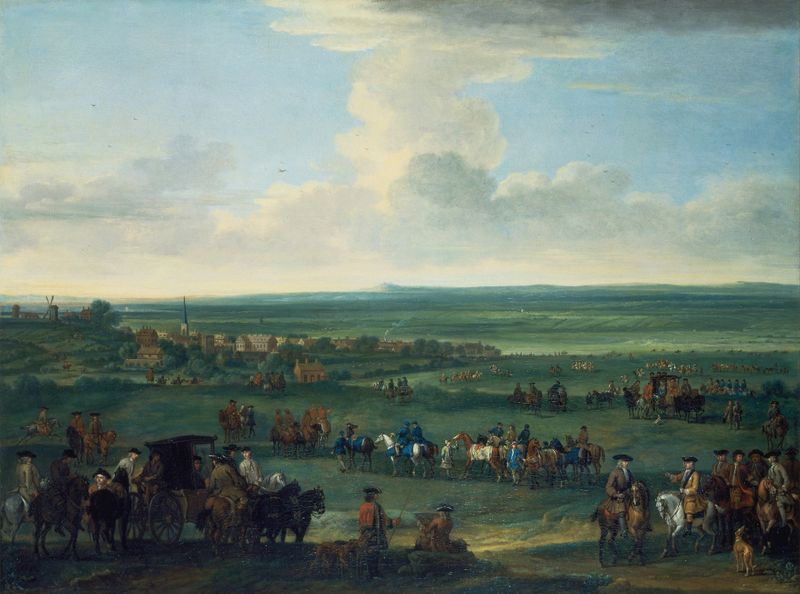
George I at Newmarket, 4 or 5 October, 1717
John Wootton

Classical Landscape with Figures and Animals; Sunset
John Wootton

Lord Portmore Watching Racehorses at Exercise on Newmarket Heath
John Wootton
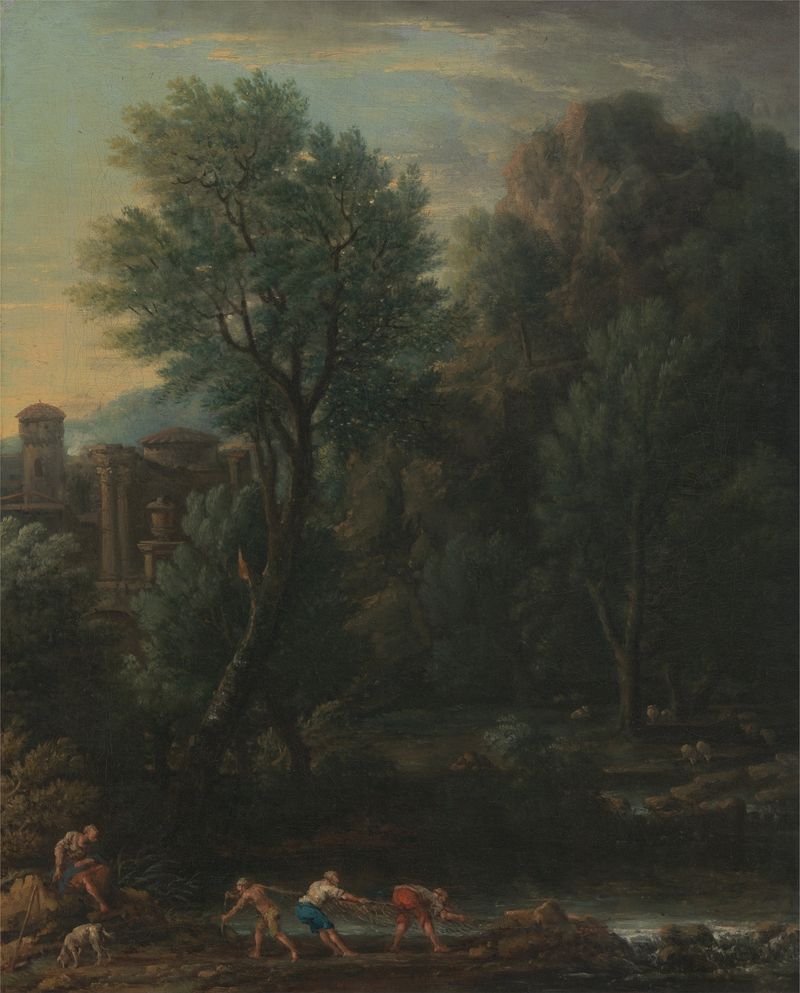
Classical Landscape
John Wootton

Classical Landscape: Evening
John Wootton
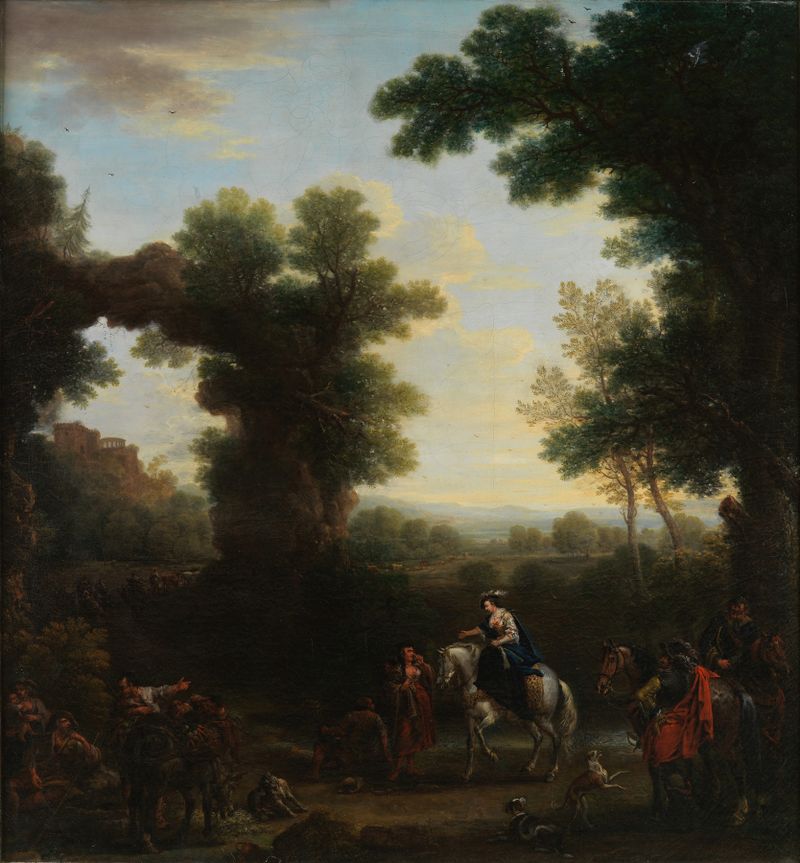
Classical Landscape with Gypsies
John Wootton

Classical Landscape
John Wootton
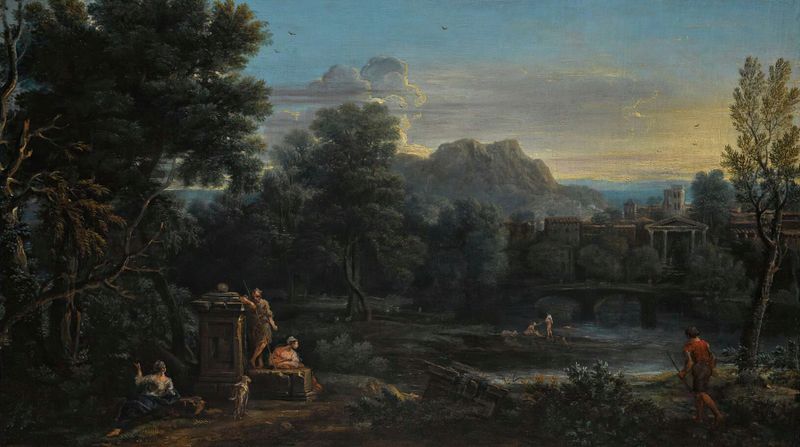
A wooded classical landscape with figures resting in the foreground and bathing in the river, a town beyond
John Wootton





