
The Dilkoosha, Lucknow in the Distance — History & Facts
In the quietude of forgotten places, melancholy whispers linger, untold stories woven into the fabric of time. Look to the horizon where the ethereal outline of the Dilkoosha emerges, its distant silhouette bathed in soft hues of twilight. Notice how the gentle blending of blues and grays creates an almost dreamlike quality, inviting the viewer to step into a moment suspended between reality and memory. The delicate brushwork captures the fleeting light of dusk, emphasizing the tranquil yet poignant atmosphere that envelops the scene. As your gaze moves closer, observe the subtle contrasts between the lush foreground and the somber background.
The vibrant greenery, rich with life, stands in stark opposition to the muted, distant structure, evoking a sense of longing and nostalgia. This juxtaposition reflects a duality of existence—vivid vitality juxtaposed against the inevitable decay of time. Each stroke reveals not just the beauty of the landscape but also the weight of history that clings to it, resonating with the viewer's own introspections. In 1866, William Simpson created this work during his travels in India, a time when European artists began to explore the subcontinent's rich culture.
Emerging from a period marked by colonial expansion, Simpson's art sought to bridge the gap between Western and Eastern aesthetics, capturing the essence of a land filled with both wonder and sorrow. The reflective quality of The Dilkoosha, Lucknow in the Distance encapsulates his complex relationship with the world around him and the deep sense of loss that accompanied his experiences.
More Artworks by William Simpson
Browse all →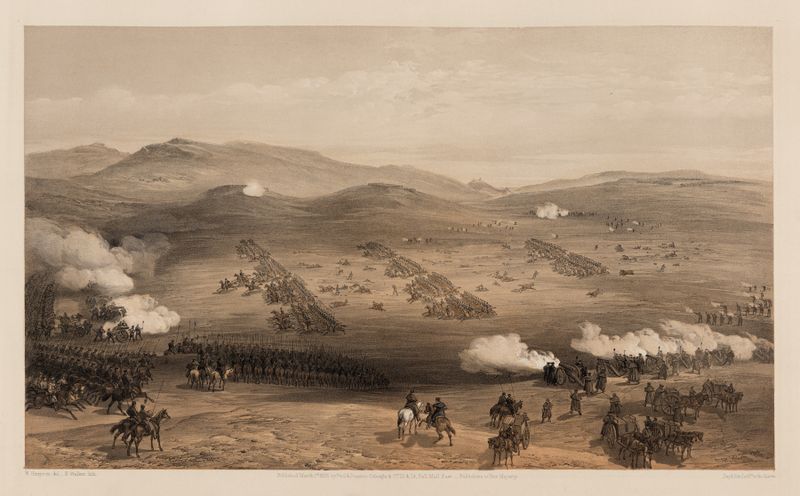
Charge of the light cavalry brigade, 25th Oct. 1854, under Major General the Earl of Cardigan
William Simpson

Charge of the heavy cavalry brigade, 25th Octr. 1854
William Simpson
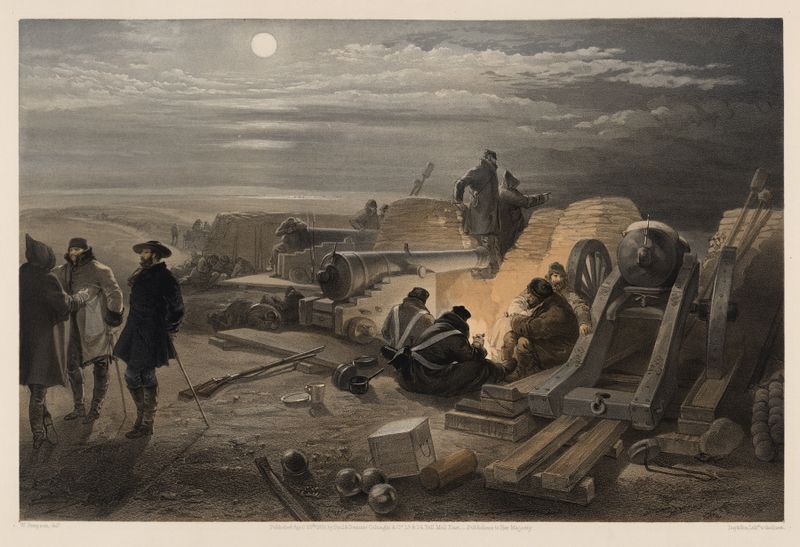
A quiet night in the batteries – a sketch in the Greenhill battery (Major Chapman’s), 29th Jany. 1855
William Simpson

The Great Wall of China
William Simpson
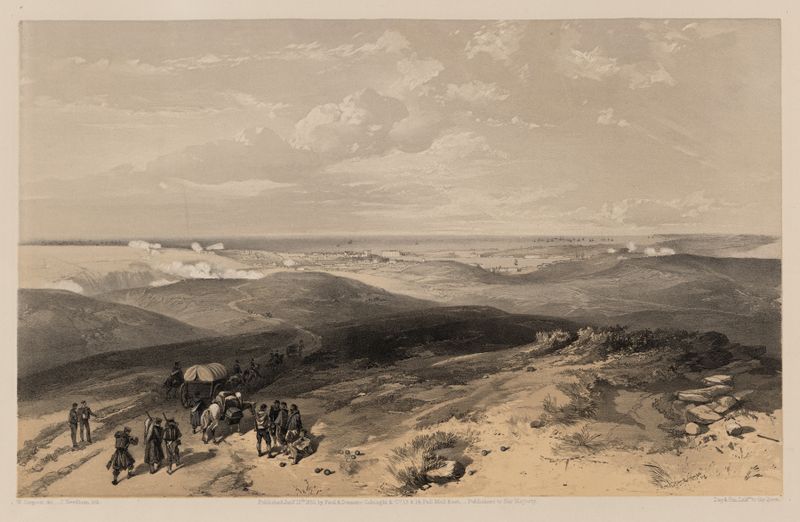
Sebastopol from the rear of the English batteries
William Simpson
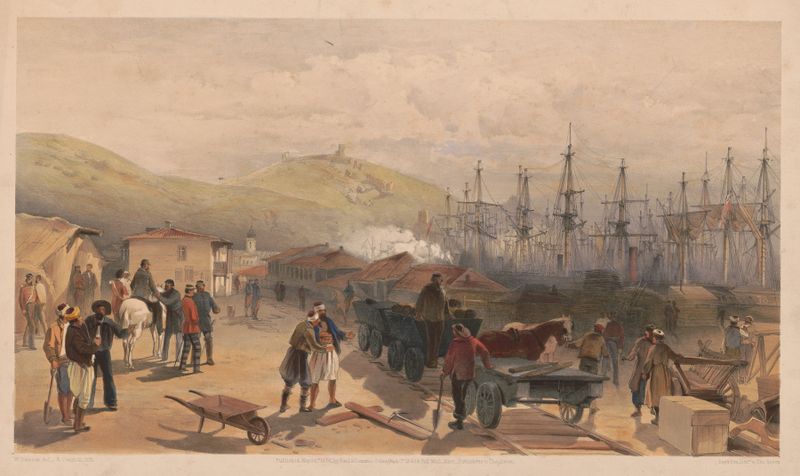
The railway at Balaklava, looking south
William Simpson

The Governor-General’s and Commander-in-Chief’s Camp at Jalandhar, 1 Febuary 1860
William Simpson
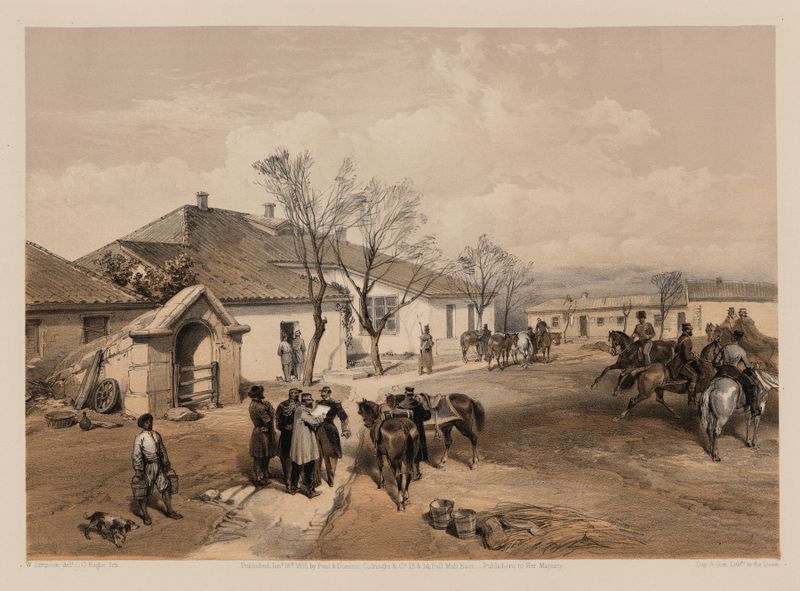
Lord Raglan’s head quarters at Khutor-Karagatch
William Simpson
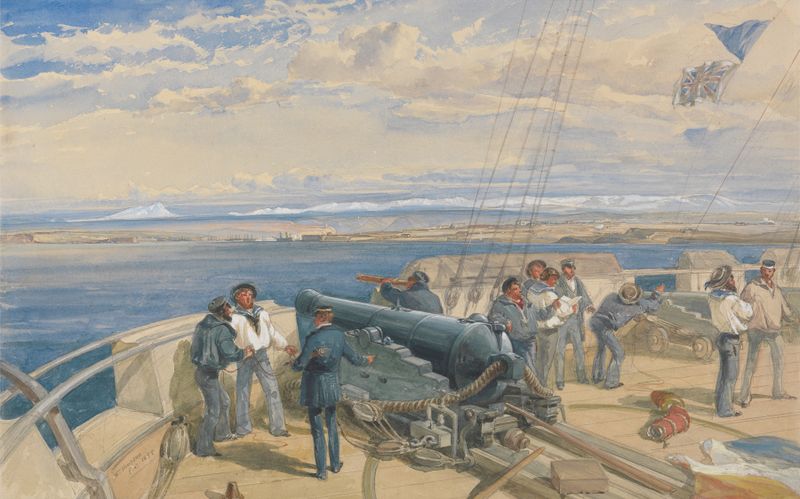
Sebastopol from the Sea, Sketched from the Deck of H. M. S. Sidon, Feb. 1855
William Simpson
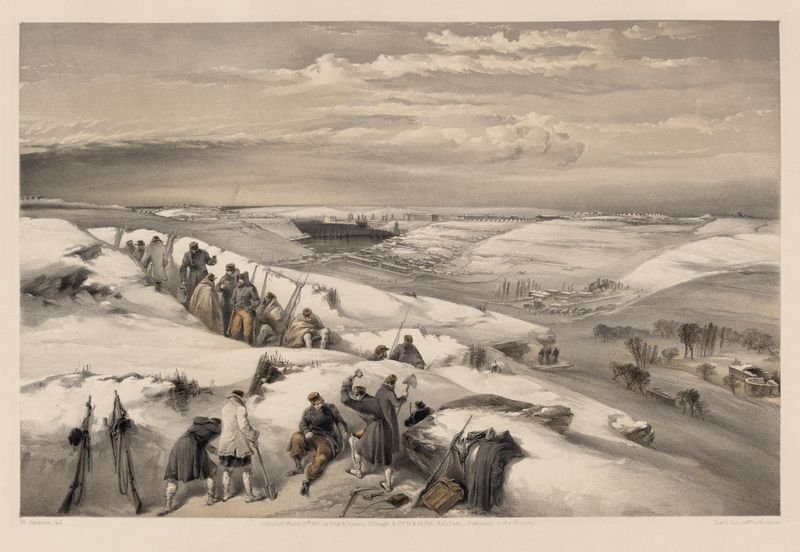
Sebastobol from the 26 gun battery on the extreme right of French attack
William Simpson





