
The Doge on the Bucintoro near the Riva di Sant’Elena, Venice — History & Facts
Did the painter know this moment would outlive them? The vibrancy of color and the delicate interplay of light in this work whisper of eternity, encapsulating the fleeting nature of human experience. Look to the left at the grand vessel, the Bucintoro, adorned in rich hues of gold and deep azure, reigniting the history of Venetian splendor. Notice how the artist employs brilliant reds and greens to evoke the opulence of the Doge's attire, setting him apart against the shimmering water. The soft reflections in the rippling surface create a dialogue with the sky, where gentle strokes of pink and orange hint at an approaching dusk, enriching the composition with a sense of serenity. Beneath the surface beauty lies a tension between power and fragility.
The Doge, a symbol of authority, is framed by a world that is both majestic and transient—the vibrant colors suggest celebration, yet the fading light foreshadows the inevitable passage of time. The spectators in the background, rendered in muted tones, serve as a reminder of the collective fate that ties them to the Doge's solitary grandeur, contrasting the vibrancy of his presence with the subtle weight of history. Giovanni Grubacs created this work during a period of shifting artistic movements in the late 19th century, while Venice was experiencing both revival and decline. Influenced by the romanticism of his predecessors, he sought to capture the essence of Venetian life through a blend of realism and idealization.
The painting reflects a moment when the city was not only a significant cultural hub but also a canvas where history and art intertwined.
More Artworks by Giovanni Grubacs
Browse all →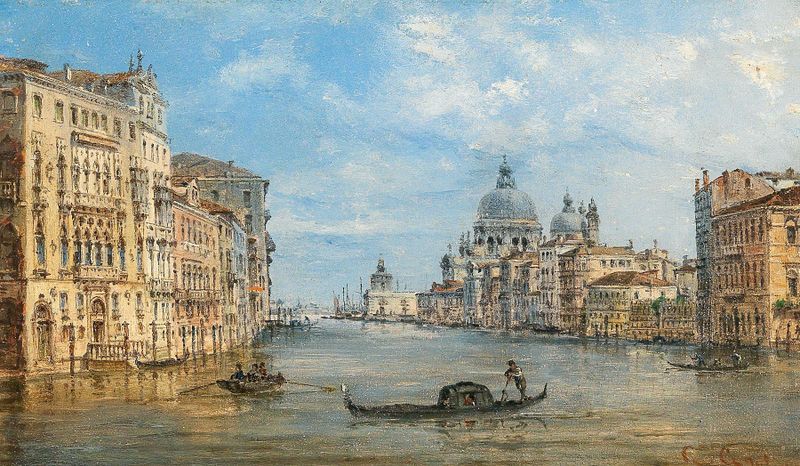
Venice, a view of the Grand Canal
Giovanni Grubacs
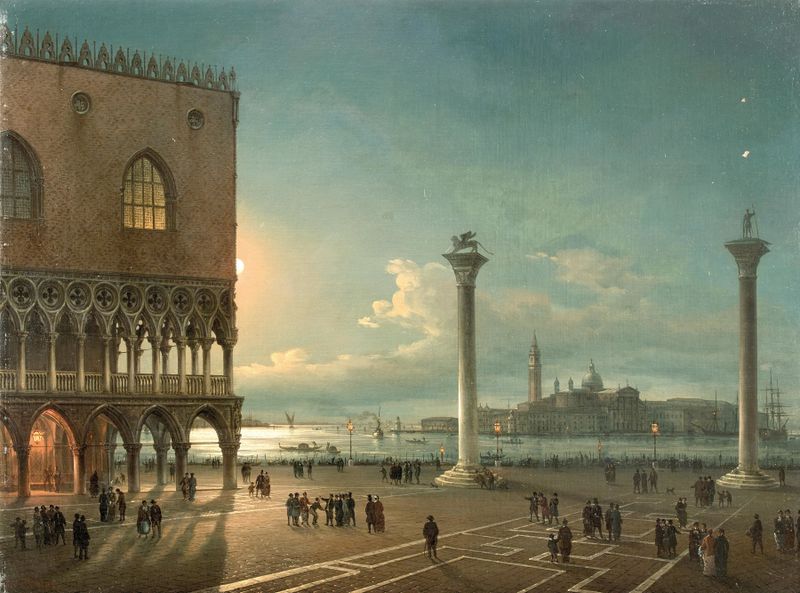
The Piazzetta di San Marco in moonlight, Venice
Giovanni Grubacs
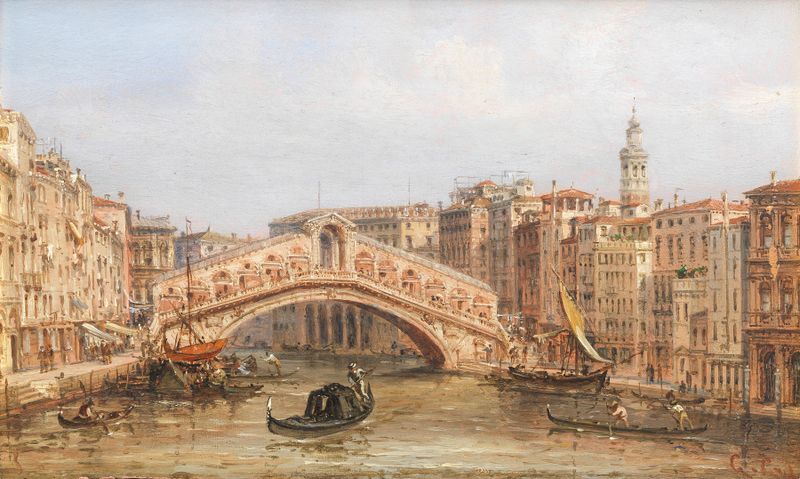
The Rialto Bridge
Giovanni Grubacs
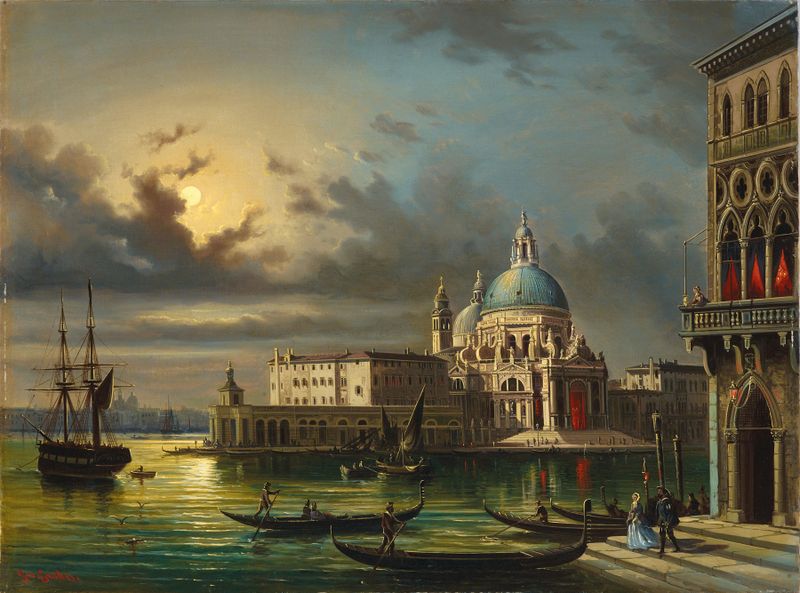
The Punta della Dogana and Santa Maria della Salute, Venice in moonlight
Giovanni Grubacs
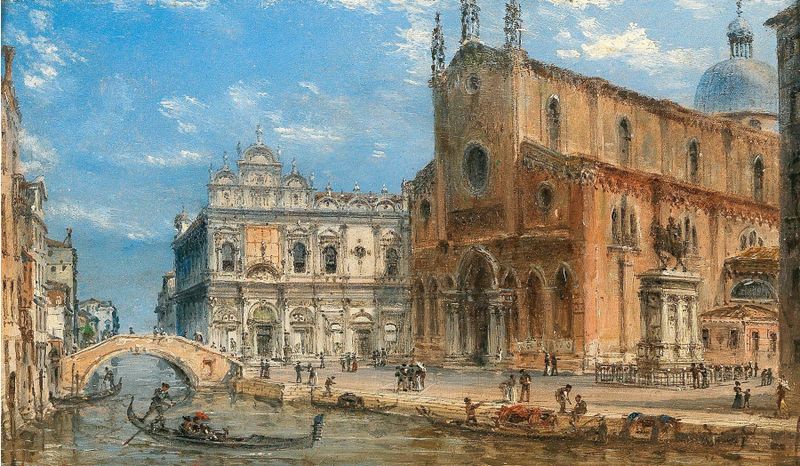
Venice, a view of San Zanipolo with the Colleoni equestrian monument
Giovanni Grubacs
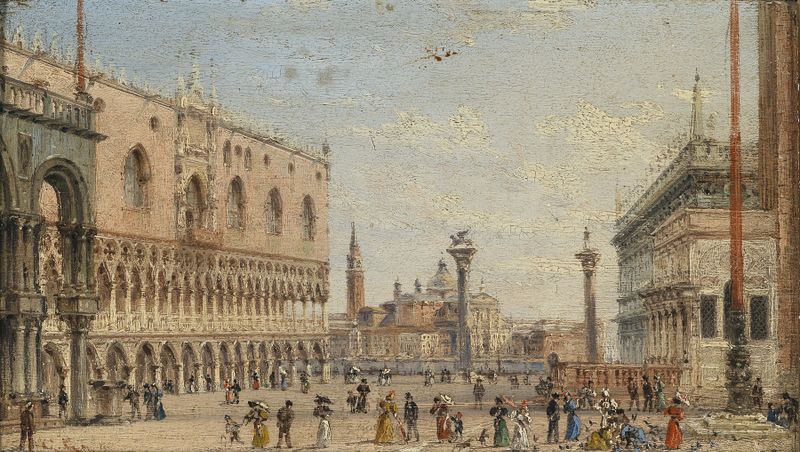
Venedig Piazza San Marco
Giovanni Grubacs
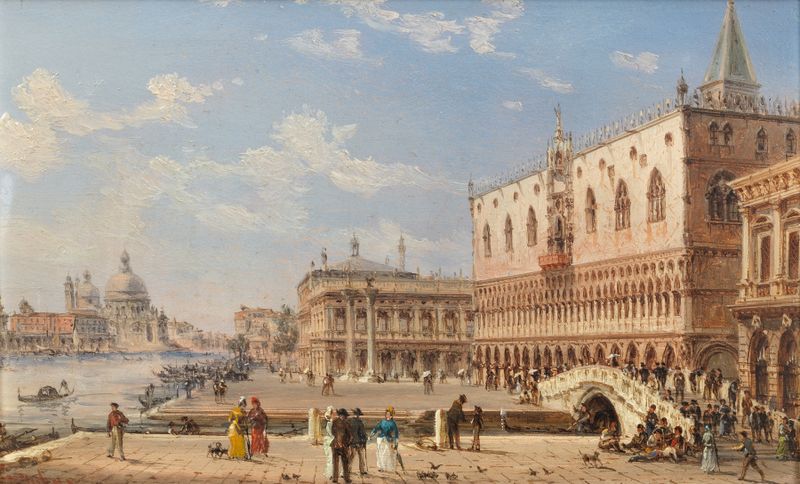
Doge’s Palace with the Ponte della Paglia
Giovanni Grubacs
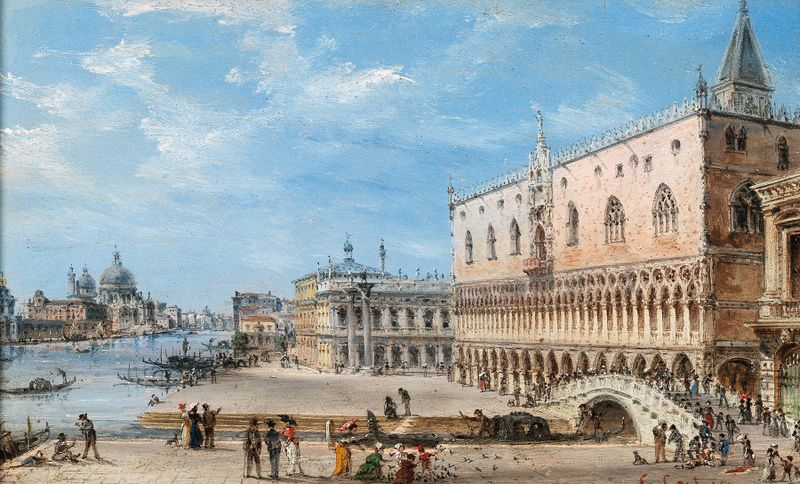
Riva degli Schiavoni
Giovanni Grubacs
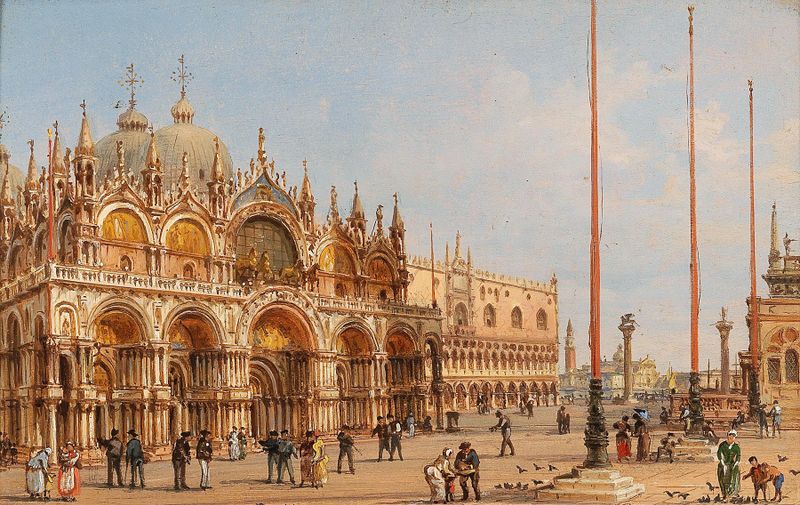
A View Of St Mark’s Basilica And A View Of St Mark’s Square
Giovanni Grubacs
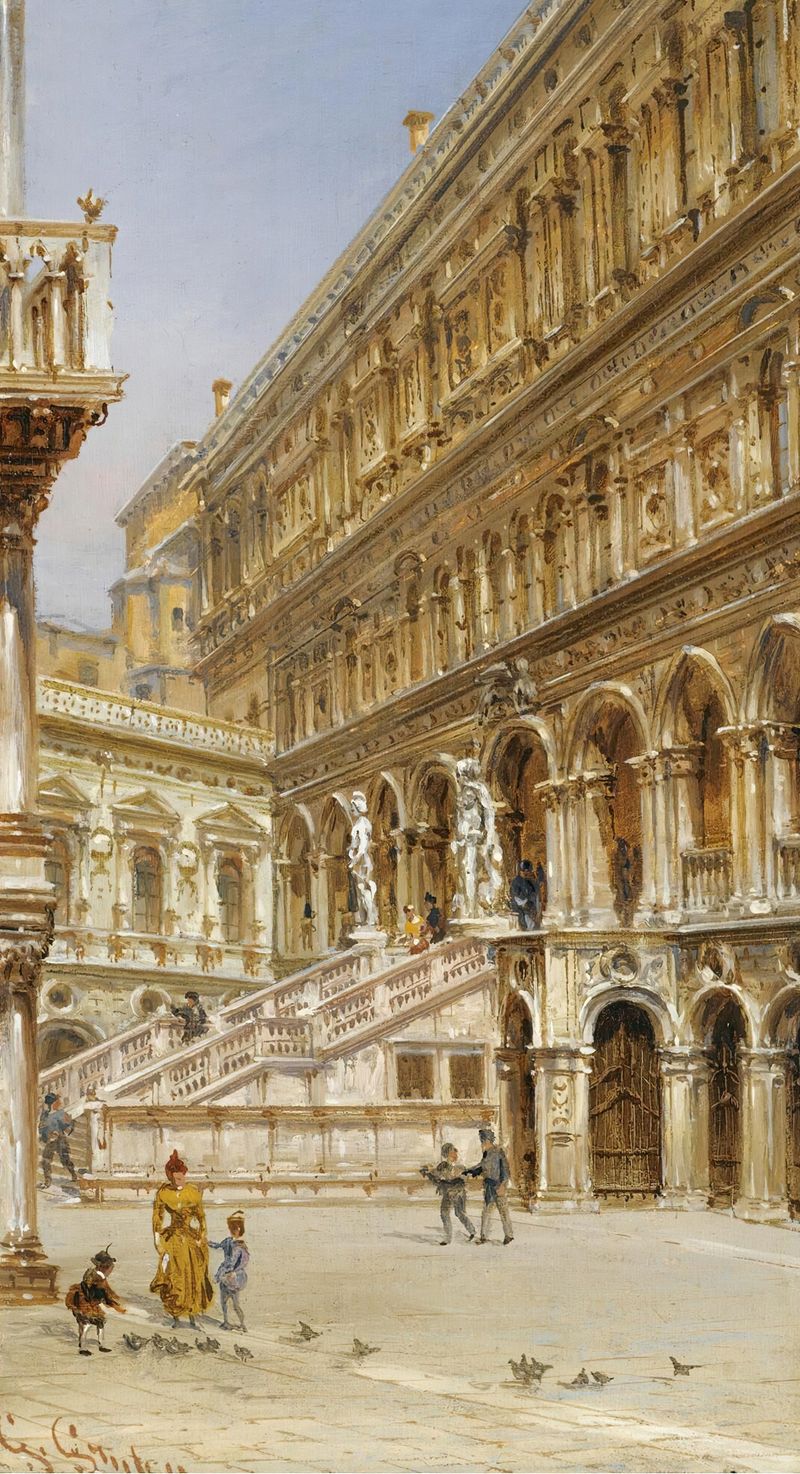
The Giants’ Staircase In The Courtyard Of The Doge’s Palace
Giovanni Grubacs
More Historical Art
Browse all →
The Night Watch Militia Company of District II under the Command of Captain Frans Banninck Cocq
Rembrandt van Rijn

Lincoln Memorial
Henry Bacon

The Third of May 1808
Francisco de Goya

Isaac and Rebecca, Known as ‘The Jewish Bride’
Rembrandt van Rijn

The Charge of the Mamelukes (1814)
Francisco de Goya

De vier ruiters van de apocalyps
Albrecht Dürer