
The elements — History & Facts
A sunflower commands the center, its broad face like a sun around which the rest of the scene gently orbits. The composition pulls the viewer into a world where the boundaries between people, nature, and art dissolve: on one side, a mother lifts her child toward the blooms, her gesture echoed by the painter’s poised brush on the other. The palette is soft but deliberate, with spring greens and floral pastels setting a mood of quiet celebration.
Even the cat, nestled among the flowers, seems to pause in appreciation. The eye is led from the intimacy of the family, through a riot of blossoms, to the act of creation itself—an unbroken chain of life, observation, and artistry. Works like this, with their decorative framing and allegorical overtones, flourished in the late nineteenth and early twentieth centuries, when artists such as Théophile Alexandre Steinlen—whose name is linked to this piece—were celebrated for bringing art into everyday spaces. Murals and panels were commissioned for public buildings or private salons, meant to uplift and educate through beauty and symbolism.
The presence of this work in the collection of the musée des arts décoratifs, as documented in 2014, hints at its intended role as both ornament and gentle lesson. History has kept few traces of this particular panel’s journey, but its vision of harmony—between generations, between art and life—remains immediate, inviting us to linger and look again.
More Artworks by A. Stein

The Laundresses
A. Stein
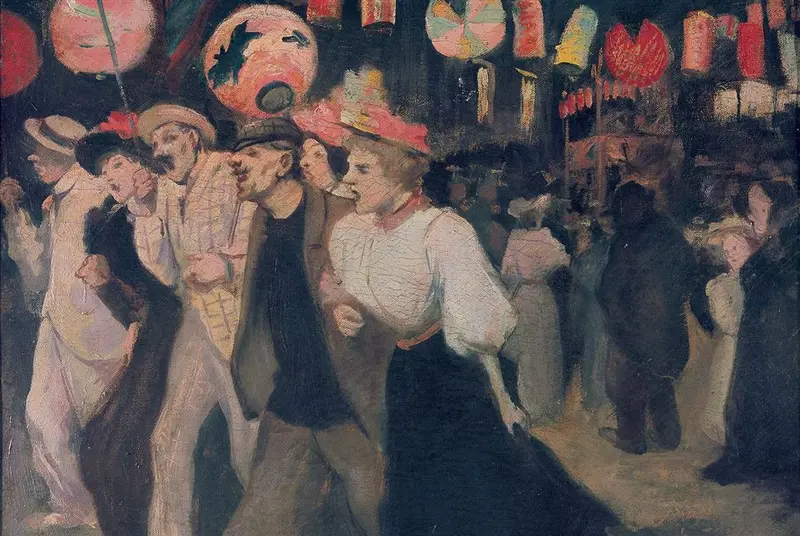
Le 14 juillet
A. Stein
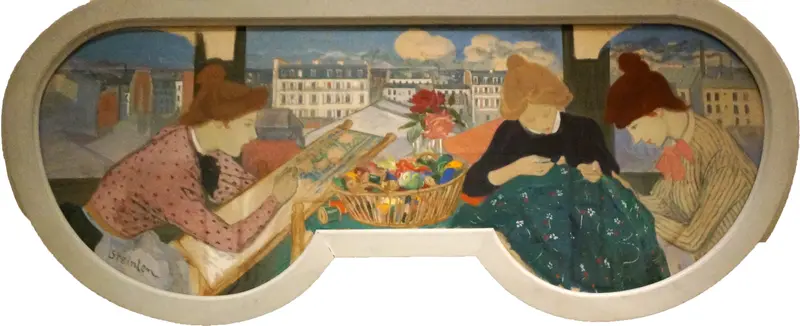
The application of the decoration
A. Stein
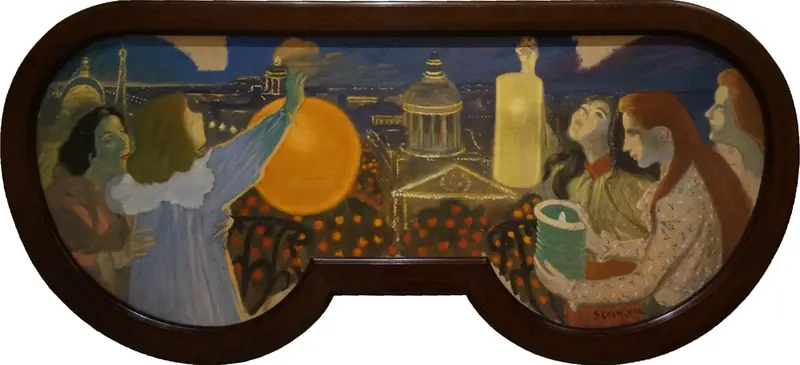
Night party
A. Stein
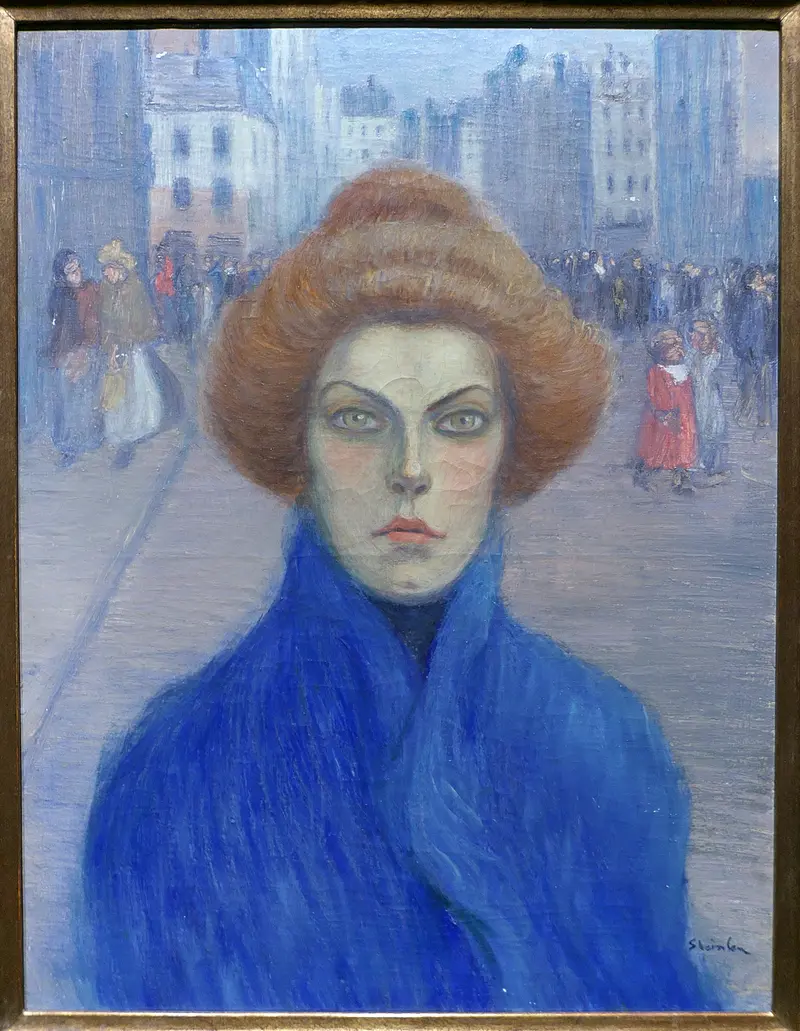
De regreso al hogar (Théophile Alexandre Steinlen)
A. Stein
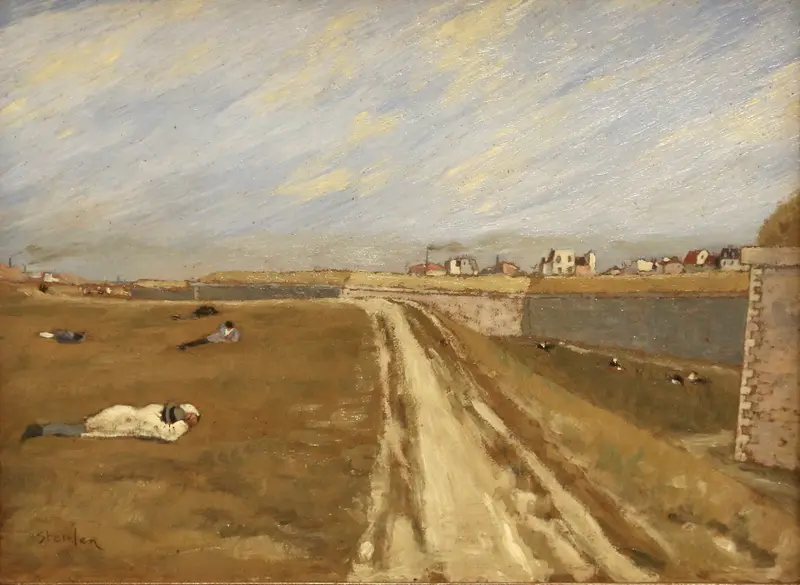
Fortifs - Théophile Alexandre Steinlein (MCBA, Lausanne)
A. Stein

Poilu
A. Stein
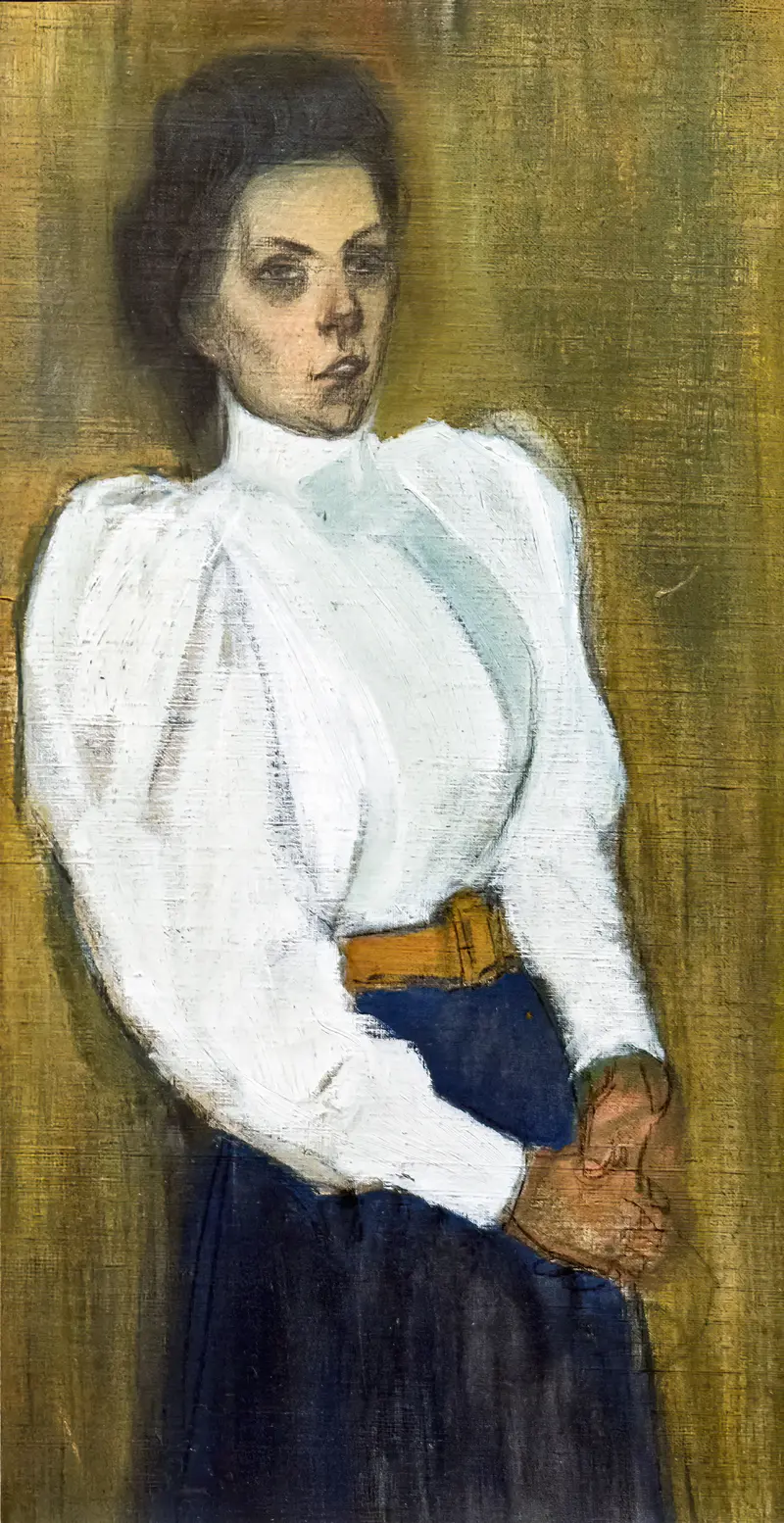
Woman in white blouse
A. Stein

Overland Mail Company, Barlow, Sanderson & Co.
A. Stein



