
The field of Inkermann — History & Facts
Who listens when art speaks of silence? In a world brimming with chaos, the stillness captured in an artist's brush can resonate deeper than the loudest cries of battle. First, look to the foreground where the muted tones of gray and brown merge, forming the desolate landscape of Inkermann. Notice how the rugged terrain sprawls across the canvas, uneven and jagged, embodying the turmoil of conflict. The brushwork is both delicate and vigorous, suggesting the weight of sorrow that hangs in the air.
This is no mere representation of a battlefield; it is a testament to the aftermath of violence, where the remnants of life linger in the stillness. As you delve deeper, consider the soft, almost spectral figures that populate the scene. They are not warriors but shadows of humanity—wounded, struggling, or lost in contemplation. The contrast between their stillness and the chaotic history that surrounds them forms a poignant commentary on the personal toll of war.
The muted palette evokes a sense of mourning, as if the very colors bleed with the memories of those who suffered. It invites reflection on the cost of conflict, urging us to confront the pain often drowned out by the clamorous clamor of heroism. William Simpson painted this piece during the Crimean War, in 1855, as he served as a war correspondent. His experiences on the battlefield lent him a unique perspective, capturing not only the events of war but the haunting silence that follows.
At this moment, the art world was shifting towards realism, and Simpson's work emerged as a powerful response to the glorified depictions of conflict, offering a raw glimpse into the human experience amidst chaos.
More Artworks by William Simpson
Browse all →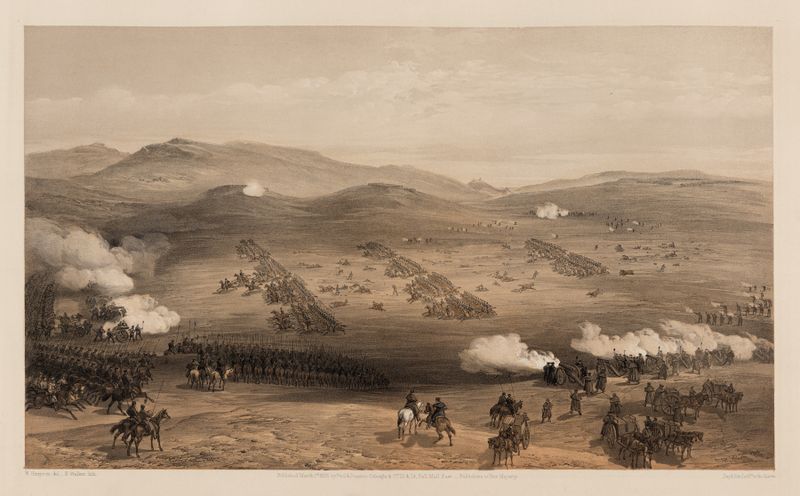
Charge of the light cavalry brigade, 25th Oct. 1854, under Major General the Earl of Cardigan
William Simpson

Charge of the heavy cavalry brigade, 25th Octr. 1854
William Simpson
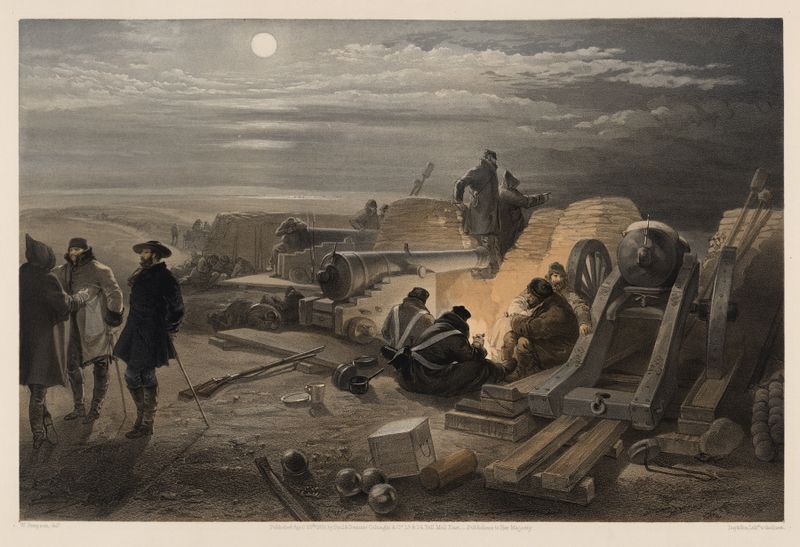
A quiet night in the batteries – a sketch in the Greenhill battery (Major Chapman’s), 29th Jany. 1855
William Simpson

The Great Wall of China
William Simpson
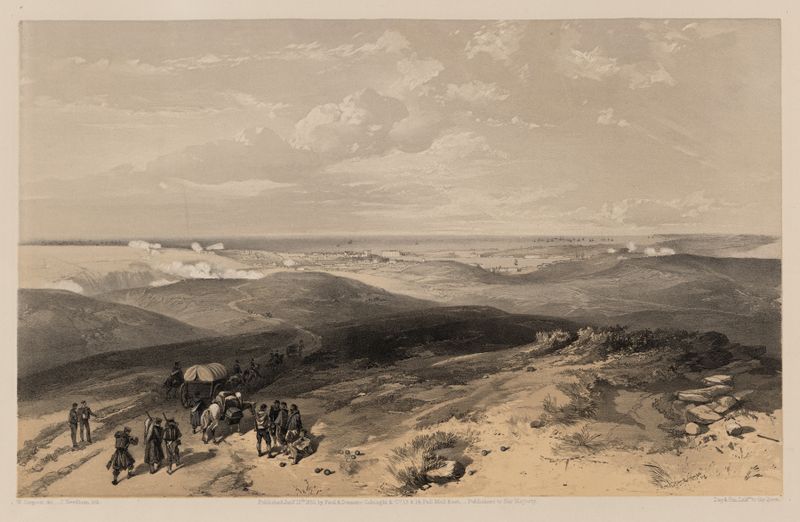
Sebastopol from the rear of the English batteries
William Simpson
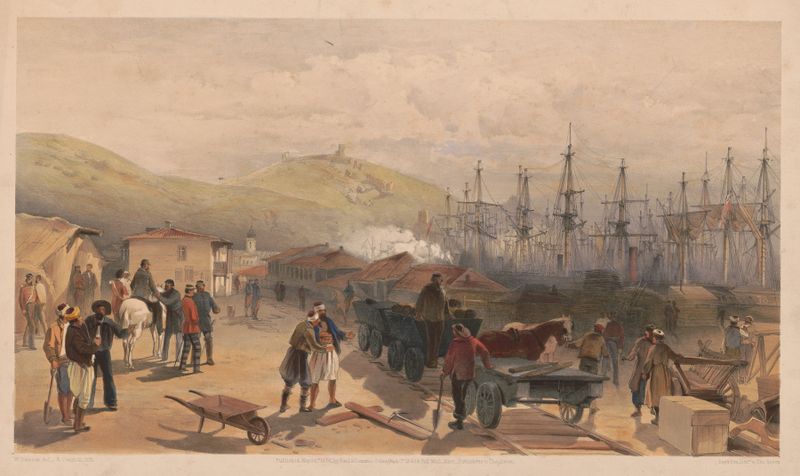
The railway at Balaklava, looking south
William Simpson

The Governor-General’s and Commander-in-Chief’s Camp at Jalandhar, 1 Febuary 1860
William Simpson
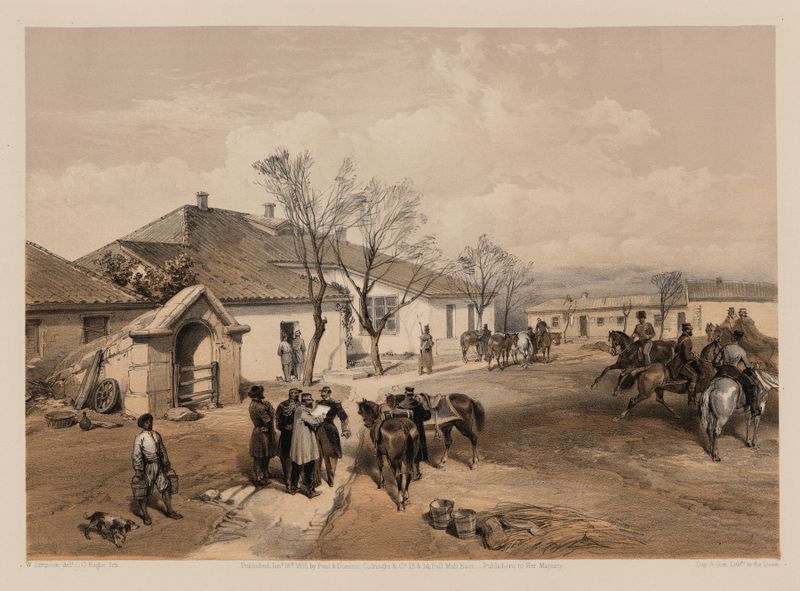
Lord Raglan’s head quarters at Khutor-Karagatch
William Simpson
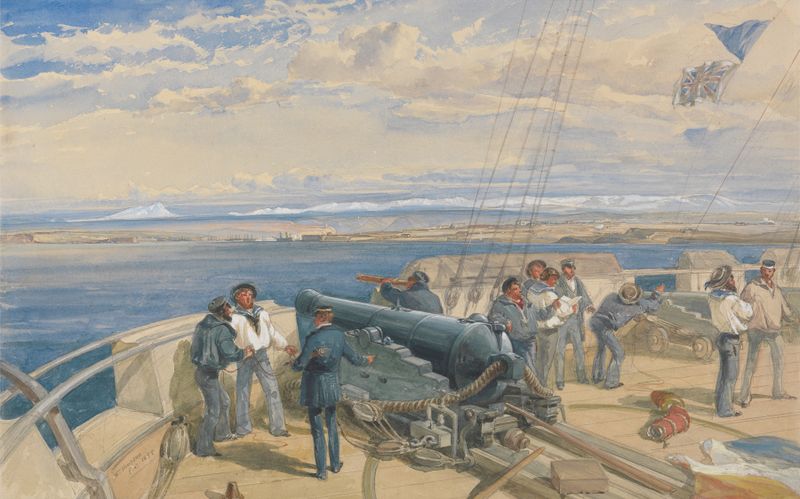
Sebastopol from the Sea, Sketched from the Deck of H. M. S. Sidon, Feb. 1855
William Simpson
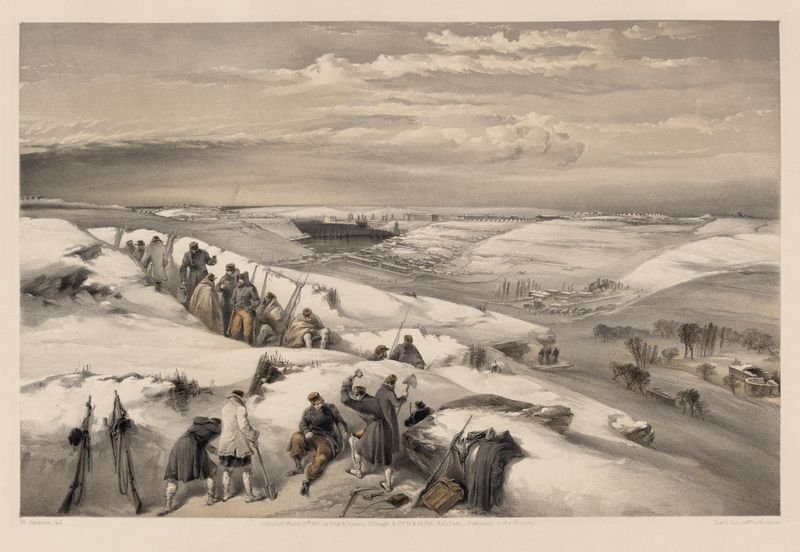
Sebastobol from the 26 gun battery on the extreme right of French attack
William Simpson





