The Four Trees — History & Facts
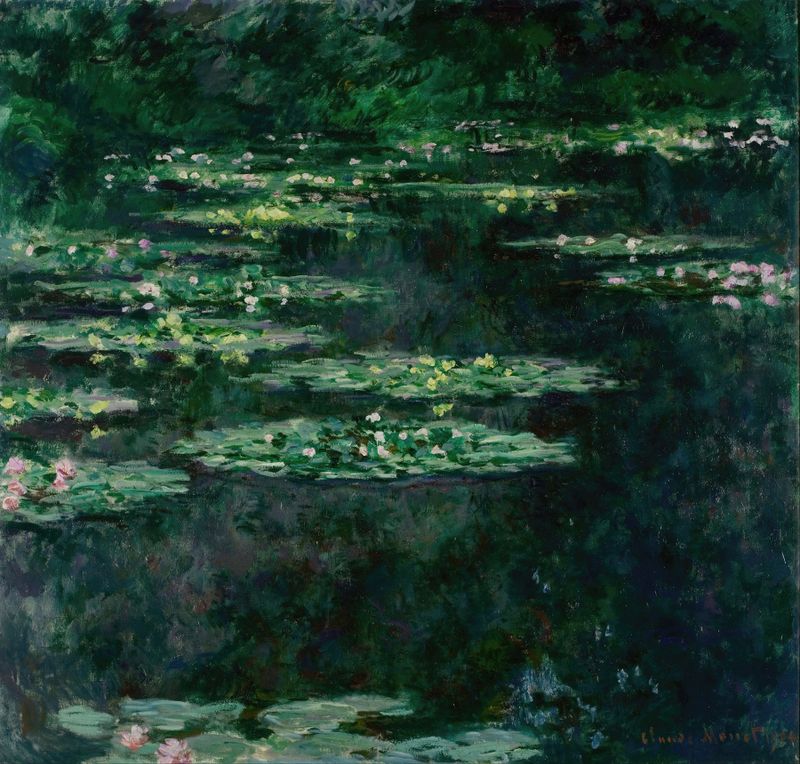
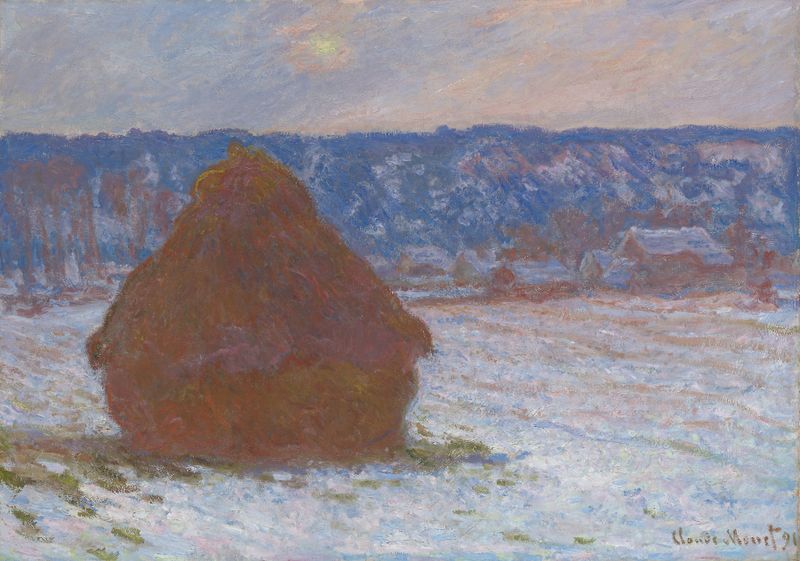
Could a single brushstroke hold eternity? In The Four Trees, the essence of nature and time converge through vibrant color and delicate texture, whispering the legacy of the natural world that transcends generations. Look to the left at the towering trees, their gnarled branches silhouetted against a glowing sky. The interplay of greens and yellows creates an almost luminescent quality, inviting the viewer to trace the contours of the foliage. Notice how the dappled light falls upon the ground, suggesting the warmth of a fleeting sunset, as Monet employs loose, expressive strokes that breathe life into the scene.
The composition is cleverly balanced, leading the eye through the natural archway formed by the trees toward the horizon, where the sky melts into serene blues. Beneath the surface of this idyllic landscape lies a profound relationship between nature and memory. The four trees stand as sentinels, evoking a sense of permanence in an ever-changing world. Their unwavering presence contrasts with the ephemeral quality of the light, a reminder of the fleeting nature of time and beauty.
Each stroke captures not just a moment, but the emotions tied to that moment — nostalgia, reverence, and a longing for continuity. In 1891, Monet painted this scene in the tranquil setting of Giverny, where he was deeply inspired by his surroundings. At this point in his career, he was fully embracing his signature style of Impressionism, focusing increasingly on the play of light and the passing of seasons. The art world was transforming, moving away from realism, and Monet was at the forefront, forever altering the perception of nature through his nuanced brushwork and innovative vision.