
The Garden at the Wannsee in Berlin — History & Facts
A sun-drenched afternoon envelops the garden, where laughter mingles with the gentle rustle of leaves. A few elegantly dressed figures wander leisurely along the winding paths, their faces aglow with the warmth of the day. The air is fragrant with blooming flowers, and the soft play of light dances across the canvas, creating a moment suspended in time. Look to the left, where a riot of vibrant flowers blooms, their colors exploding against the lush greenery.
Notice how the sunlight filters through the branches, casting dappled shadows that play upon the manicured grass. The composition draws you in, inviting your eye to traverse the garden’s pathways, each curve leading to a new discovery, from the delicate petals to the serene figures that embody life’s simplest joys. Beneath the surface of this idyllic scene lies a profound tension between leisure and the relentless passage of time. The figures, seemingly engrossed in their tranquil surroundings, hint at a deeper yearning for connection—a reminder of the fragility of these fleeting moments.
The juxtaposition of the vibrant garden and the whispered silence of the figures creates an emotional depth, suggesting a destiny intertwined with the beauty of life itself. In 1928, Max Liebermann painted this scene at the height of his artistic career in Berlin, a city brimming with cultural upheaval and innovation. During this time, he was revered for his impressionistic style and keen eye for the subtleties of light and nature. The world was on the cusp of change, and this tranquil garden serves as a poignant counterpoint to the tumultuous events to come, encapsulating a moment of peace before the storm.
More Artworks by Max Liebermann
Browse all →
Die Blumenterrasse in Wannsee mit Blick auf den Fischotterbrunnen
Max Liebermann
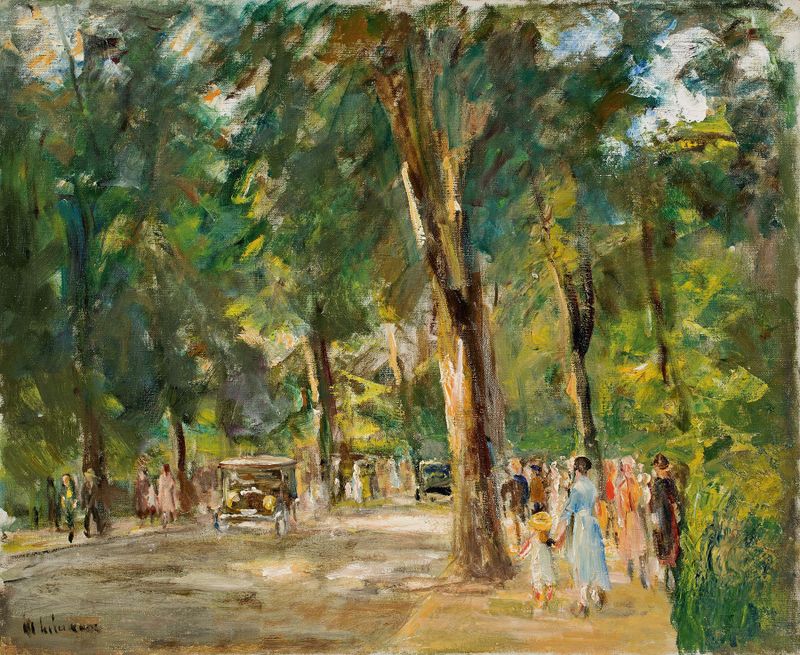
Die Große Seestraße in Wannsee mit Spaziergängern
Max Liebermann

Seitlicher Blick in den Wannseegarten
Max Liebermann

Der Rosengarten in Wannsee
Max Liebermann

Allee mit Spaziergängern und Automobilen
Max Liebermann

Blick in meinen Garten
Max Liebermann
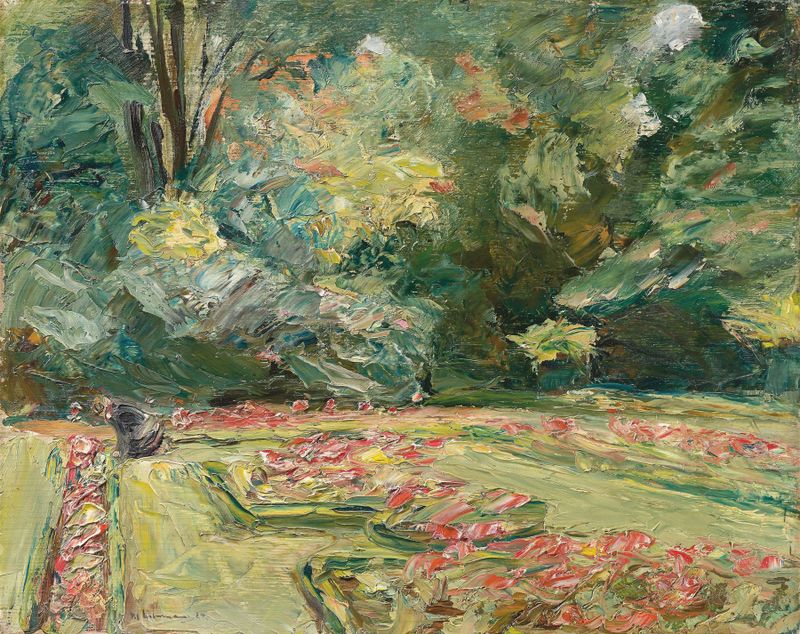
Die Blumenterrasse im Wannseegarten nach Norden
Max Liebermann

Spielende Kinder am Strand
Max Liebermann
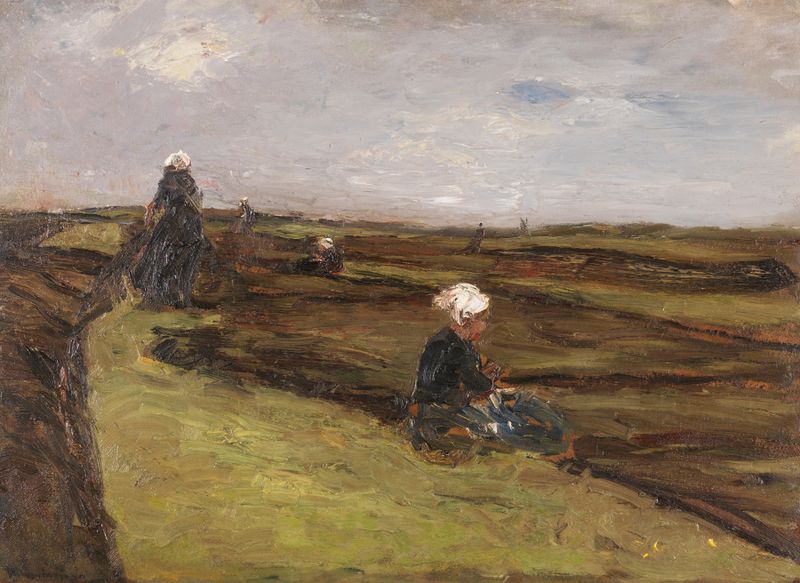
Die Netzflickerinnen
Max Liebermann

Am Strand von Noordwijk
Max Liebermann





