
The gate of Saint Peter’s church in Vienna — History & Facts
Can beauty exist without sorrow? In the quiet embrace of shadow, this question reverberates through the intricate details of the gate. The interplay of light and dark invites contemplation, suggesting that every path to splendor carries with it a hint of melancholy. Look to the ornate carvings that dominate the gate, intricately designed with allegorical figures and floral motifs. Notice how the deep shadows accentuate the textures, creating a dramatic contrast against the fading light.
The play of light reveals the craftsmanship, inviting the eye to trace the delicate lines and curves, while the muted tones evoke a sense of history and reverence. Each element combines to create a striking composition that is both inviting and foreboding. Within this architectural masterpiece, the duality of existence is palpable. The gate stands as a threshold between the sacred and the secular, a symbol of both entry and barrier.
The shadows cast not only enhance the visual experience but also serve as a reminder of the lingering sorrows that often accompany beauty. The figures, seemingly caught in timeless stasis, highlight the tension between life and death, joy and grief. Ernst Graner, known for his meticulous attention to detail, crafted this work during a period of artistic transformation in Vienna. Although the exact date remains uncertain, it reflects his engagement with the rich tapestry of European architecture and the emotive power of form.
In a city where the past and present coexist, Graner’s gate encapsulates the spiritual and aesthetic inquiries of his time, inviting viewers to ponder their own journeys through beauty and shadow.
More Artworks by Ernst Graner
Browse all →
The Departure of Emperor Francis Joseph, near the Schweizertor in Hofburg residence
Ernst Graner

Old Albrechtsplatz (today Albertinaplatz) in Vienna with the Philipphof and the Mozart monument
Ernst Graner
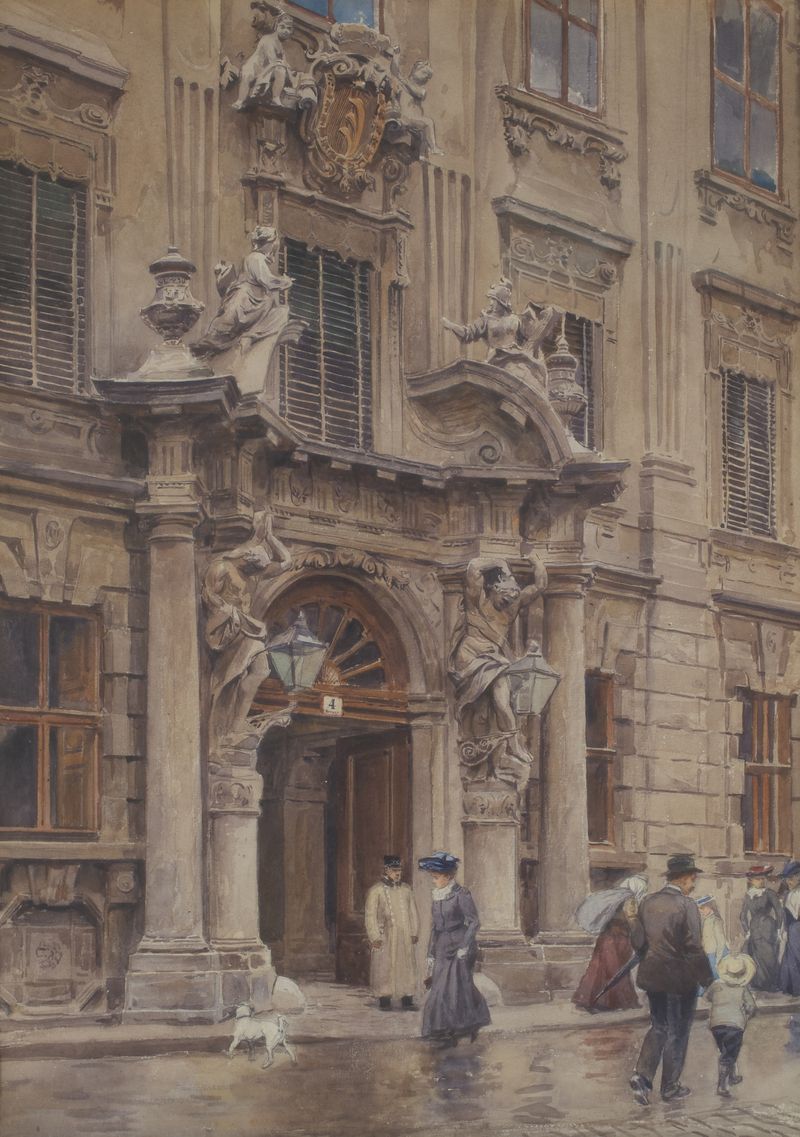
Das Portal Des Palais Kinsky
Ernst Graner
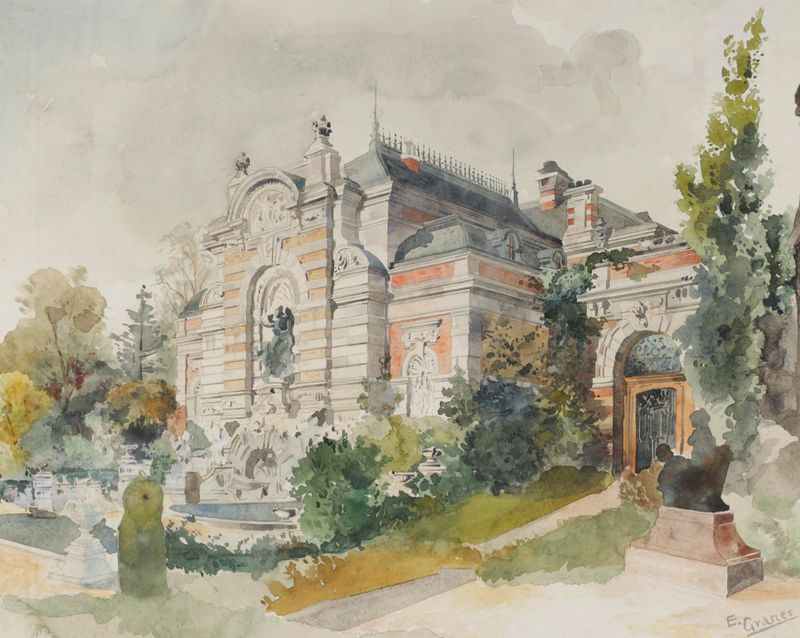
Villa in einem Park
Ernst Graner

Karlskirche
Ernst Graner

Kaiser Franz Joseph überquert den Naschmarkt
Ernst Graner

Palais des Prinzen Eugen in der Himmelpfortgasse
Ernst Graner

Die Schwendergasse In Wien Mit Schwenders Colosseum
Ernst Graner
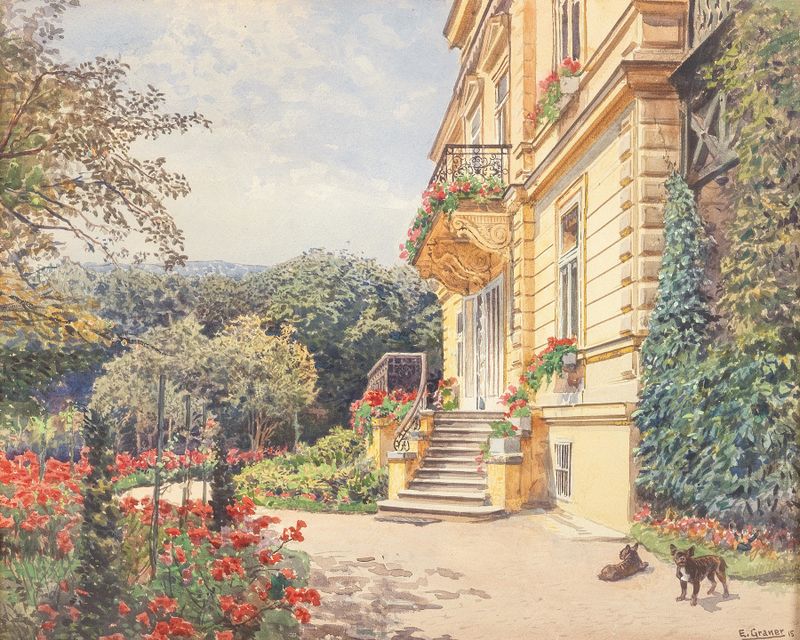
Villa in gepflegtem Garten
Ernst Graner
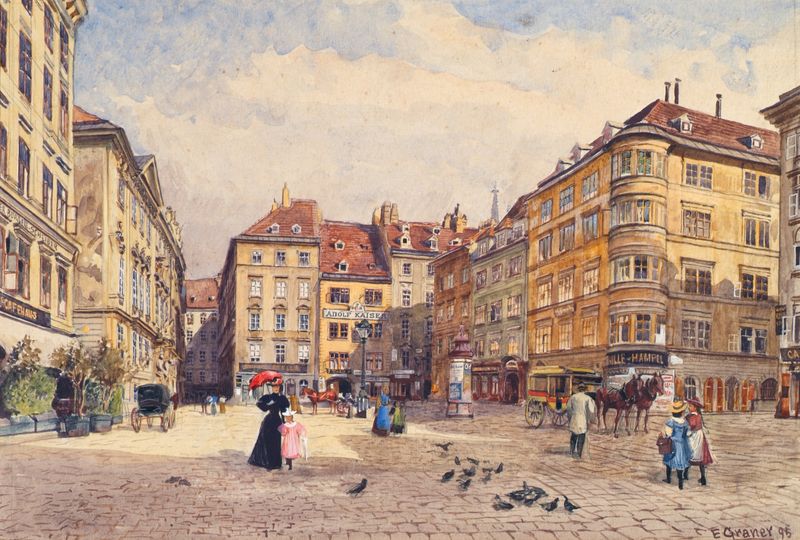
Der Judenplatz In Wien
Ernst Graner
More Architecture Art
Browse all →
The statue of Liberty
Frédéric Auguste Bartholdi

View of Houses in Delft, Known as ‘The Little Street’
Johannes Vermeer

View of Houses in Delft, Known as ‘The Little Street’
Johannes Vermeer

The Cathedral in Rouen. The portal, Grey Weather
Claude Monet

The yellow house
Vincent van Gogh

The Church in Auvers-sur-Oise, View from the Chevet
Vincent van Gogh