
The Golden Hour — History & Facts
Could a single brushstroke hold eternity? In The Golden Hour, a blaze of color and light captures the fleeting beauty of a moment that invites revelation and reflection. Focus on the horizon where the sun sinks toward the earth, casting a warm golden hue across the expansive landscape. Look closely at the way the sky bursts with oranges and pinks, blending seamlessly into the cool blues of dusk. The strokes are confident yet delicate, creating a sense of movement that pulls the viewer’s gaze toward the distant mountains, where shadows deepen and become more mysterious. As light dances across the canvas, contrasts emerge—between warmth and coolness, light and shadow, the ephemeral and the eternal.
The vivid hues evoke both a sense of peace and an underlying tension, reminding us of the transience of time. The soft ripples in the water reflect not just the brilliance above but also hint at the depth of what lies beneath, suggesting that beauty can exist even in the face of inevitable change. In 1875, Thomas Moran embarked on a journey through the American West, where he painted this piece as part of his exploration of its vast landscapes. At that time, the art world was in flux, with the rise of impressionism challenging traditional forms.
Moran’s work captured the sublime nature of the American wilderness, pushing the boundaries of color and light to evoke the spirit of a land still largely untouched.
More Artworks by Thomas Moran
Browse all →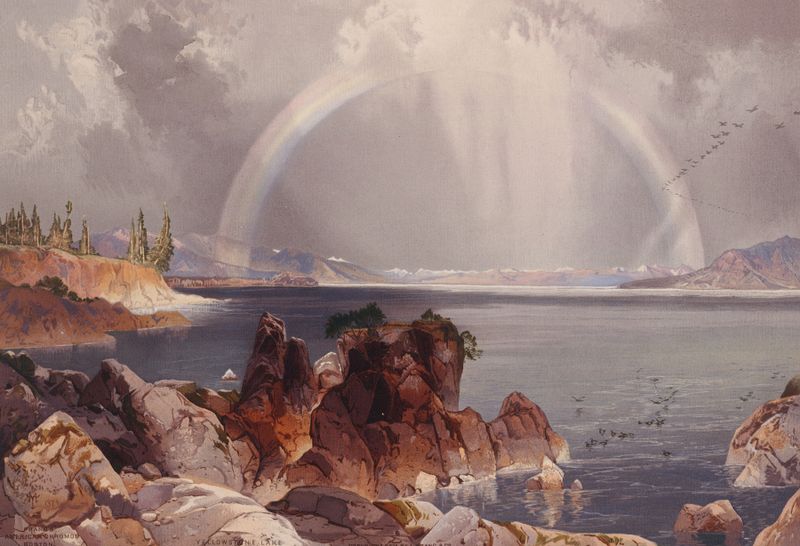
Yellowstone Lake
Thomas Moran

Grand Canyon of the Colorado River
Thomas Moran

Grand Canyon, Colorado River
Thomas Moran

The Towers of Tower Falls, Yellowstone
Thomas Moran
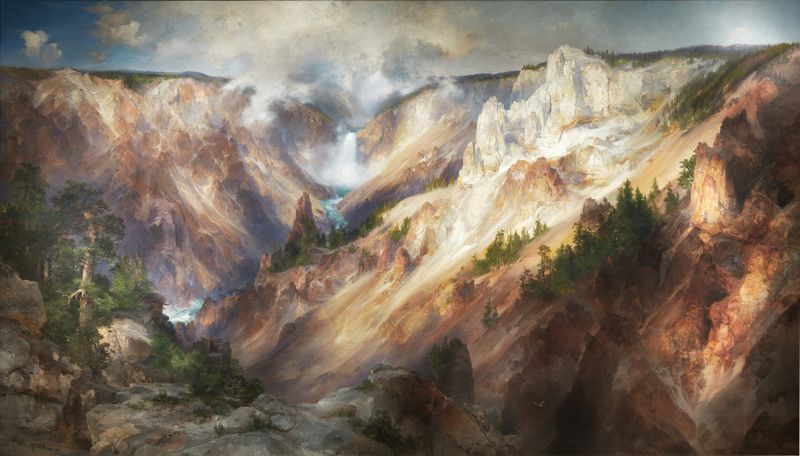
The Grand Canyon Of The Yellowstone
Thomas Moran

Mountain of the Holy Cross
Thomas Moran

Cliffs Of The Upper Colorado River, Wyoming Territory
Thomas Moran
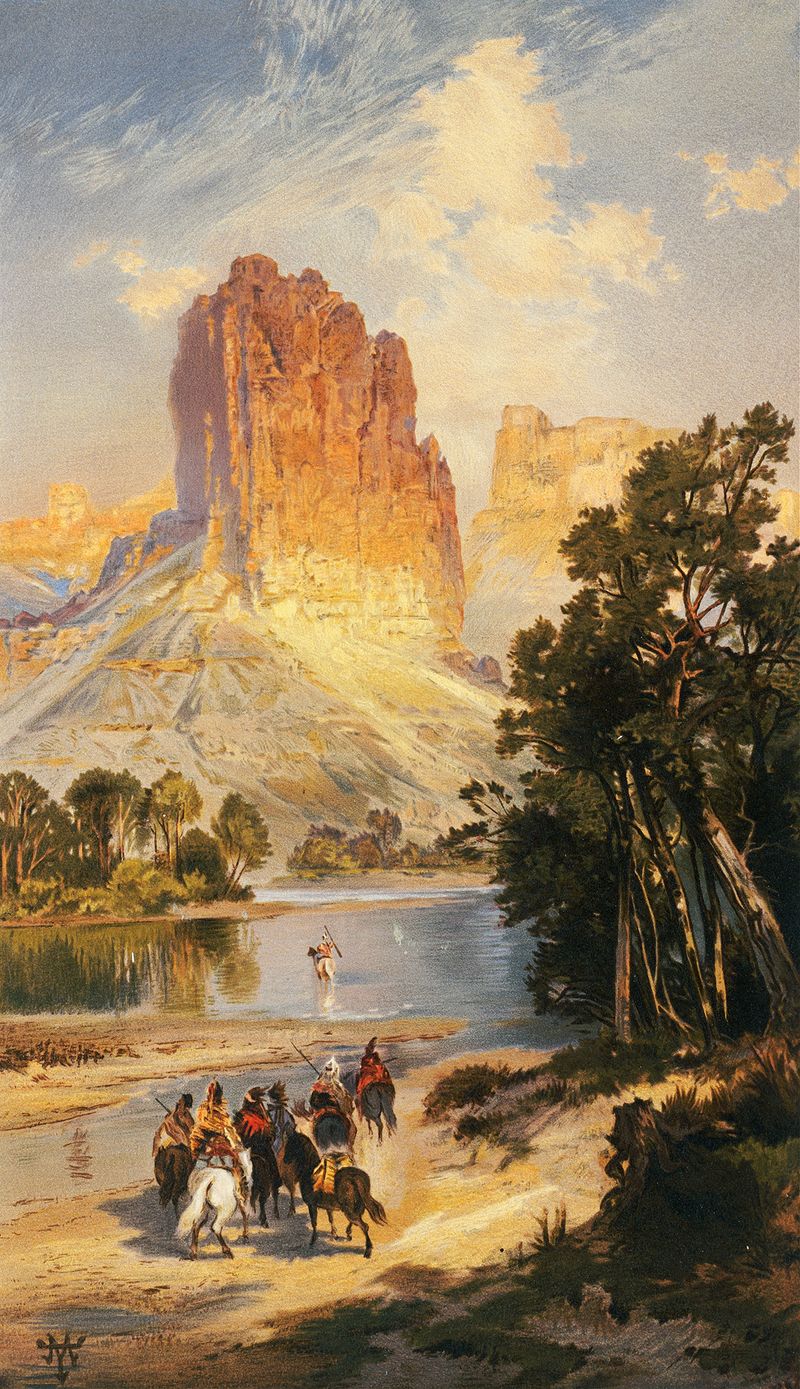
Cliffs of the Upper Colorado River, Wyoming Territory
Thomas Moran

Mammoth Hot Springs, Yellowstone
Thomas Moran
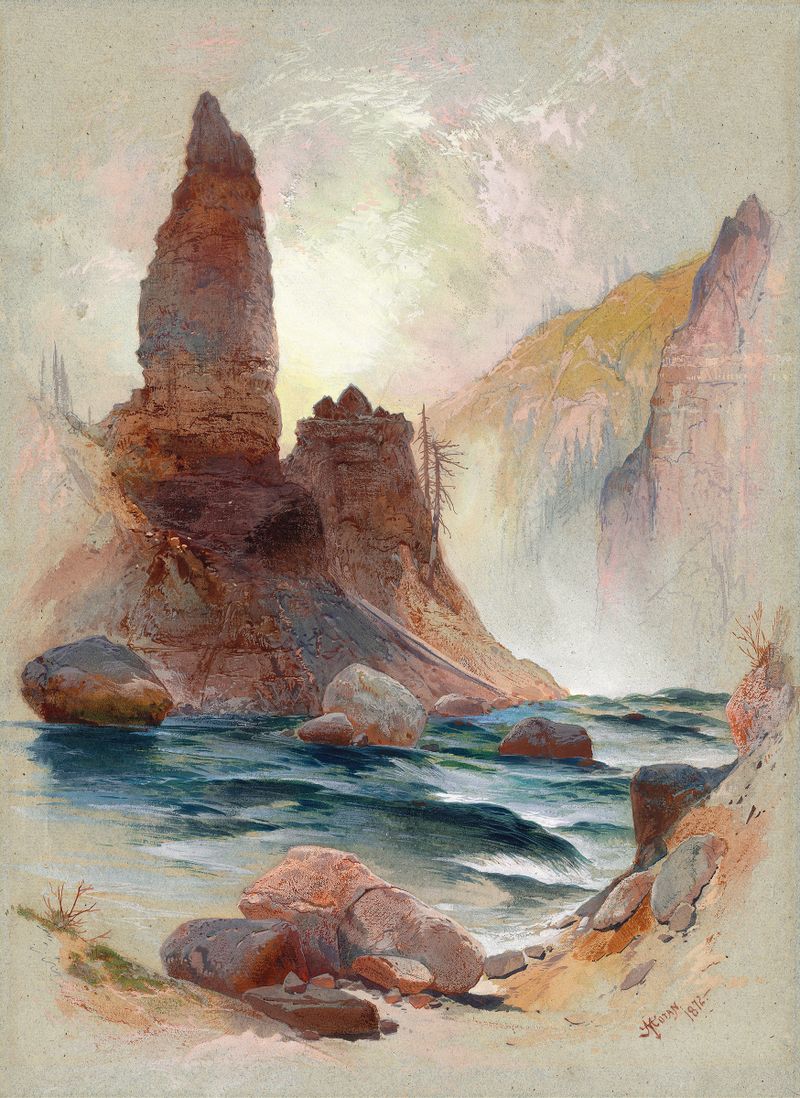
Tower at Tower Falls, Yellowstone
Thomas Moran





