
The Grand Canyon, Yellowstone — History & Facts
Could a single brushstroke hold eternity? In The Grand Canyon, Yellowstone, the vastness of nature's beauty and the weight of human solitude intertwine, evoking a profound sense of melancholy. Look to the foreground where jagged cliffs rise majestically, their rugged textures contrasting dramatically with the smooth, flowing river below. Notice how the warm hues of sunset — golds and deep oranges — bleed into the cooler blues and purples of the distant sky, creating a breathtaking palette that captures the transition from day to night. This interplay of light and shadow invites the viewer to wander through the layers of the landscape, emphasizing both depth and distance. Delve deeper, and you'll find hidden stories in the details.
The delicate strokes that outline the canyon’s crevices speak of time’s passage, while the tranquil water reflects the sky’s changing colors, symbolizing the fleeting nature of moments. The composition suggests a juxtaposition between permanence and impermanence — a grand expanse marked by stillness yet alive with the echoes of history, reminding us of both our insignificance and the majesty of nature. In 1875, Thomas Moran was inspired by his travels in the American West, a time when the nation was grappling with its identity and the allure of the natural world was coming into focus. Painted during a period when the American landscape was being celebrated and revered, this piece captures a pivotal moment in art history, as it played a significant role in advocating for the preservation of such vast wilderness.
More Artworks by Thomas Moran
Browse all →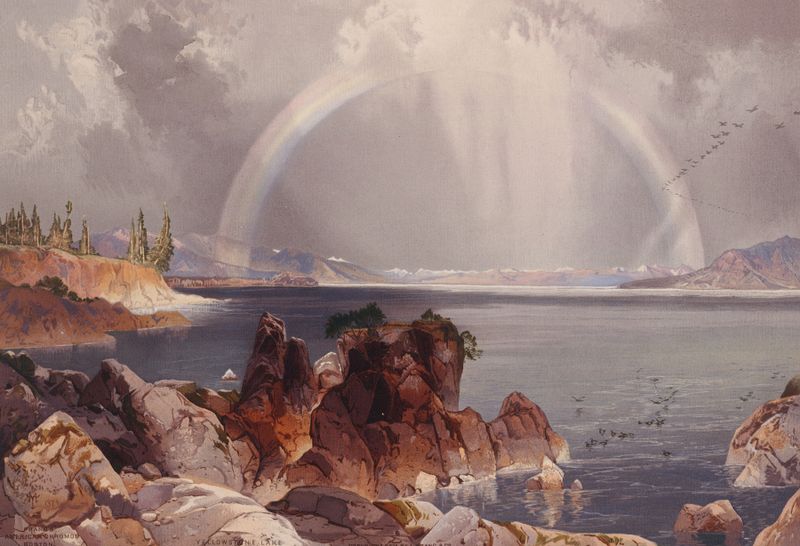
Yellowstone Lake
Thomas Moran

Grand Canyon of the Colorado River
Thomas Moran

Grand Canyon, Colorado River
Thomas Moran

The Towers of Tower Falls, Yellowstone
Thomas Moran
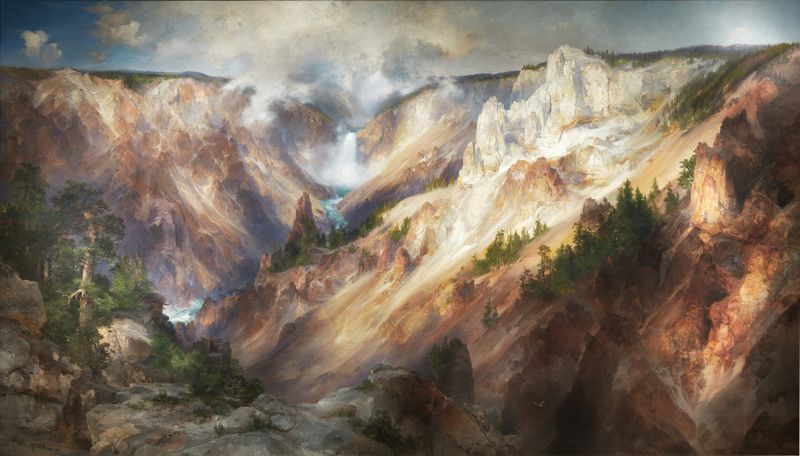
The Grand Canyon Of The Yellowstone
Thomas Moran

Mountain of the Holy Cross
Thomas Moran

Cliffs Of The Upper Colorado River, Wyoming Territory
Thomas Moran
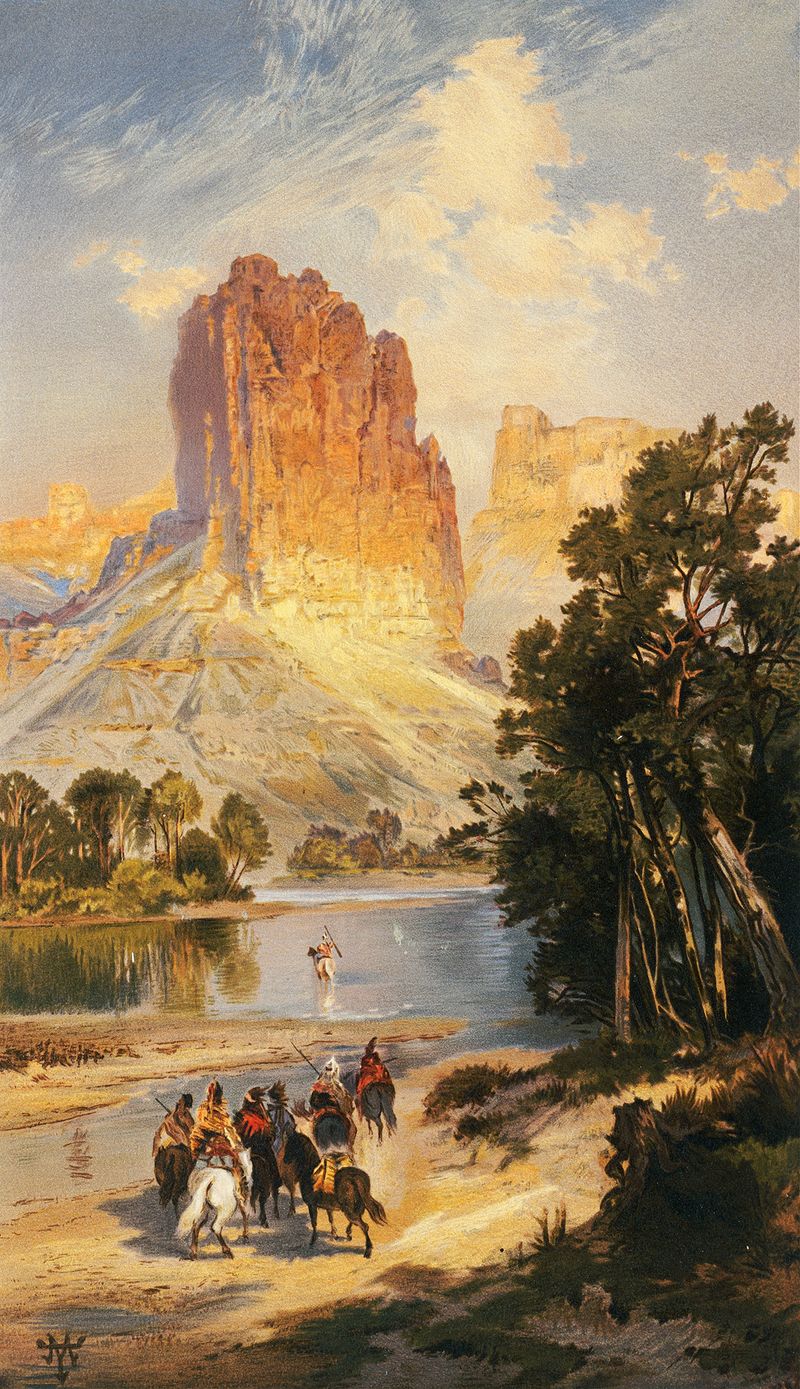
Cliffs of the Upper Colorado River, Wyoming Territory
Thomas Moran

Mammoth Hot Springs, Yellowstone
Thomas Moran
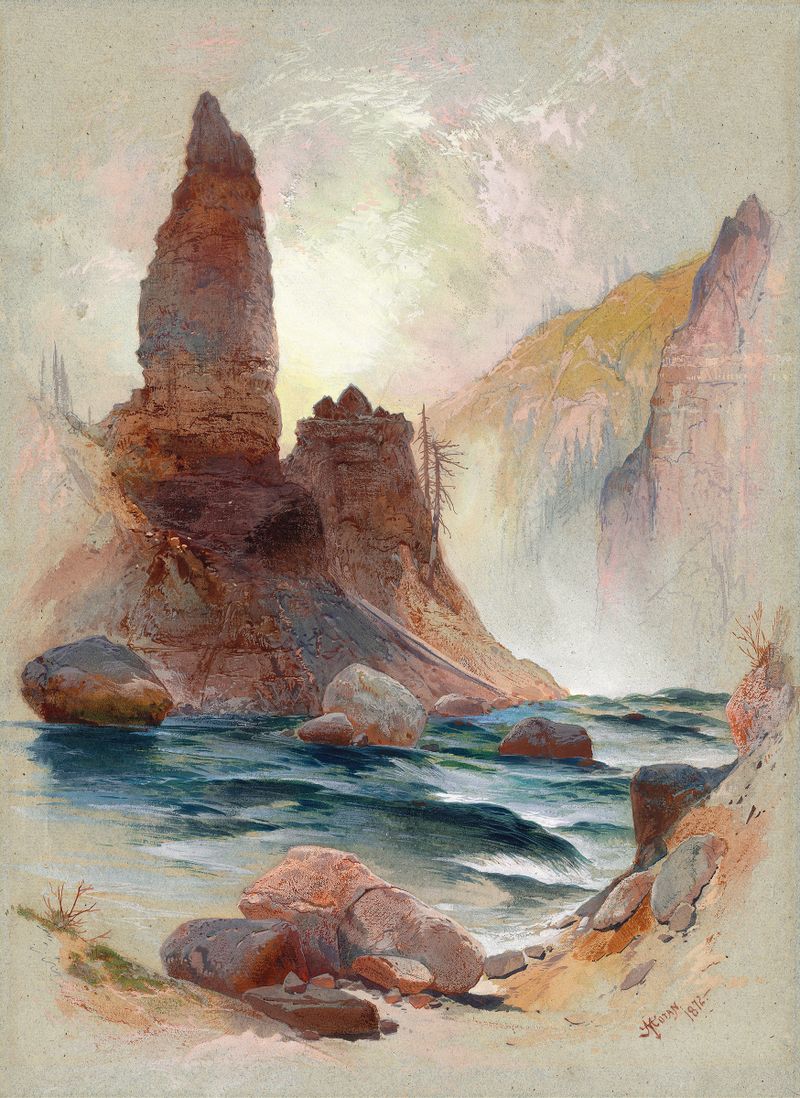
Tower at Tower Falls, Yellowstone
Thomas Moran





