
The Grand Canyon, Yellowstone — History & Facts
Could beauty survive in a century of chaos? In the hands of Thomas Moran, the answer is a resounding yes, as he captures the awe-inspiring grandeur of the natural world. Look closely at the horizon, where the sun spills its golden light across the canyon's rugged cliffs, illuminating the vivid oranges and blues that define the landscape. The sweeping brushstrokes create a sense of movement, drawing the eye into the undulating forms of the canyon and inviting you to explore its depths. Notice how the foreground elements, rich with texture, contrast against the ethereal sky, enhancing the sense of vastness and isolation that permeates the scene. Yet, amid this breathtaking beauty, there lies an underlying tension.
The raw power of nature is palpable, suggesting both sublimity and vulnerability. The interplay of light and shadow hints at the fleeting nature of such landscapes, a reminder of their fragility in the face of human intervention. Here, tranquility and turmoil coexist, revealing a complex narrative about the relationship between humanity and the environment. In 1875, during a period of burgeoning American exploration and nationalism, the artist sought to capture the unblemished landscapes of the West.
Moran's work was pivotal in promoting the conservation of national parks, especially as industrialization began to encroach upon these wild spaces. At this juncture, he not only painted The Grand Canyon, Yellowstone but also laid the groundwork for a movement that would strive to preserve the beauty he so passionately portrayed.
More Artworks by Thomas Moran
Browse all →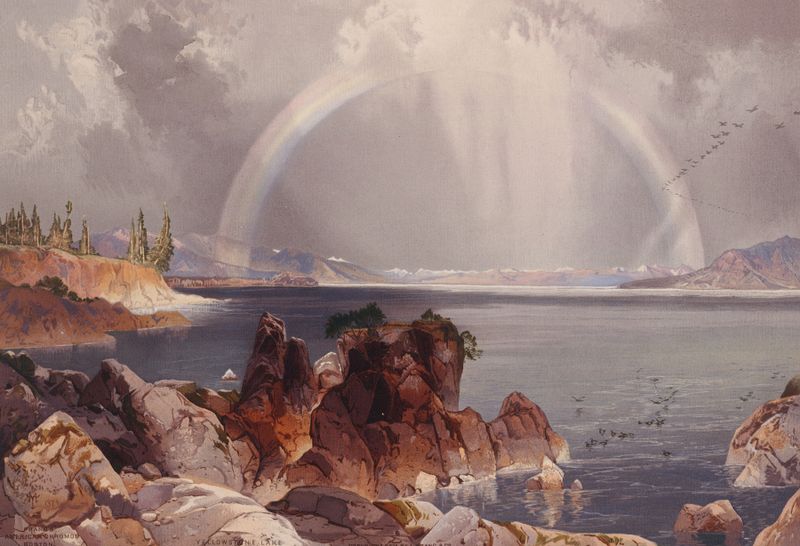
Yellowstone Lake
Thomas Moran

Grand Canyon of the Colorado River
Thomas Moran

Grand Canyon, Colorado River
Thomas Moran

The Towers of Tower Falls, Yellowstone
Thomas Moran
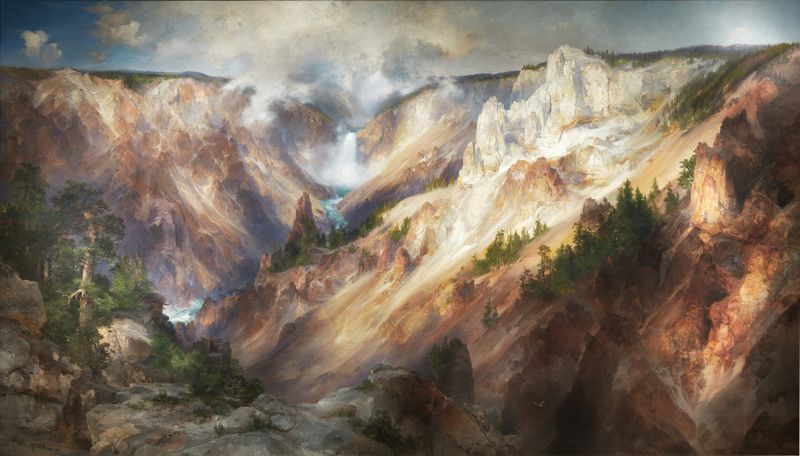
The Grand Canyon Of The Yellowstone
Thomas Moran

Mountain of the Holy Cross
Thomas Moran

Cliffs Of The Upper Colorado River, Wyoming Territory
Thomas Moran
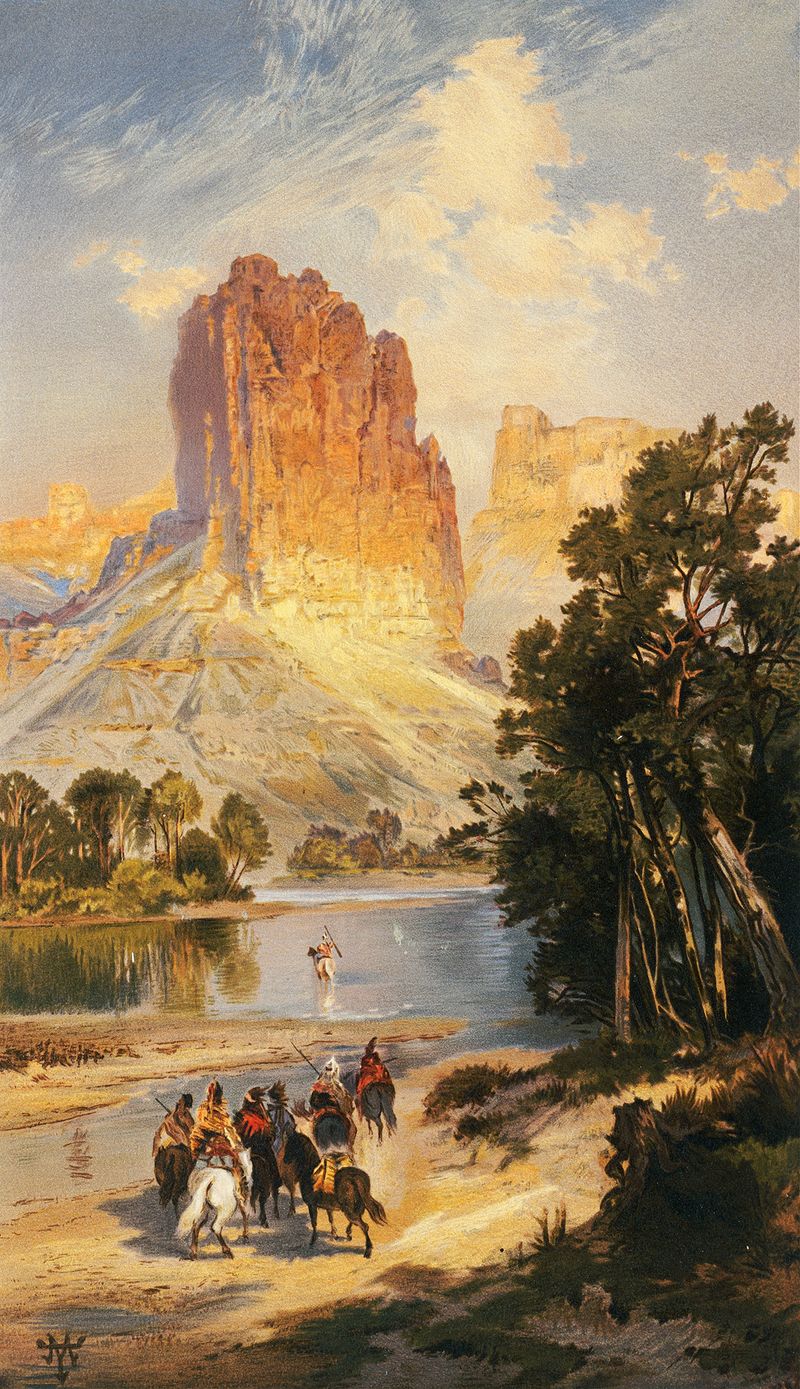
Cliffs of the Upper Colorado River, Wyoming Territory
Thomas Moran

Mammoth Hot Springs, Yellowstone
Thomas Moran
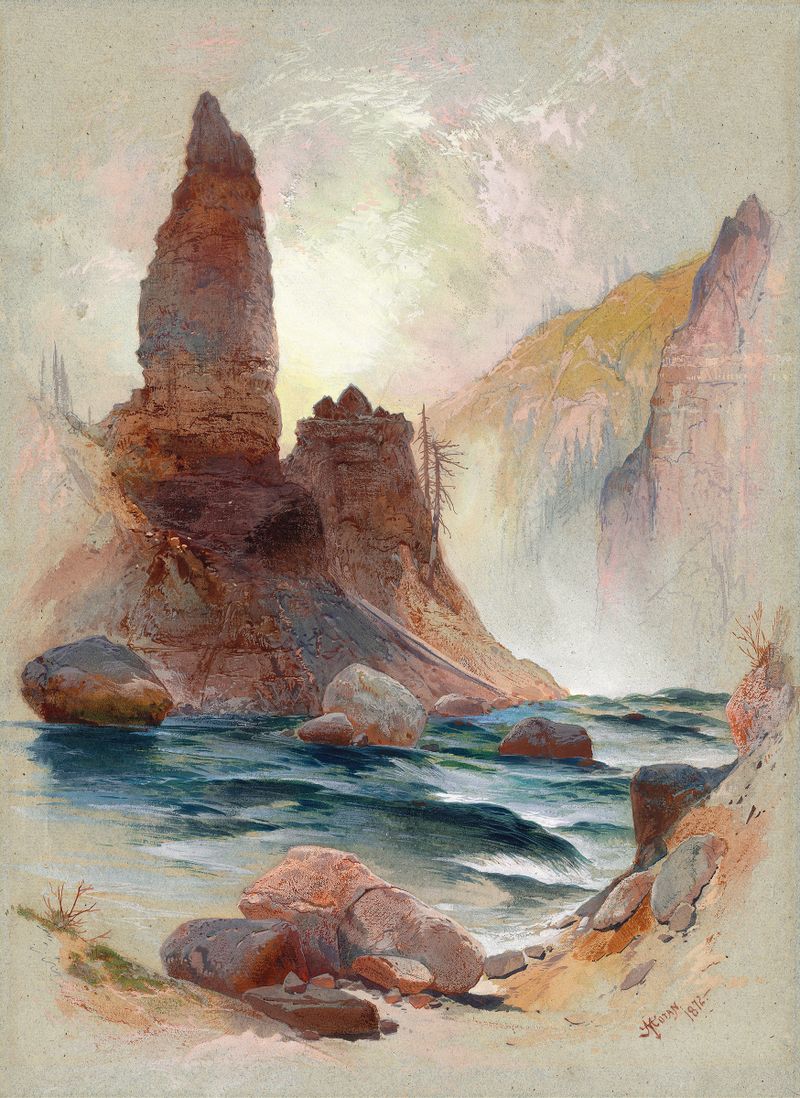
Tower at Tower Falls, Yellowstone
Thomas Moran





