
The Great Sacrifice. Setting for I.F.Stravinsky’s Ballet «Sacred Spring» — History & Facts
Did the painter know this moment would outlive them? A singular encounter—where chaos intertwines with the divine—captures the viewer's imagination, demanding contemplation of sacrifice and renewal. Look to the center of the canvas, where a group of figures, draped in ritualistic garb, converge in an intense tableau. The swirling lines and earthy palette evoke a primal energy that draws your eye. The smokey hues of ochre and deep reds contrast with the stark white of their ceremonial attire, illuminating their solemn expressions.
Notice how the light plays upon the figures’ faces, revealing determination laced with desperation, as if each brushstroke pulses with a heartbeat of the earth itself. In the background, a towering figure looms—part human, part elemental—symbolizing the chaos inherent in creation. The juxtaposition of the serene faces and the tumultuous landscape hints at a collective struggle against nature's fury. It suggests the inevitable cycle of destruction and rebirth, an exploration of humanity's eternal conflict with its environment and the sacrifices demanded by life itself. Nicholas Roerich painted this work in 1910, during a period marked by artistic experimentation and a revival of interest in folk themes.
Living in Russia, he immersed himself in the spiritual and cultural heritage of his homeland. At this time, the world was on the brink of great change, and Roerich sought to convey the profound connections between humanity and the universe, reflecting the chaotic winds of revolution swirling around him.
More Artworks by Nicholas Roerich
Browse all →
Himalayas, Sikkim
Nicholas Roerich
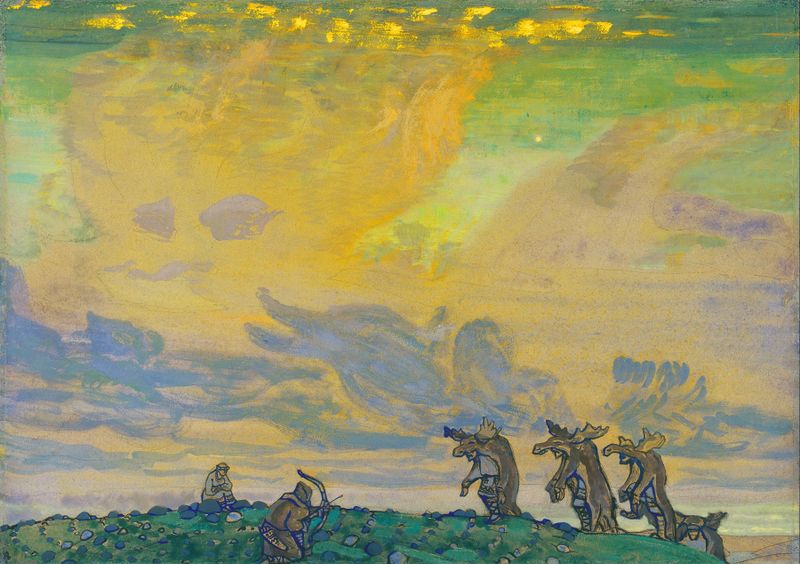
The Great Sacrifice. Setting for I.F.Stravinsky’s Ballet Sacred Spring
Nicholas Roerich
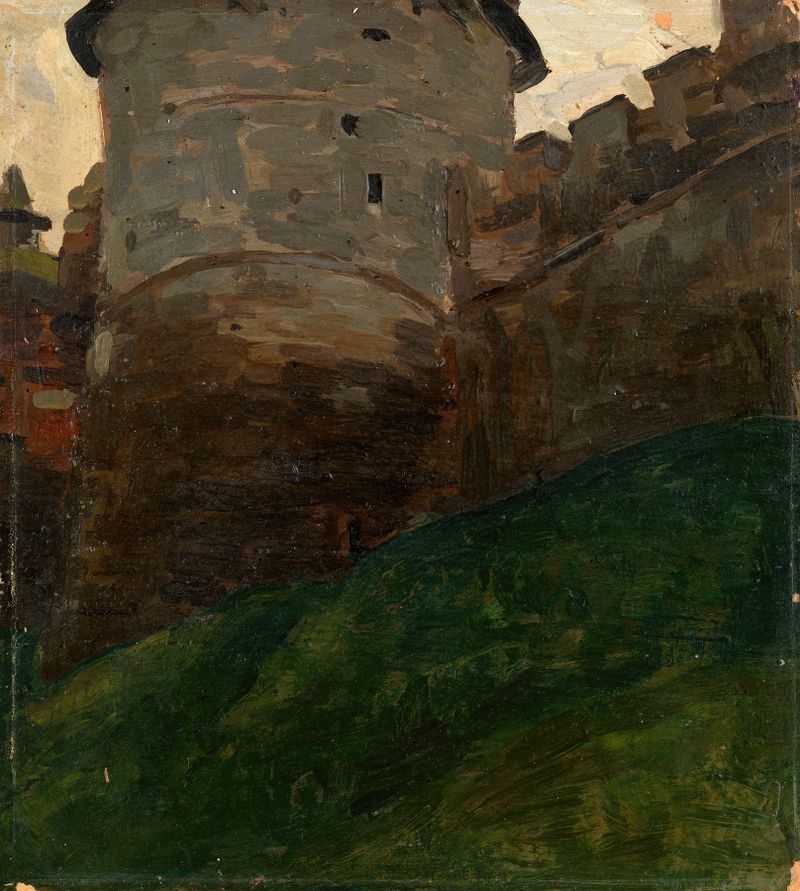
The Kremlin Tower of Nizhny Novgorod
Nicholas Roerich

Himalayas from Ting-kye Dzong
Nicholas Roerich
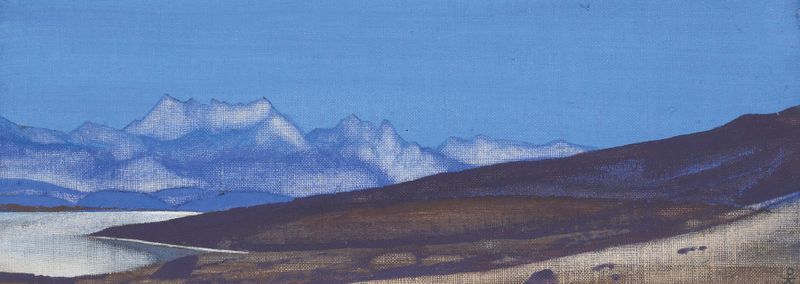
Mongolia
Nicholas Roerich
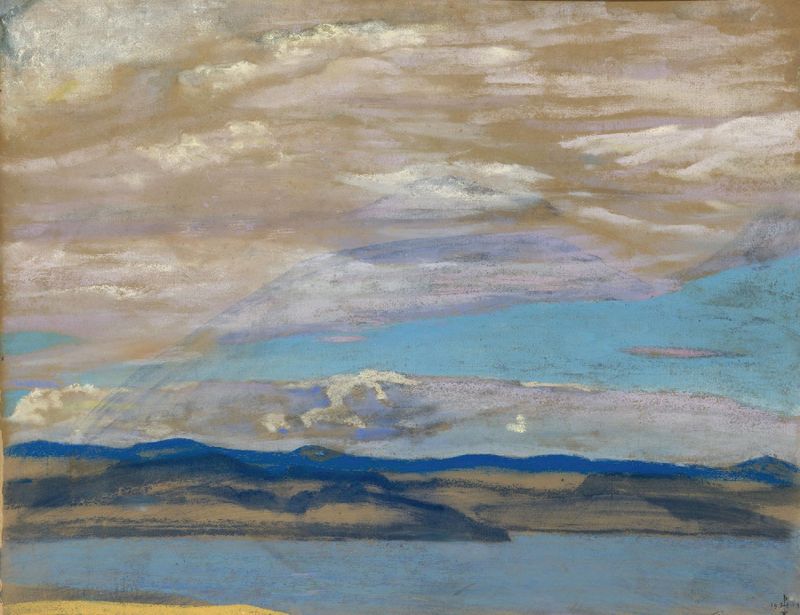
Islands
Nicholas Roerich

Depsang plains
Nicholas Roerich

Nag Lake
Nicholas Roerich
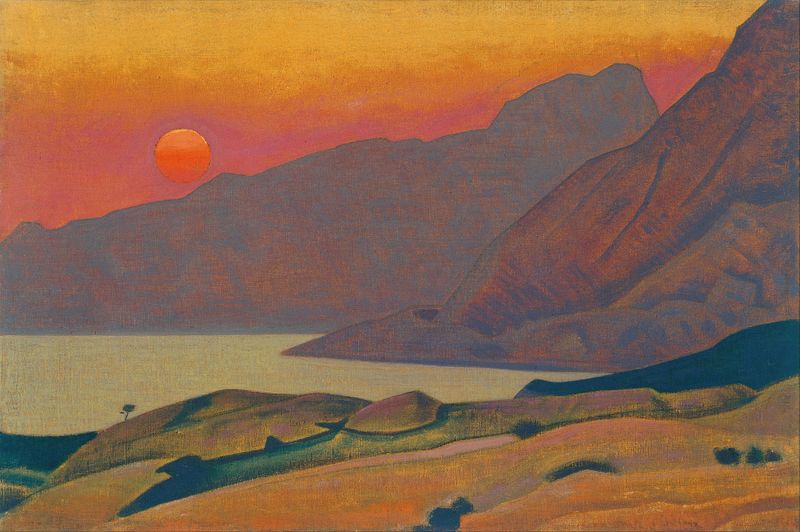
Monhegan. Maine
Nicholas Roerich

Trees by a Lake
Nicholas Roerich





