
The Great Salt Lake of Utah — History & Facts
Could beauty survive in a century of chaos? In The Great Salt Lake of Utah, the landscape answers with a resounding, yet haunting, resplendence that captures both the awe and terror of nature’s vastness. Look to the center of the canvas where the shimmering waters of the lake stretch endlessly, reflecting a gradient of blues and violets that wash over the horizon. Notice how the sunlight spills softly across the scene, casting elongated shadows that dance upon the rugged mountains in the background. The artist skillfully employs bold brushstrokes to create texture, drawing the eye to the interplay between the calm water and the jagged peaks, evoking a sense of serene isolation amidst the wild grandeur. Yet, amidst this visual feast lies an undercurrent of fear, as the dramatic landscape hints at nature’s unpredictability.
The juxtaposition of the tranquil, mirror-like surface and the formidable mountains suggests a delicate balance, as if beauty could shatter at any moment. The muted tones suggest a lurking melancholy, prompting reflections on the transient nature of life and the fragility of paradise. Here, the landscape becomes a metaphor for both awe and apprehension, a reminder of what lies beneath the surface. In 1875, Moran painted this work during a period of great exploration and discovery in America.
He was deeply influenced by the romantic landscape tradition and the movement toward capturing the sublime in nature. This was a time of expanding frontiers, as well as increasing tensions between nature and encroaching civilization, which would shape the artist’s perspective and thematic choices throughout his career.
More Artworks by Thomas Moran
Browse all →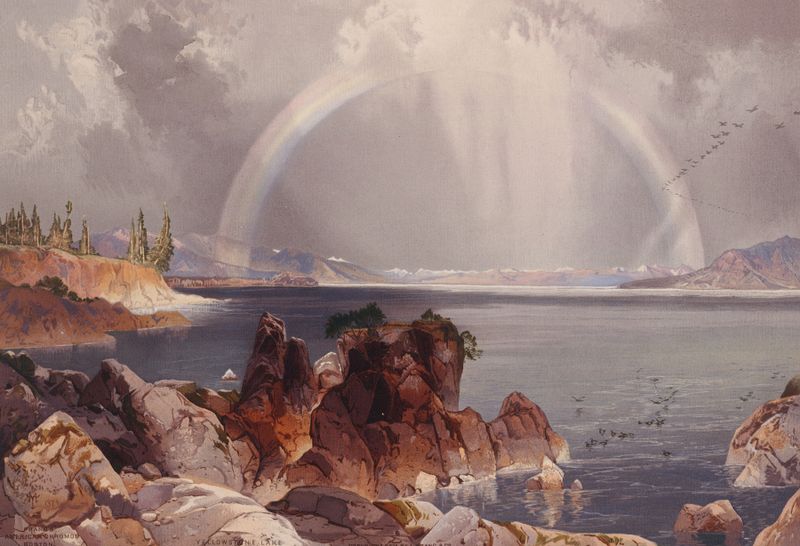
Yellowstone Lake
Thomas Moran

Grand Canyon of the Colorado River
Thomas Moran

Grand Canyon, Colorado River
Thomas Moran

The Towers of Tower Falls, Yellowstone
Thomas Moran
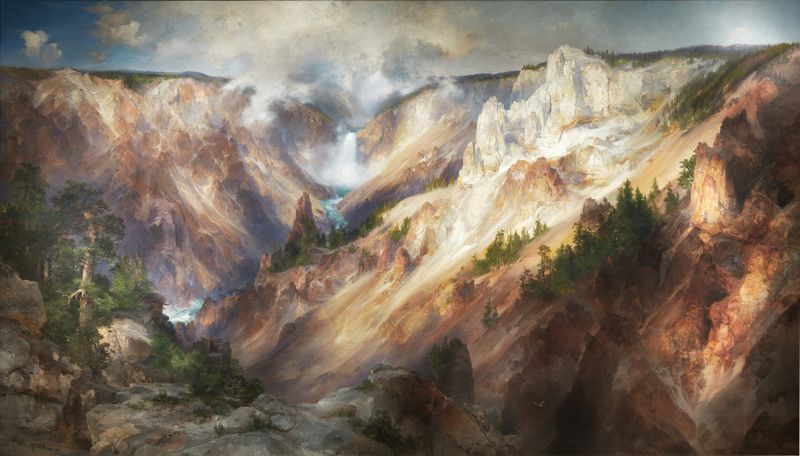
The Grand Canyon Of The Yellowstone
Thomas Moran

Mountain of the Holy Cross
Thomas Moran

Cliffs Of The Upper Colorado River, Wyoming Territory
Thomas Moran
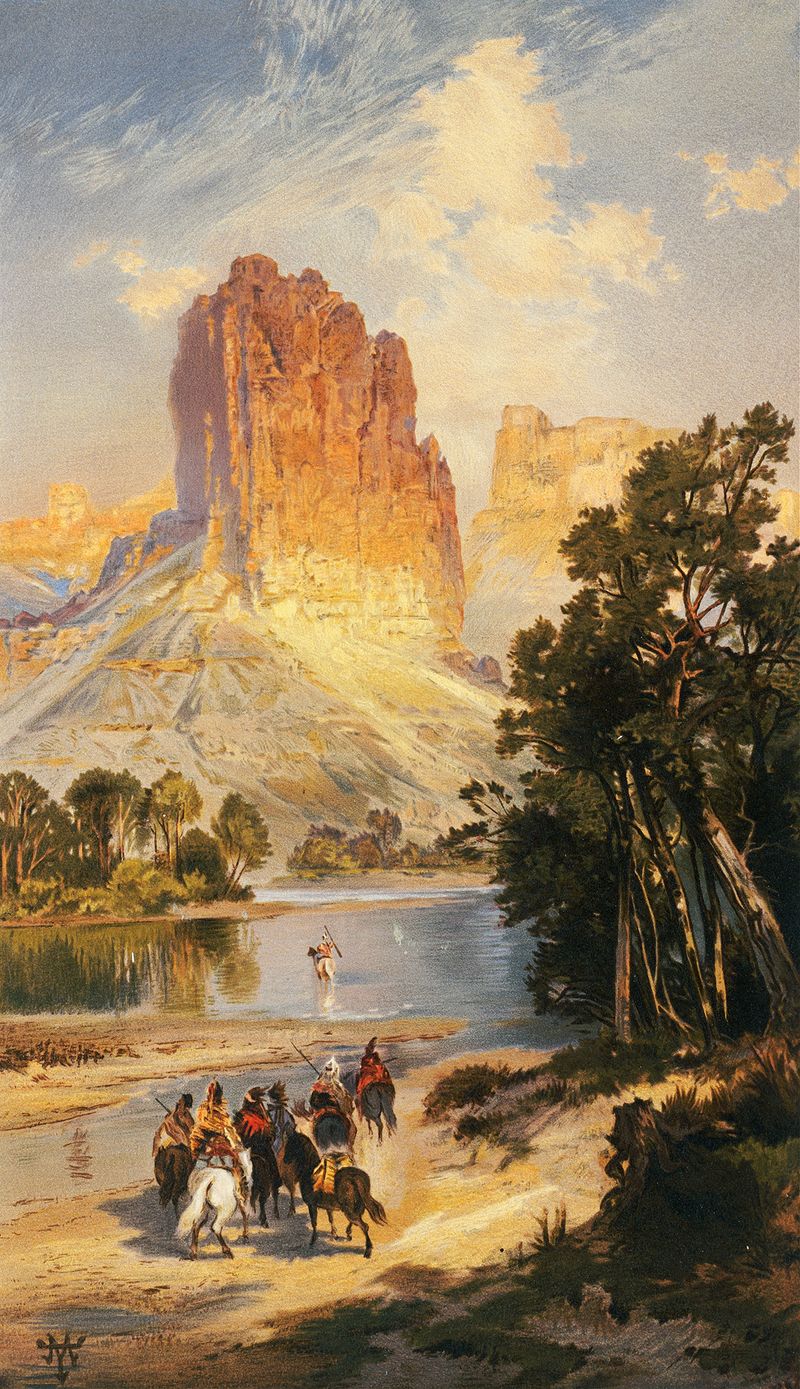
Cliffs of the Upper Colorado River, Wyoming Territory
Thomas Moran

Mammoth Hot Springs, Yellowstone
Thomas Moran
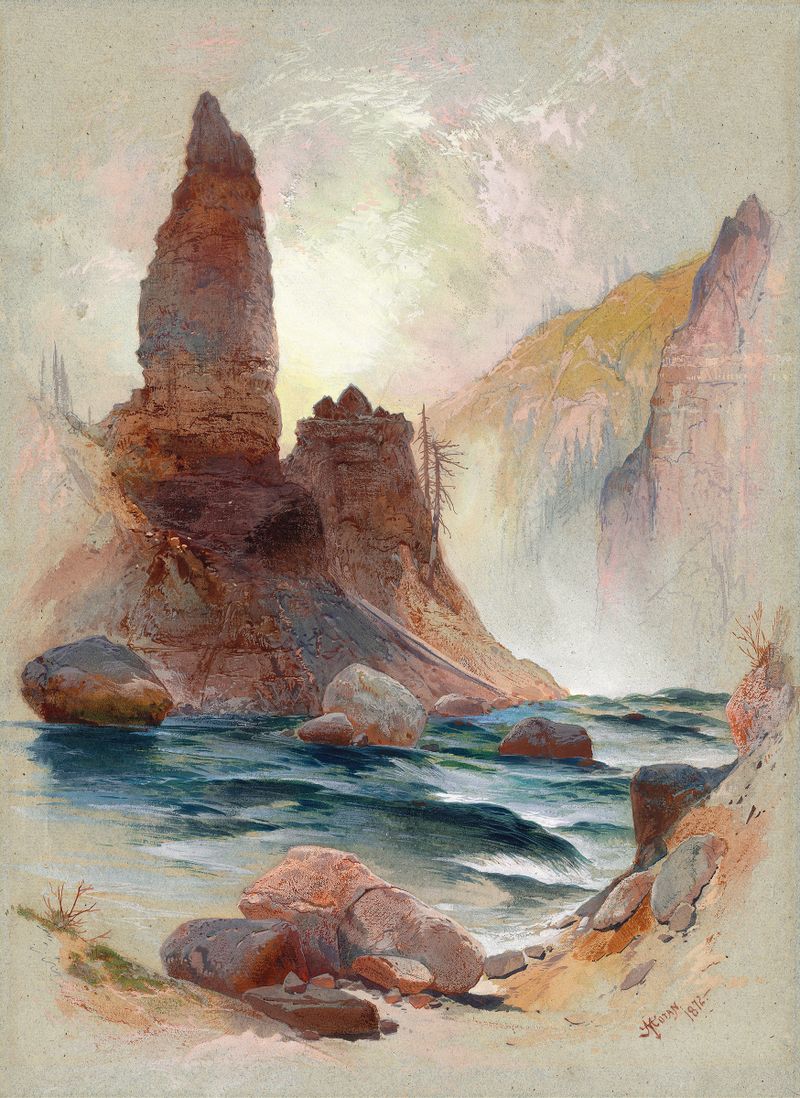
Tower at Tower Falls, Yellowstone
Thomas Moran





