
The Grey Bodice — History & Facts
Can paint confess what words never could? In The Grey Bodice, a soft tranquility envelops the viewer, inviting them into a world where silence speaks louder than language. Look to the center of the canvas; a woman stands gracefully, her figure enveloped in a flowing grey bodice that hints at both modesty and elegance. The soft hues of her attire contrast beautifully with the warm, dappled light filtering through the trees, creating an intimate glow around her. Notice how the artist has captured the delicate interplay between shadow and light on her tranquil face, drawing attention to her wise, contemplative gaze—suggesting deep thoughts that linger beneath the surface. Beneath this serene facade, tensions emerge in the juxtaposition of the woman's calm demeanor and the wild, untamed nature surrounding her.
The lush greens of the foliage seem to vibrate with energy, contrasting with the stillness she embodies. The choice of grey in her bodice evokes both sophistication and a sense of solitude, underscoring the emotional depth of her silent story. This artwork hints at a narrative of inner strength and vulnerability, encouraging viewers to ponder the quiet battles that reside within. In 1898, during a period of artistic experimentation and the rise of American Impressionism, the artist painted this piece while working in Connecticut.
Weir was influenced by nature and the tranquility it provided, reflecting a moment in his life when he sought solace from the rapidly changing world around him. This work stands as a testament to his ability to blend the harmony of nature with human emotion, capturing a fleeting yet profound moment in time.
More Artworks by Julian Alden Weir
Browse all →
My Back Yard no. 1
Julian Alden Weir
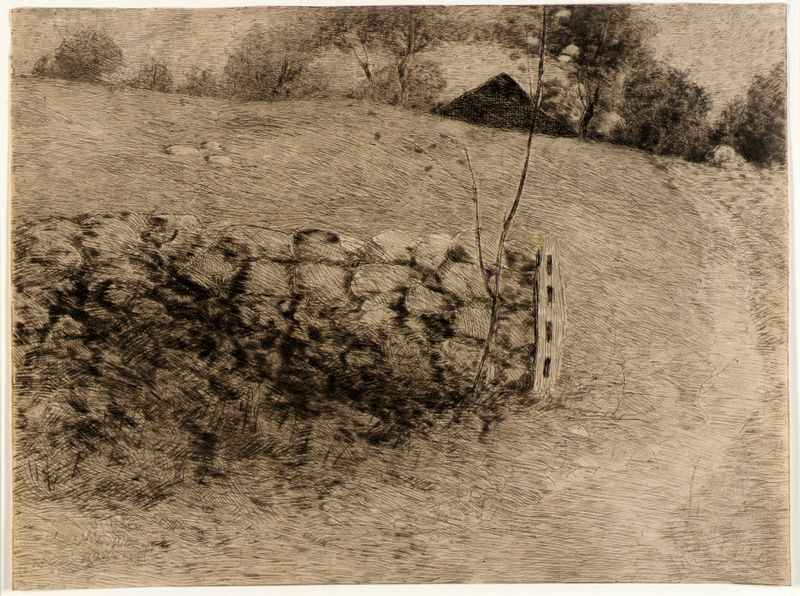
The Barn Lot
Julian Alden Weir

The Webb Farm
Julian Alden Weir
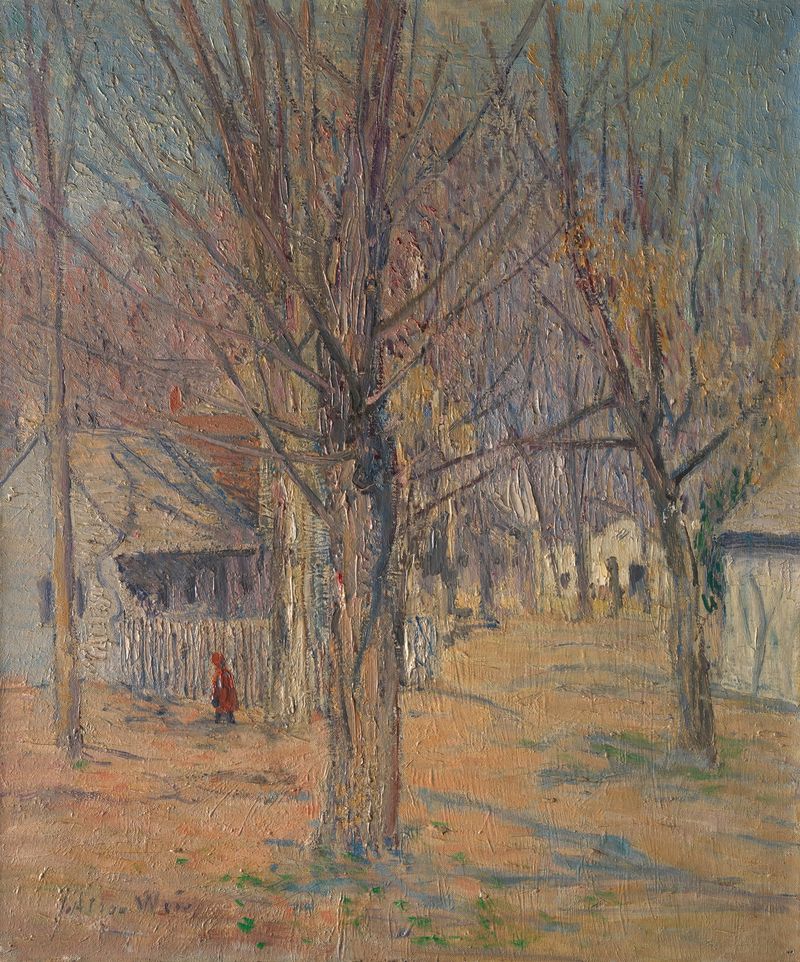
Connecticut Village (Going to School)
Julian Alden Weir

The Stone Bridge
Julian Alden Weir

The Webb Farm 2
Julian Alden Weir
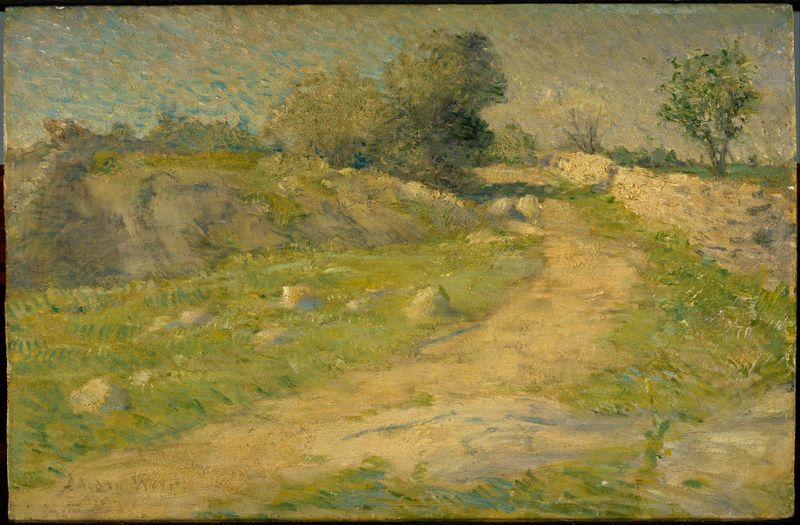
The Lane
Julian Alden Weir
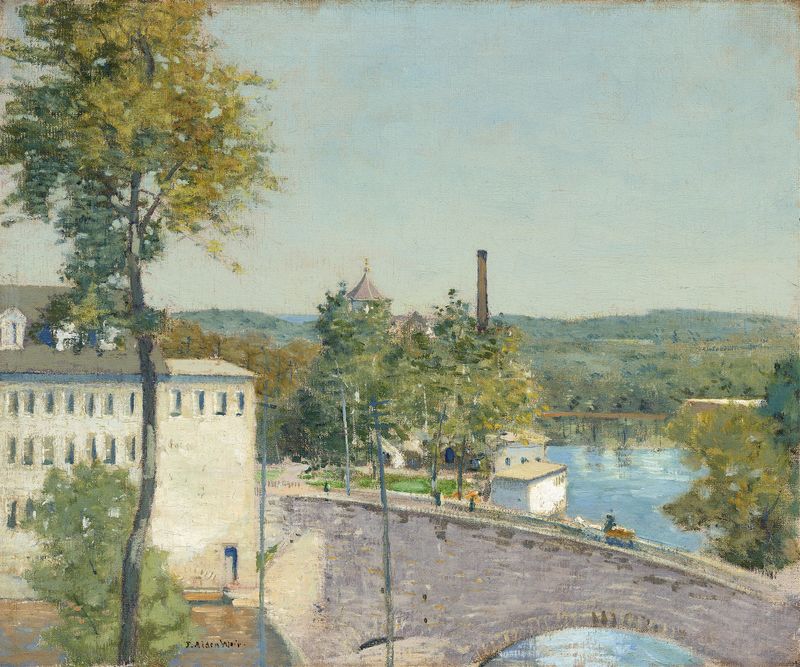
U.S. Thread Company Mills,Willimantic,Connecticut
Julian Alden Weir

Neighboring Farm
Julian Alden Weir

Coon Alley
Julian Alden Weir





