
The ,Haute Barrière‘ outside Ostend — History & Facts
Where does light end, and longing begin? This question lingers in the stillness captured by The Haute Barrière as a melancholic veil enfolds the viewer in its embrace. Look to the left at the stark barrier, its wooden slats painted in muted hues of brown and gray. The light plays subtly across the surface, revealing textures that speak of age and wear. Notice how Ensor employs a cool palette, with soft blues and greens that deepen the sense of isolation, drawing the eye toward the horizon where the sea meets the sky in a wash of indistinct color.
The composition is carefully balanced, yet the emptiness invites a pensive exploration. Delve deeper into the juxtaposition of the barrier and the vast expanse beyond it. This divide represents more than a physical boundary; it embodies the emotional distance between aspiration and reality. The overlapping layers of paint reflect the complexity of human longing—the desire to transcend limitations lingers in the air, mingling with the salt of the sea breeze.
It is a moment suspended in time, where the longing for connection collides with the solitude of existence. In 1925, Ensor painted this piece while living in Ostend, Belgium, a city that had undergone significant changes post-World War I. With a deep sense of nostalgia permeating the art world, he found himself at a crossroads, reflecting on personal and collective loss. This work, infused with his characteristic blend of melancholy and introspection, encapsulates not only his artistic evolution but also the broader existential questions of his time.
More Artworks by James Ensor
Browse all →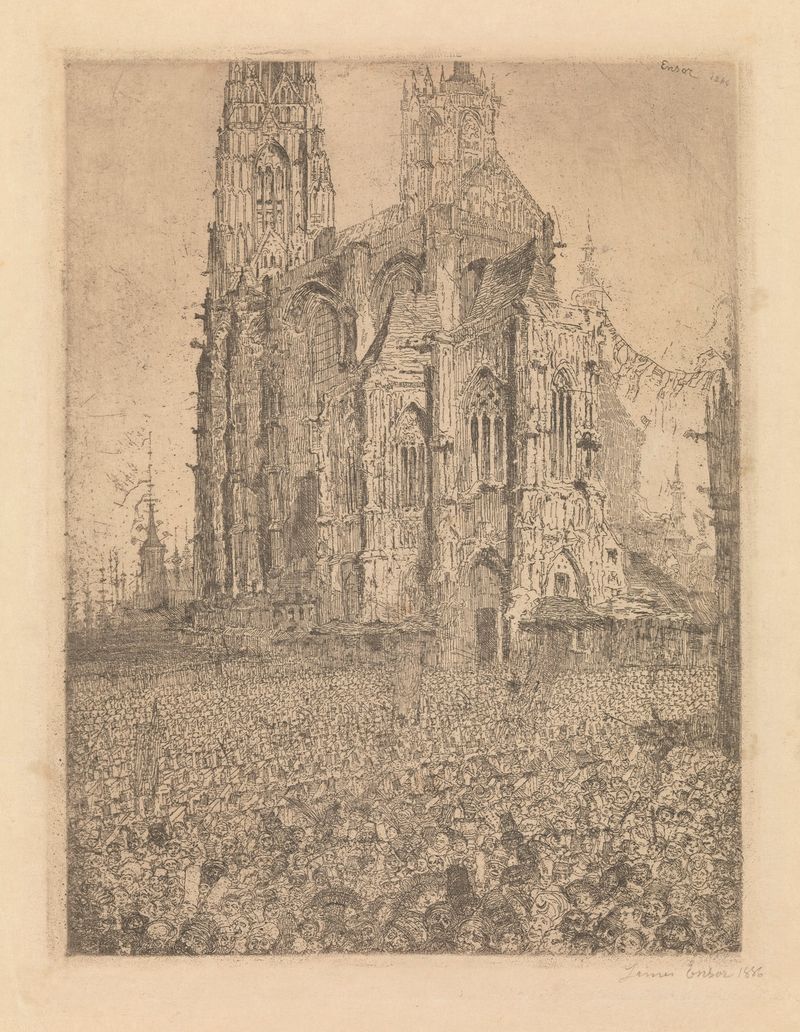
The Cathedral
James Ensor
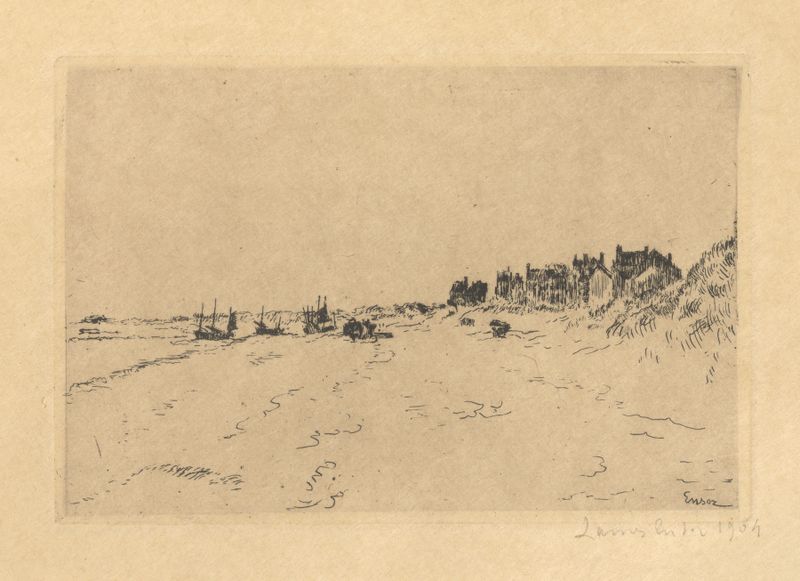
Het strand van De Panne
James Ensor
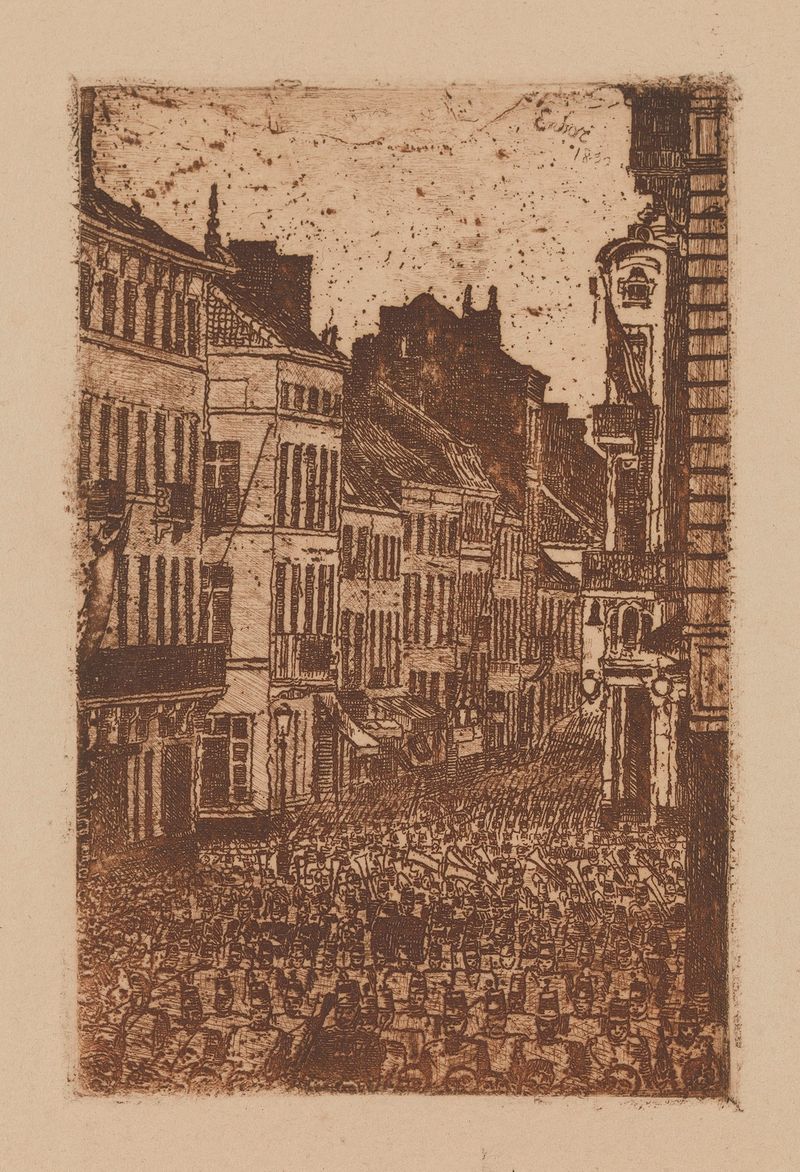
The Music in the rue de Flandre, Ostend
James Ensor
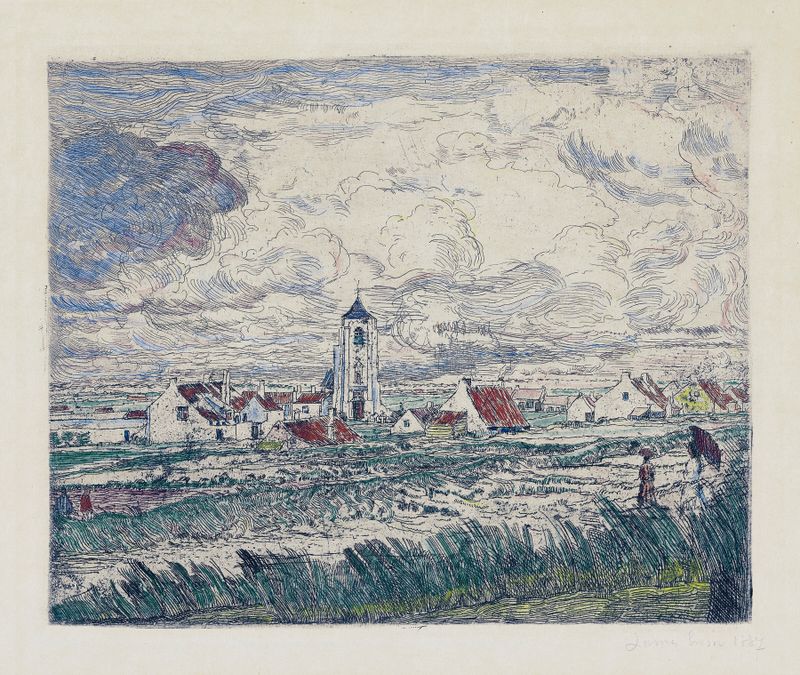
Grande vue de Mariakerke
James Ensor
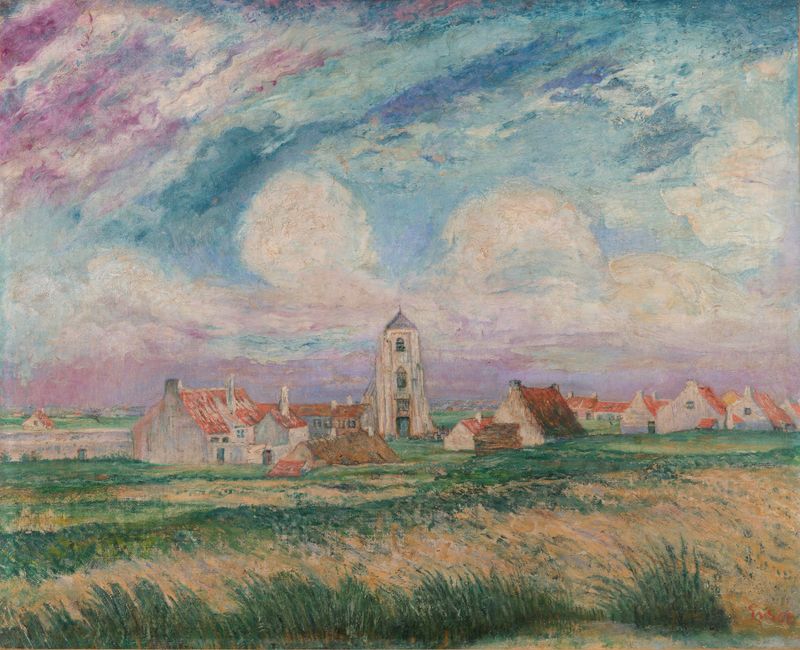
View of Mariakerke
James Ensor
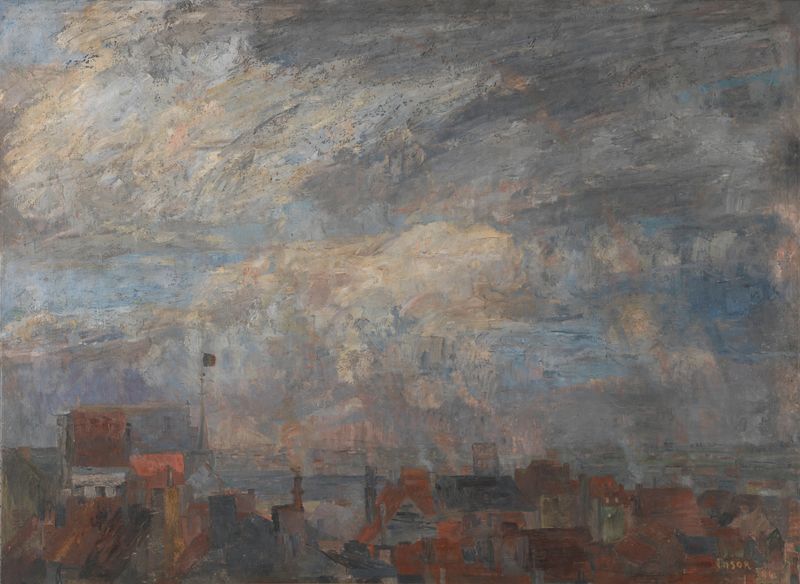
The Rooftops of Ostend
James Ensor
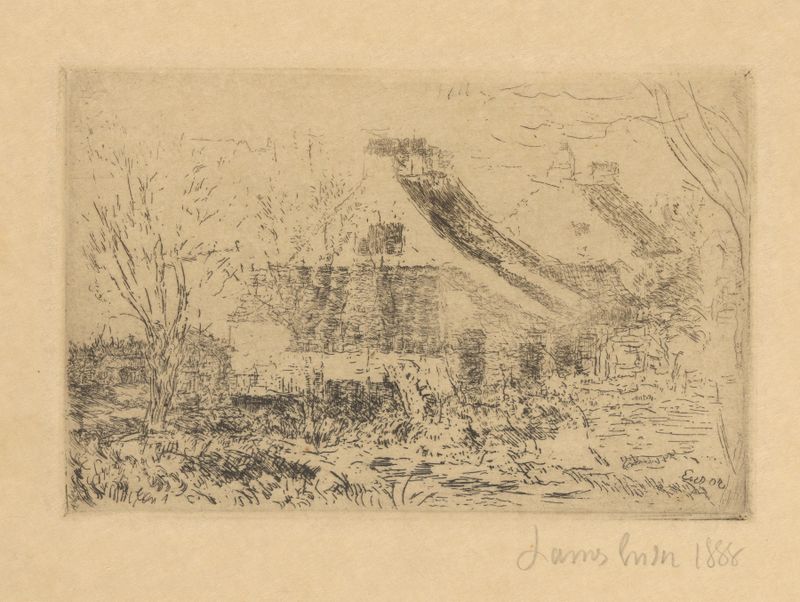
Huisjes in Mariakerke
James Ensor
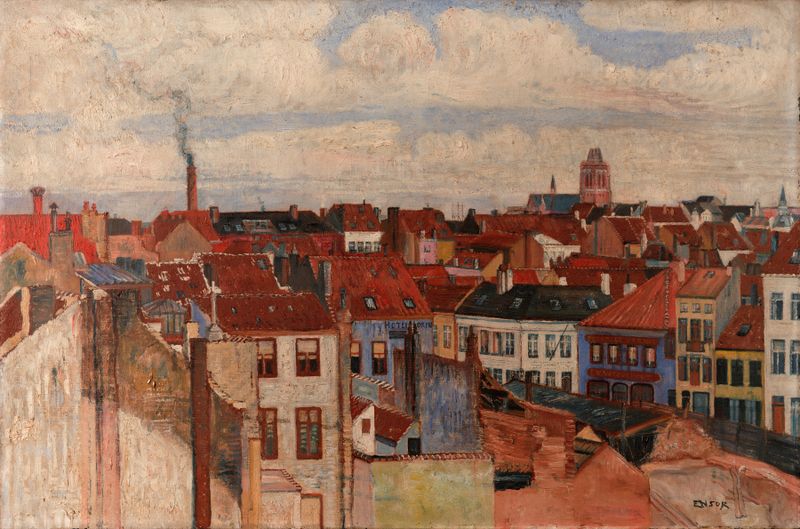
The rooftops of Ostend
James Ensor
The Music in the rue de Flandre, Ostend
James Ensor
Verovering van een vreemde stad
James Ensor





