
The Haystacks — History & Facts
When did color learn to lie? In a world defined by shadows and light, the truth of nature often lies cloaked within layers of vibrant hue and texture. Here, the canvas vibrates with a sincere faith in the beauty of the everyday, inviting a deeper contemplation of its honest essence. Look closely at the luminous hues that form the haystacks, their golden and earthy tones creating a harmony that draws the eye. Notice how the strokes vary in intensity, capturing the dappled sunlight that dances across the surface.
The composition breathes with a soft rhythm, where each stack stands in gentle contrast to the lush, green backdrop, enveloped in a tranquil embrace of nature. The painter's technique, with its loose brushwork, suggests a fleeting moment in time, inviting you to linger and explore. Beneath the surface, the work reveals a tension between the serene beauty of pastoral life and the impermanence of nature itself. The haystacks, while representing agricultural abundance, also serve as a reminder of the cycles of life and decay.
This duality captures an emotional weight, suggesting faith not only in the lushness of the earth but in the inevitable passage of time. The vibrant colors almost echo a prayer, a celebration of existence amidst the transience. Created between 1887 and 1893, this piece emerged during a significant period for the artist, who was deeply influenced by the Impressionist movement. Working in Connecticut, Weir sought to convey the interplay of light and color in his landscapes.
At this time, he was embracing a new artistic freedom, moving away from strict realism to explore the emotional resonance of scenes from his surrounding world, reflecting broader shifts in the art community towards impressionistic expression.
More Artworks by Julian Alden Weir
Browse all →
My Back Yard no. 1
Julian Alden Weir
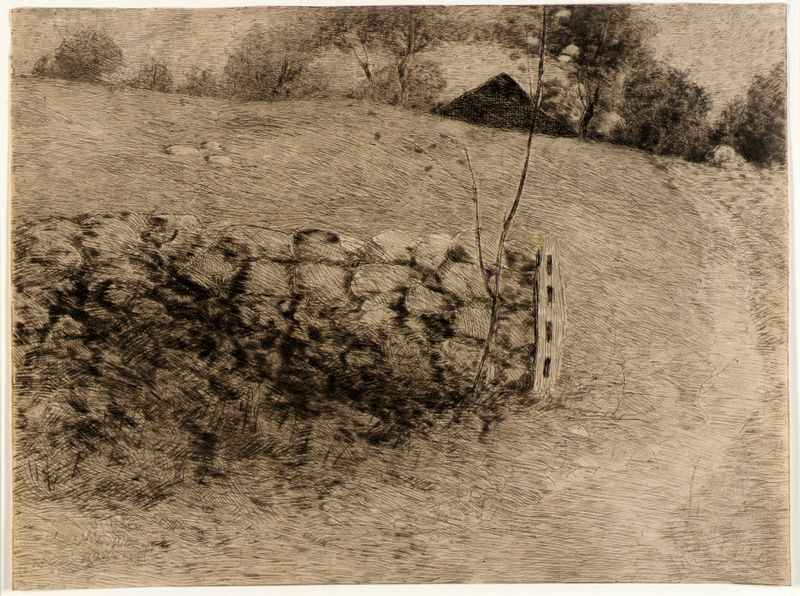
The Barn Lot
Julian Alden Weir

The Webb Farm
Julian Alden Weir
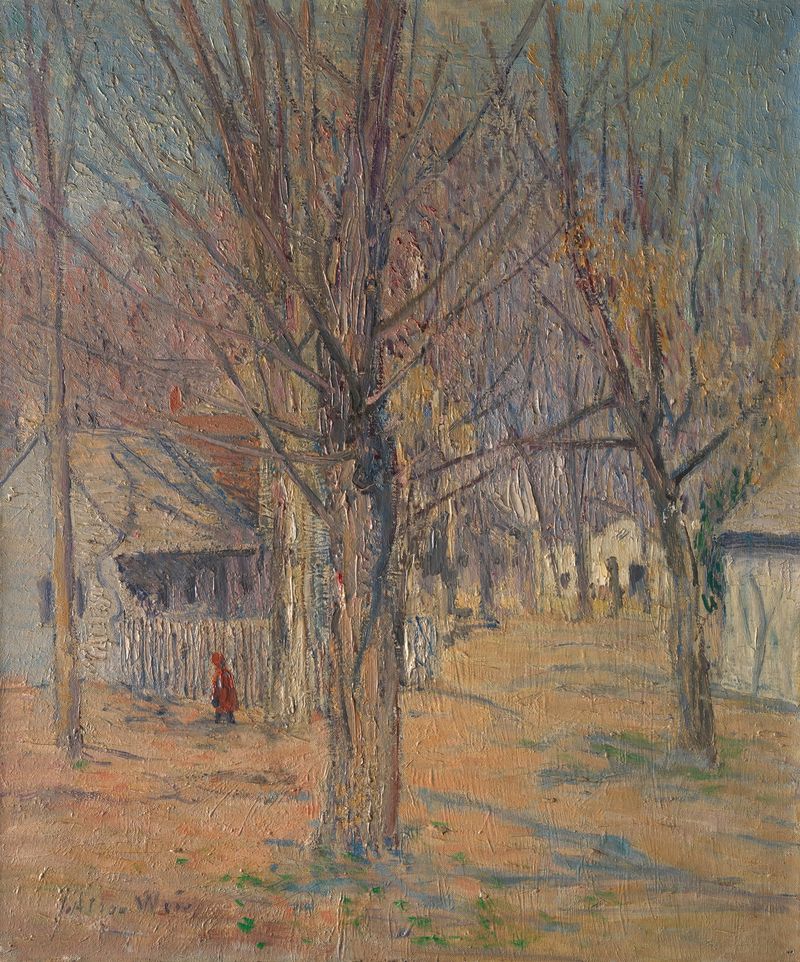
Connecticut Village (Going to School)
Julian Alden Weir

The Stone Bridge
Julian Alden Weir

The Webb Farm 2
Julian Alden Weir
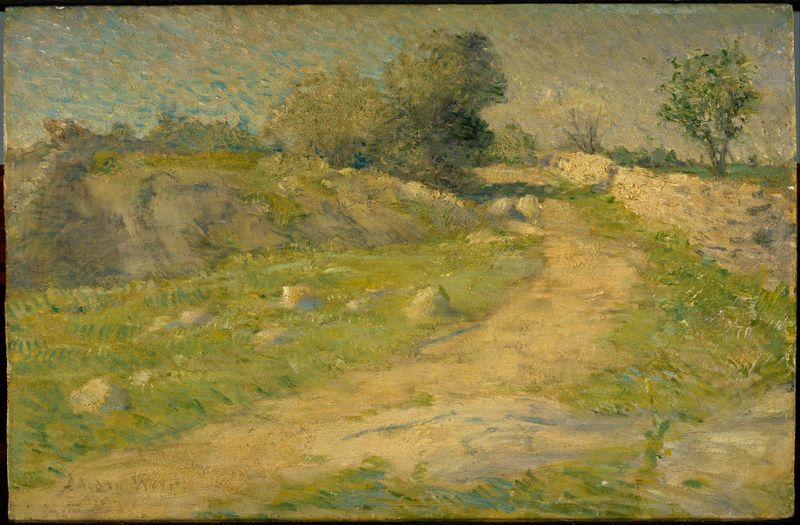
The Lane
Julian Alden Weir
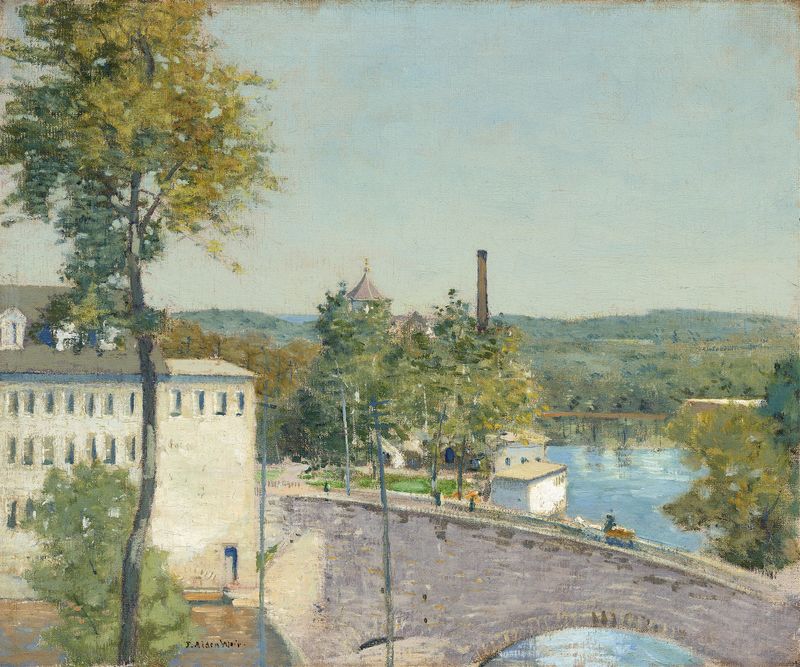
U.S. Thread Company Mills,Willimantic,Connecticut
Julian Alden Weir

Neighboring Farm
Julian Alden Weir

Coon Alley
Julian Alden Weir





