The Japanese bridge — History & Facts
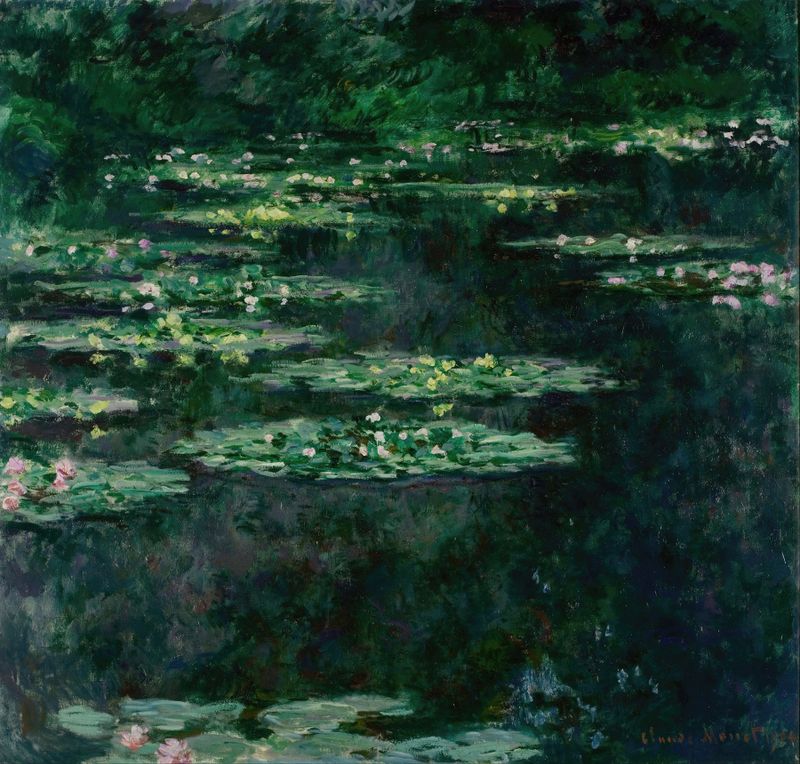
Is this a mirror — or a memory? In The Japanese Bridge, the artist invites us to ponder the delicate boundary between what we see and what we feel, blending reality with the essence of fleeting moments. Look to the center of the canvas, where the iconic bridge arches gracefully, its vibrant hues of green and ochre contrasting with the serene blues and whites of the water below. The brushstrokes are loose and fluid, creating an impression of movement — as if the bridge itself sways gently in the breeze. Notice how the reflection shimmers, blurring the line between surface and depth, conjuring a world where nature and architecture embrace in harmony. Yet beneath this tranquil surface lies a tension, a subtle unease.
The surrounding foliage, lush and vibrant, encroaches upon the bridge, hinting at nature’s relentless advance and the fragility of human constructs. The interplay of light and shadow evokes a sensation of nostalgia, a longing for moments that slip through our fingers, revealing a deeper fear of impermanence. The scene invites contemplation of what is lost and what remains, both in memory and in art. In the years between 1919 and 1924, Monet painted this work in his beloved garden at Giverny, during a time when his health was failing and the world was grappling with the aftermath of World War I.
As he sought solace in his garden, he embraced the visual beauty of his surroundings while confronting his own artistic legacy and the evolution of Impressionism. Amidst this period of reflection, he captured not only a scene but an emotional essence, immortalizing a bridge that connects both memory and reality.