
The Little Sheperdess — History & Facts
In The Little Shepherdess, Émile Munier presents a young girl tending to a flock of sheep. The colors are soft and warm, with greens and browns dominating the pastoral scene. The girl is dressed in a simple, traditional outfit, and her expression is one of gentle care and attention.
The background features a serene landscape, enhancing the tranquil mood of the painting. The painting is executed in oil on canvas, showcasing Munier's skill in capturing light and texture. The brushwork is detailed yet fluid, allowing for a sense of movement in the sheep and the girl's hair. The composition is balanced, with the shepherdess positioned slightly off-center, drawing the viewer's eye through the scene.
The use of natural colors contributes to the realism of the work. Émile Munier was a French painter known for his depictions of rural life and children. This painting reflects the Realism movement, focusing on everyday subjects with a sense of authenticity. An interesting fact about The Little Shepherdess is that it captures a moment of simplicity and innocence, resonating with viewers who appreciate the beauty of pastoral life.
Munier's works often evoke nostalgia for a simpler time, making them beloved by many.
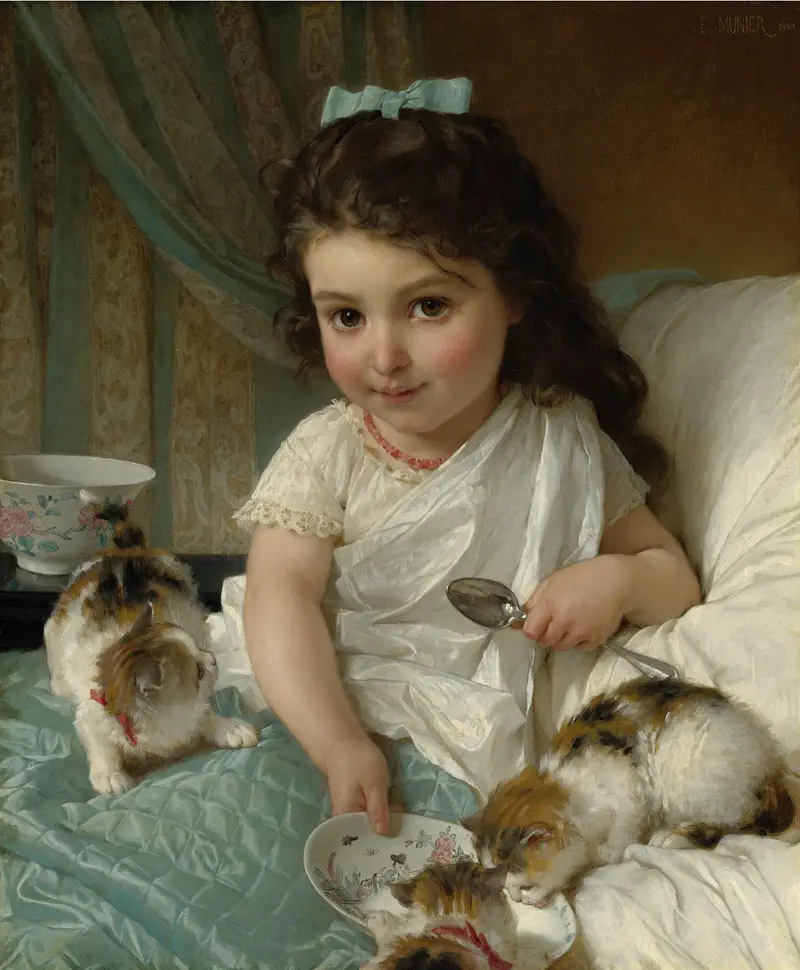
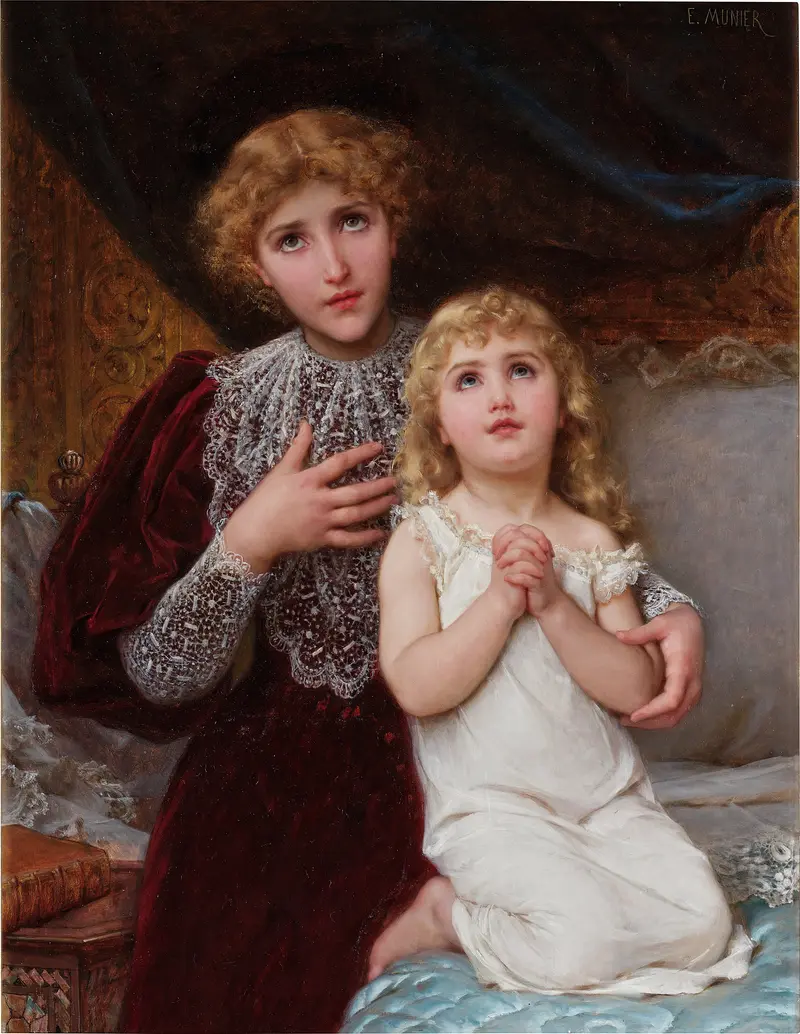
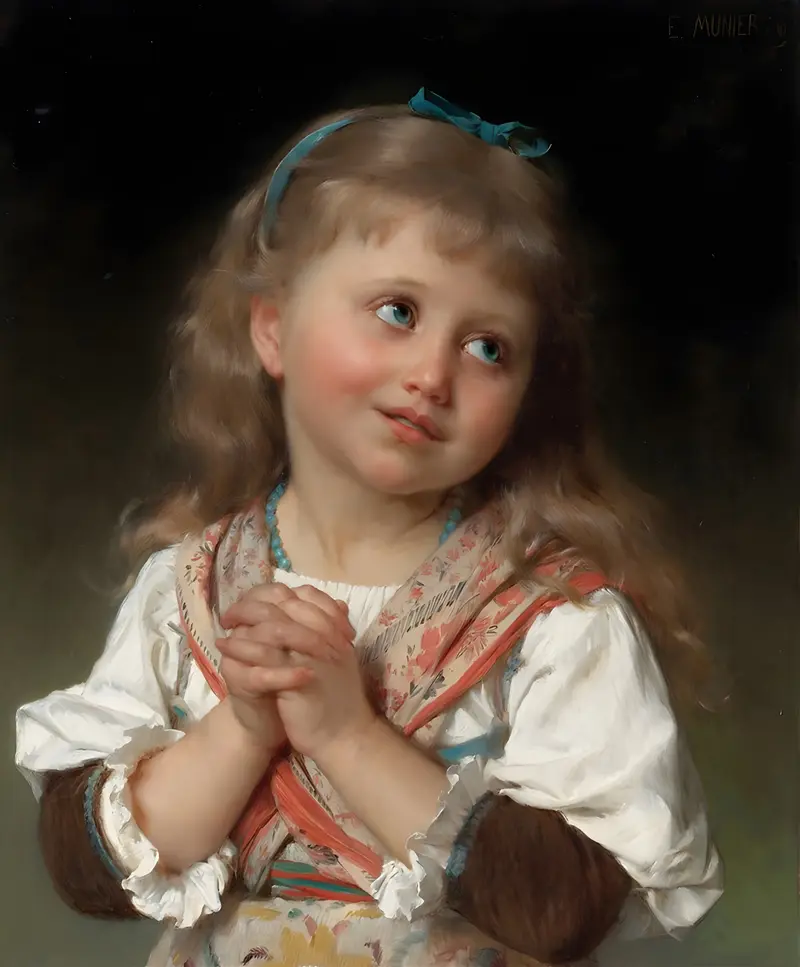
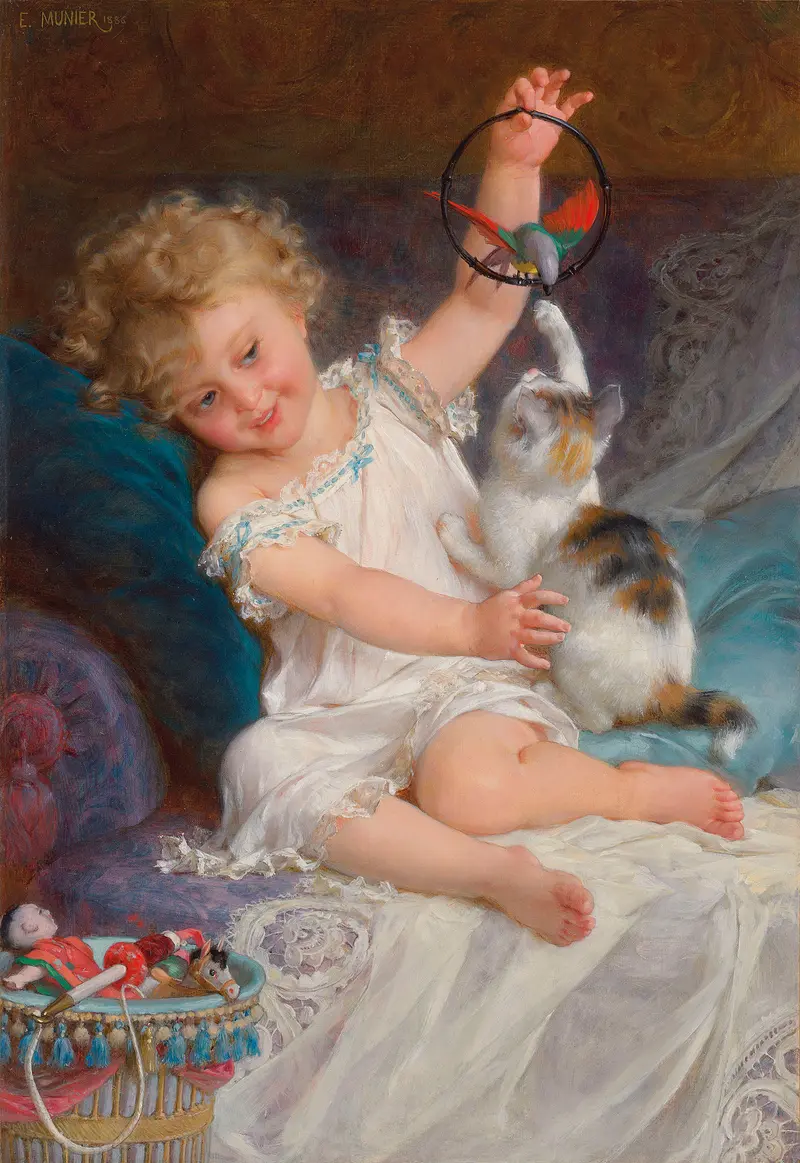
More Artworks by Émile Munier

More Genre Scene Art

Banquet of the Officers of the St George Civic Guard
Frans Hals

Rembrandt and Saskia in the Scene of the Prodigal Son
Rembrandt van Rijn

Bal du moulin de la Galette
Pierre-Auguste Renoir

Quadrille at the Moulin Rouge
Henri de Toulouse-Lautrec

A Burial at Ornans
Gustave Courbet

When Will You Marry?
Paul Gauguin