
The March of the 3rd. Division through the Sierra de Estiella or de Neve, May 16, 1811 — History & Facts
Did the painter know this moment would outlive them? The desire to immortalize the passing of time often drives artists to capture fleeting events, making history tangible for future generations. Begin your gaze at the expansive canvas, where the troops march resolutely across the rugged terrain. Notice how the light pierces through the clouds, illuminating the soldiers in their diverse uniforms, each a testament to the unity and struggle of a divided land. Focus on the contrasting colors — the earthy browns and greens of the landscape juxtaposed with the vibrant hues of the soldiers' attire, highlighting their humanity against the backdrop of nature’s indifference. Delve deeper into the work, where the tension of the scene reveals itself.
The weariness etched on the soldiers' faces speaks of perseverance amidst hardship, while the towering mountains stand like silent witnesses to their journey. The swirling clouds overhead suggest an impending storm, mirroring the tumultuous atmosphere of war and uncertainty. Here, one can sense not only the physical challenge but also the emotional and psychological burdens carried by each man as they march forth into the unknown. In 1811, Charles Turner was in England, having already established his reputation as a skilled engraver and painter.
This work reflects the essence of the Napoleonic Wars, a period marked by great upheaval and national pride. As Turner captured this moment, he contributed to a broader artistic narrative, one that sought to elevate the valor and sacrifice of soldiers while grappling with the chaotic tides of history.
More Artworks by Charles Turner
Browse all →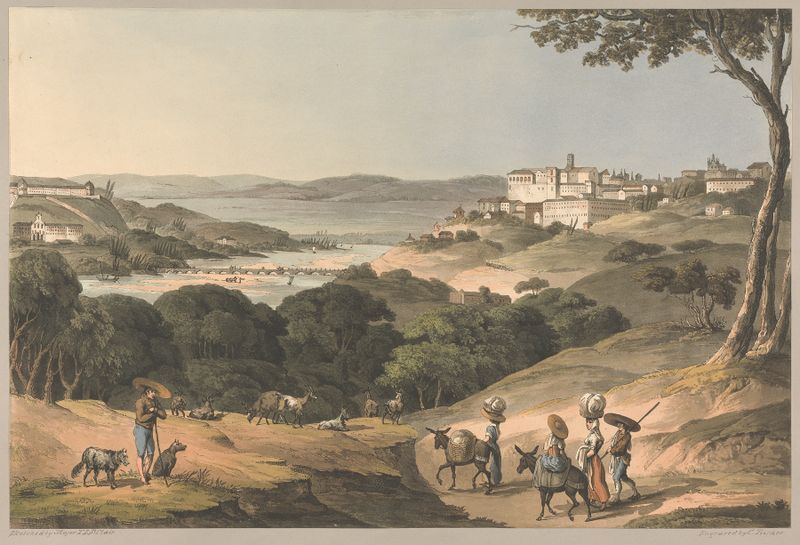
City of Coimbra on the Mondego in 1810
Charles Turner
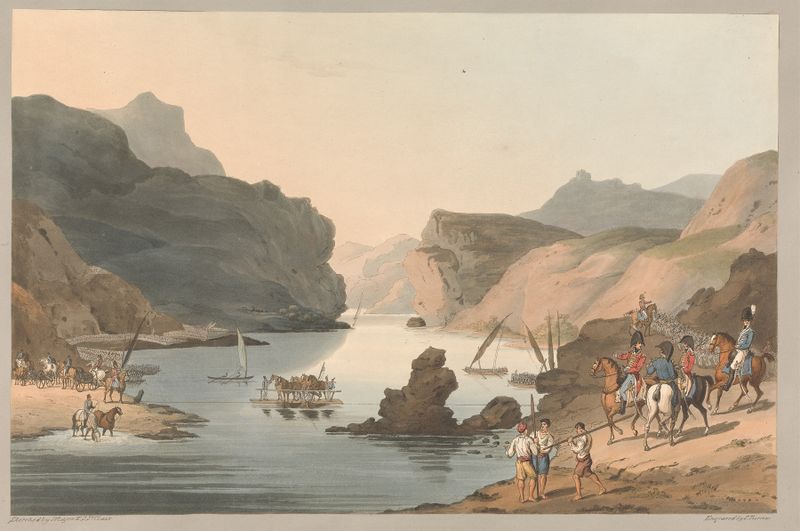
The Passage of the Tagus by the 3rd Division at Villa Velha, 20 May 1811
Charles Turner
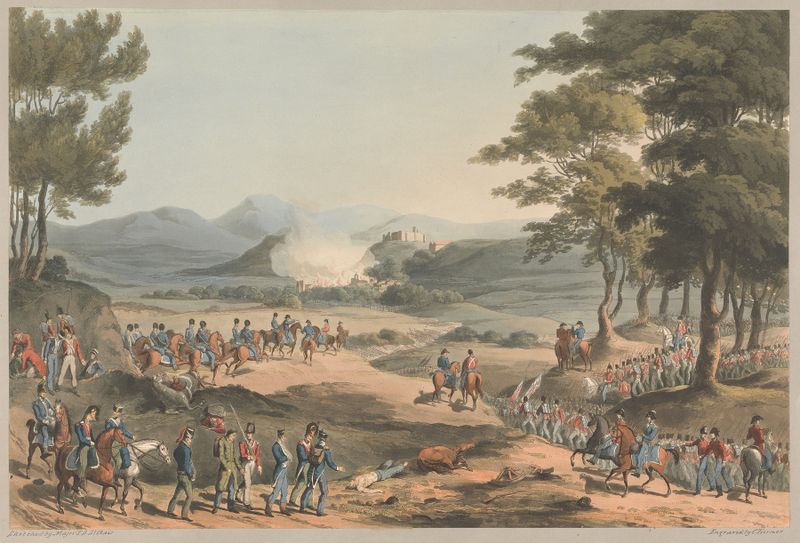
Town of Poinbal. Evacuated by the French on the Morning of 11 March 1811
Charles Turner

The Frontier of Pina Macor. Portugese Troops on the March to Costello Branco, 18th May 1811
Charles Turner

Battle of Fuontes d’Ouoro, 5th July 1811
Charles Turner
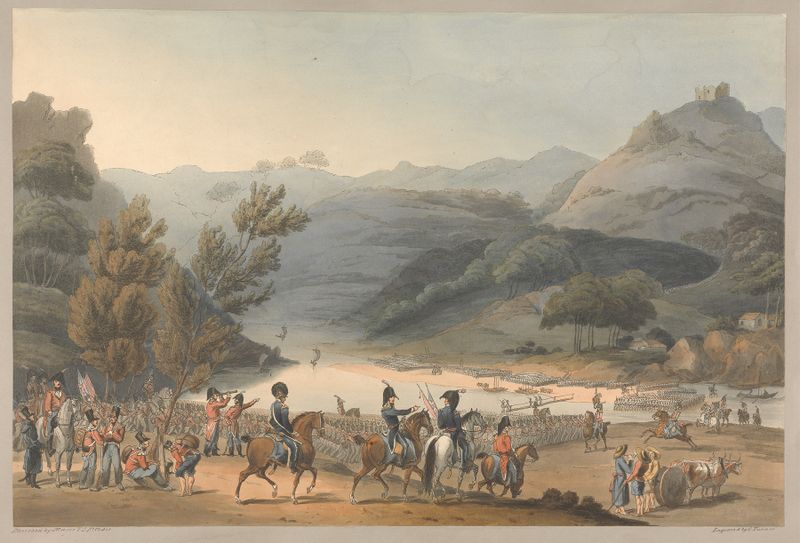
Passage of the Mondego at Pena Cova by the 3rd Division of allied Army, 1810
Charles Turner
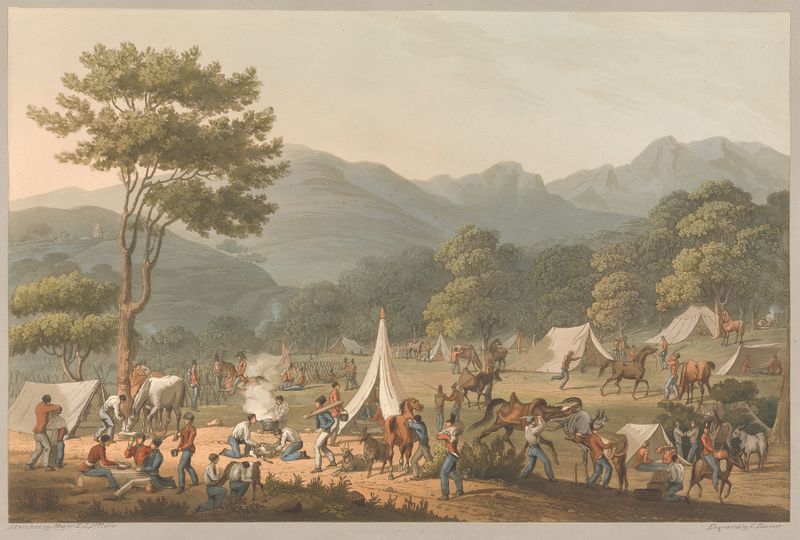
Troop bivoacked below the village of the villa Velha, 19th May 1811
Charles Turner

Sabugal on the River Coa French pickets in the foreground the Allies preparing to cross the River.
Charles Turner
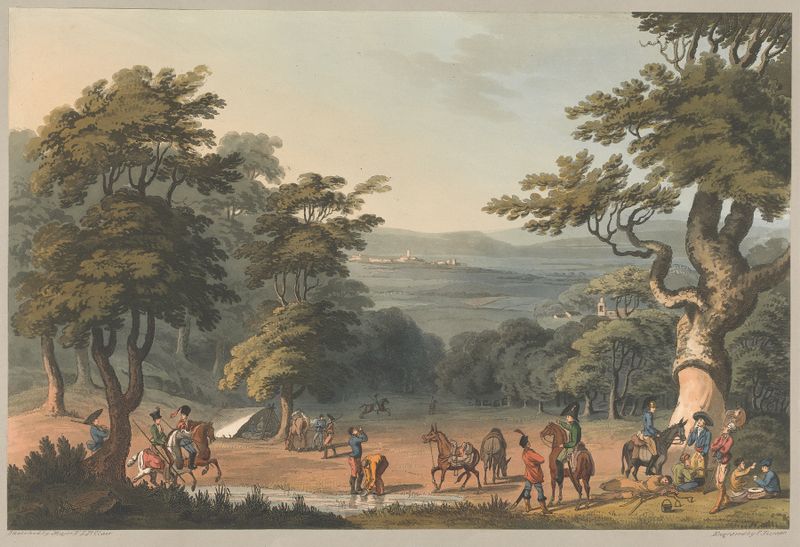
Distant View of Cuidad Rodrigo from Oak Wood near the Village Espeja March 1811
Charles Turner

Battle of Sierra de Basaco above St. Antonio de Cantaro
Charles Turner
More Historical Art
Browse all →
The Night Watch Militia Company of District II under the Command of Captain Frans Banninck Cocq
Rembrandt van Rijn

Lincoln Memorial
Henry Bacon

The Third of May 1808
Francisco de Goya

Isaac and Rebecca, Known as ‘The Jewish Bride’
Rembrandt van Rijn

The Charge of the Mamelukes (1814)
Francisco de Goya

De vier ruiters van de apocalyps
Albrecht Dürer