
The Mauritshuis in The Hague — History & Facts
In the stillness of Bartholomeus Johannes van Hove's work, the void of the empty landscape speaks volumes, inviting contemplation of the beauty that exists in absence. Look to the foreground, where the elegant architecture of the Mauritshuis stands resolutely against a muted sky. The delicate brushwork captures the refined details of the facade, while the subtle play of light reveals shadows that hint at the passage of time. The muted palette of ochres and browns evokes a sense of nostalgia, drawing the viewer into a world that feels both familiar and eerily silent. Within this serene yet haunting composition, the absence of human figures suggests a lingering presence, invoking emotions of loneliness and introspection.
The emptiness feels charged, as if the walls themselves hold untold stories—past lives whispering through the corridors. This juxtaposition of stillness and potential movement invites viewers to reflect on what has been lost or forgotten within these grand structures. In 1825, the artist painted this work in The Hague, a city experiencing a cultural renaissance. At this time, van Hove was establishing himself as a leading painter of architectural landscapes, capturing the interplay of light and structure.
His work resonated within a broader artistic movement that sought to elevate everyday scenes into realms of beauty, contrasting the ideals of Romanticism with a keen observation of the changing urban landscapes of his time.
More Artworks by Bartholomeus Johannes van Hove
Browse all →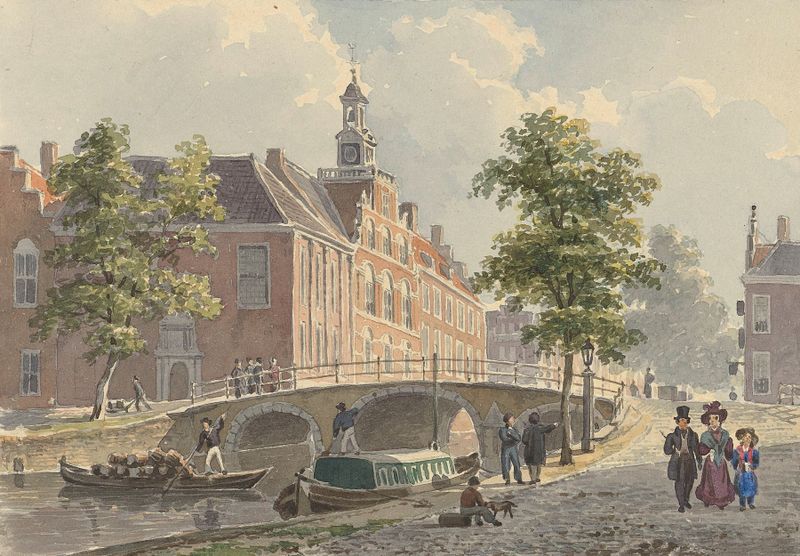
Het Spui te ‘s-Gravenhage, gezien naar het zuiden
Bartholomeus Johannes van Hove
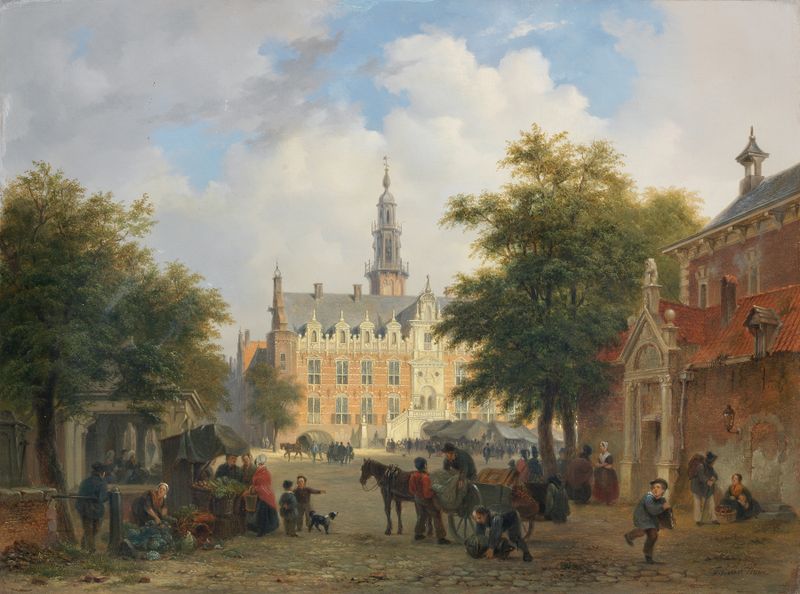
Street scene, Amsterdam
Bartholomeus Johannes van Hove

A Capriccio View Of The Hofvijver, The Hague
Bartholomeus Johannes van Hove
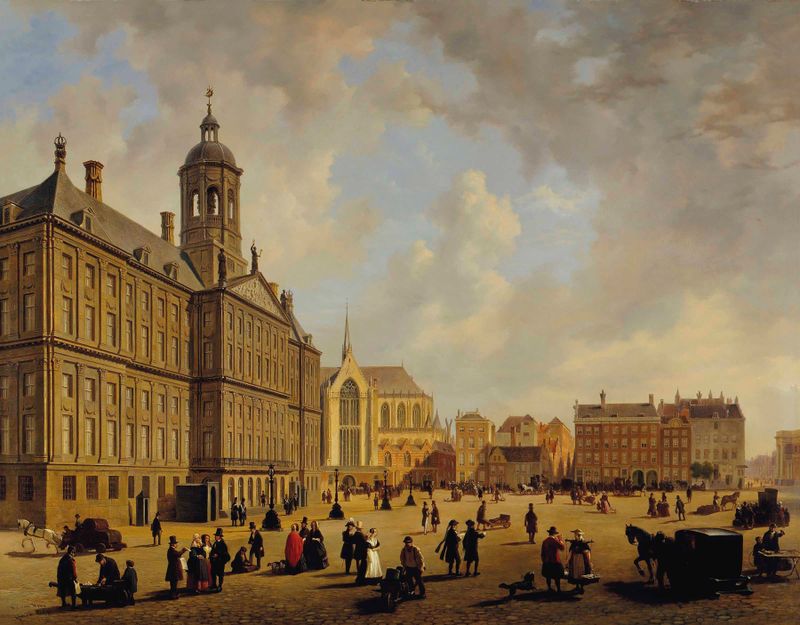
A bustling day in front of the City hall on the Dam Square, the Nieuwe Kerk in the distance, Amsterdam
Bartholomeus Johannes van Hove

Sommerliche Stadtansicht
Bartholomeus Johannes van Hove

Church Interior
Bartholomeus Johannes van Hove
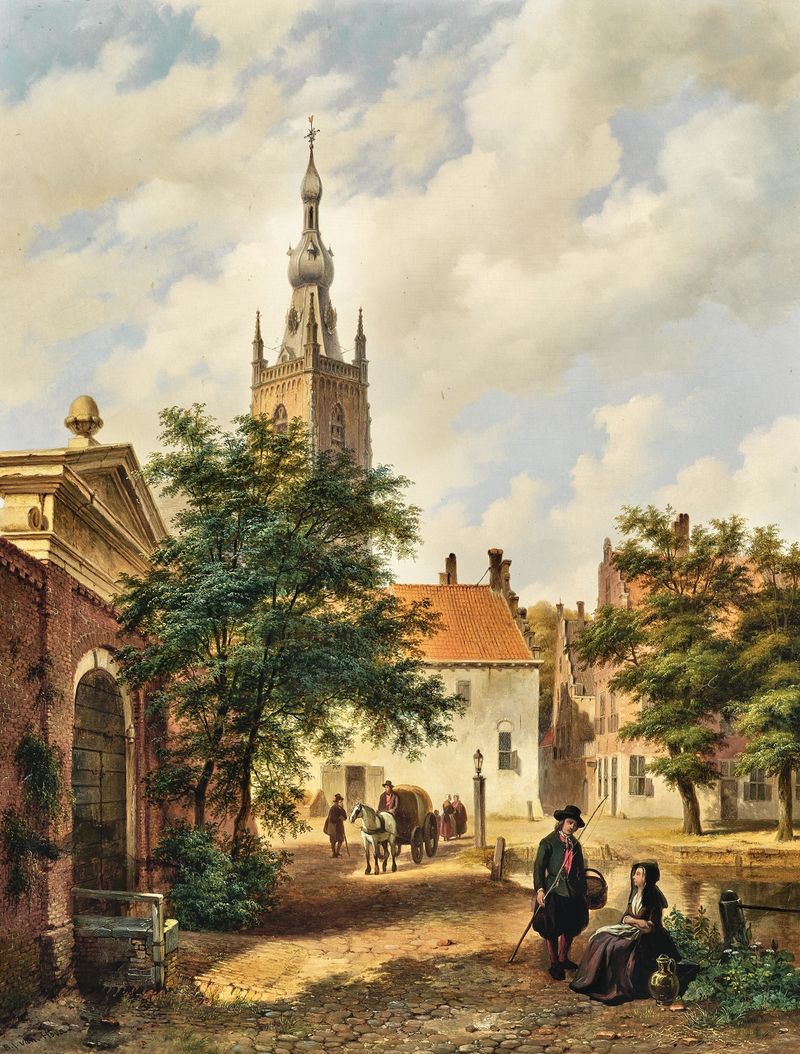
A View of a Village with a Church
Bartholomeus Johannes van Hove

Winterliche Stadtansicht
Bartholomeus Johannes van Hove
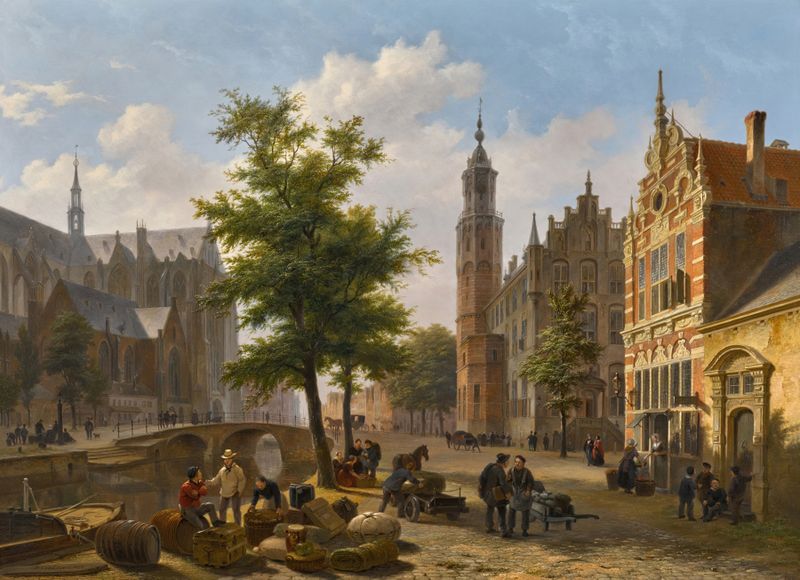
A Busy Market Place in a Dutch Town
Bartholomeus Johannes van Hove

View of a Dutch town
Bartholomeus Johannes van Hove
More Architecture Art
Browse all →
The statue of Liberty
Frédéric Auguste Bartholdi

View of Houses in Delft, Known as ‘The Little Street’
Johannes Vermeer

View of Houses in Delft, Known as ‘The Little Street’
Johannes Vermeer

The Cathedral in Rouen. The portal, Grey Weather
Claude Monet

The yellow house
Vincent van Gogh

The Church in Auvers-sur-Oise, View from the Chevet
Vincent van Gogh