
The Molo, looking towards the Zecca with the column of Saint Teodoro, Venice — History & Facts
When did color learn to lie? In a world where every hue whispers secrets of fragility, the viewer stands at the threshold of a vibrant Venetian scene, caught between history and illusion. Look to the left at the striking column dedicated to Saint Teodoro, rising majestically against the backdrop of a delicately rendered sky. The brushwork captures the luster of the architecture while the palette bursts with warm ochres and earthy greens, contrasting the cool cerulean of the water. Notice how the light breaks through the clouds, casting reflections that shimmer with an ethereal grace, inviting the eye to dance along the surface.
Each stroke tells a story of the city’s resilient beauty, yet hints at a transient moment forever preserved in time. Yet, beneath the surface, there is a subtle tension. The architecture, though grand, is framed by a shoreline that appears to crumble into the water, suggesting that all things, no matter how magnificent, are subject to decay. The juxtaposition of the sturdy column against an undulating horizon speaks to the fragile balance between permanence and impermanence.
The distant boats, poised on the cusp of movement, reflect the ever-persistent ebb and flow of life, further deepening the emotional resonance of the scene. Giuseppe Bernardino Bison painted this work in a time when Venice was a cultural crossroads, influenced by both the Romantic and Neoclassical movements. His focus on architectural detail and luminous color was part of a broader exploration of light and space in the 19th century, as he sought to capture the essence of a city that stood as a testament to both grandeur and vulnerability. This painting invites reflection on the delicate interplay between beauty and time, a notion that resonates even more profoundly today.
More Artworks by Giuseppe Bernardino Bison
Browse all →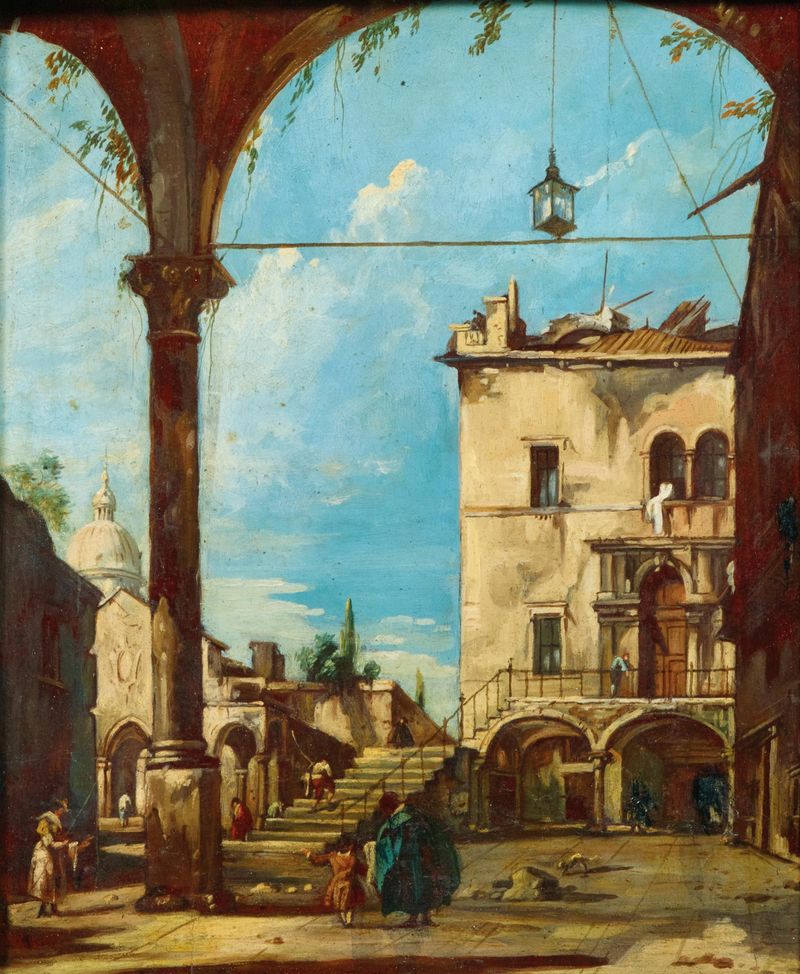
An Architectural Capriccio with Figures
Giuseppe Bernardino Bison
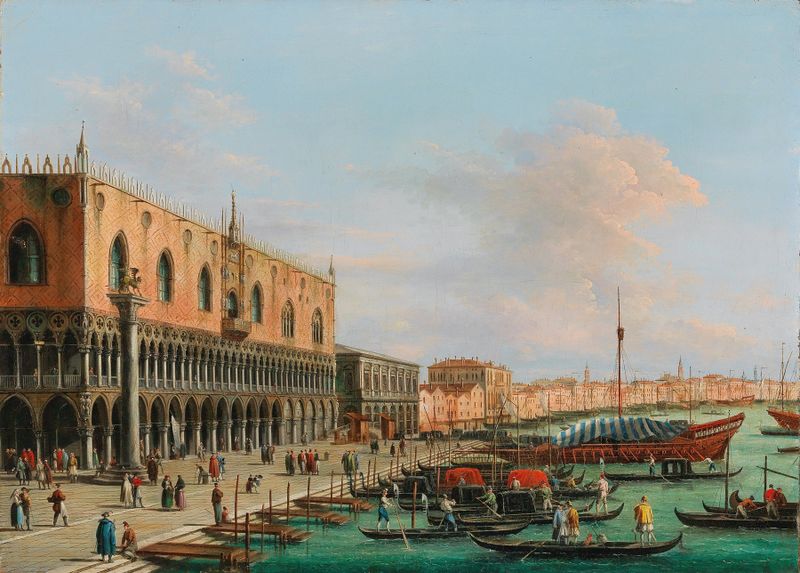
The Palazzo Ducale and the Riva degli Schiavoni, Venice
Giuseppe Bernardino Bison
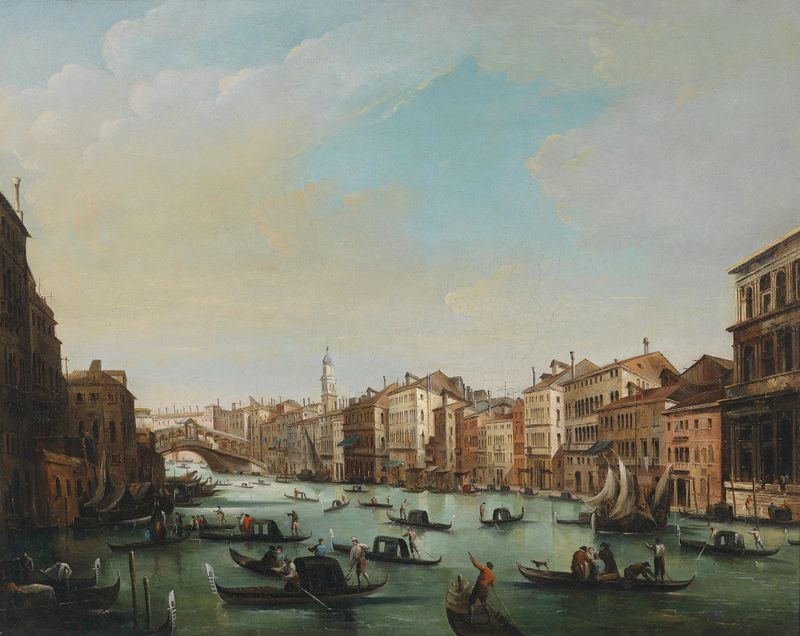
Venedig Canal Grande mit Ponte Rialto
Giuseppe Bernardino Bison
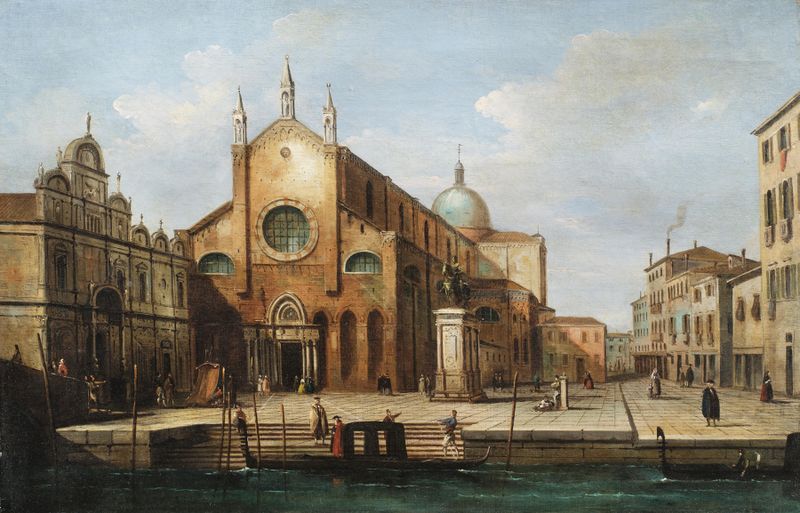
Venice, View of Campo Santi Giovanni e Paolo and the Scuola Grande di San Marco
Giuseppe Bernardino Bison
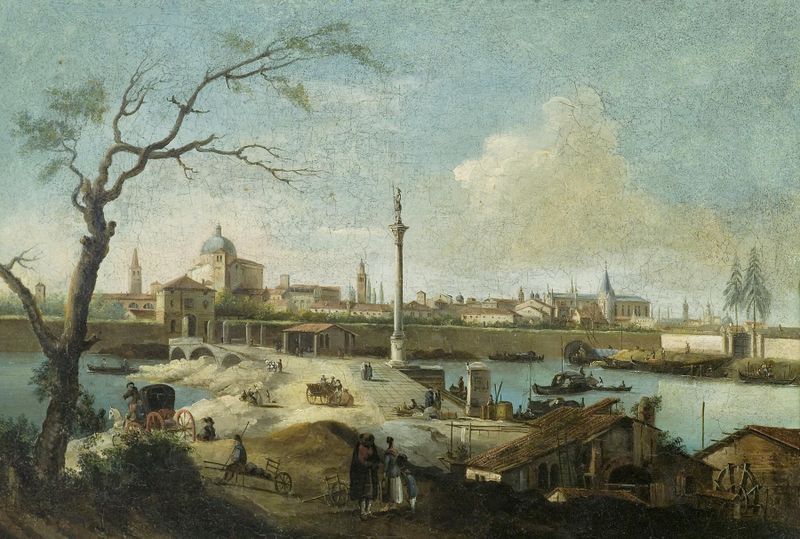
Capriccio mit der Ansicht von Padua
Giuseppe Bernardino Bison
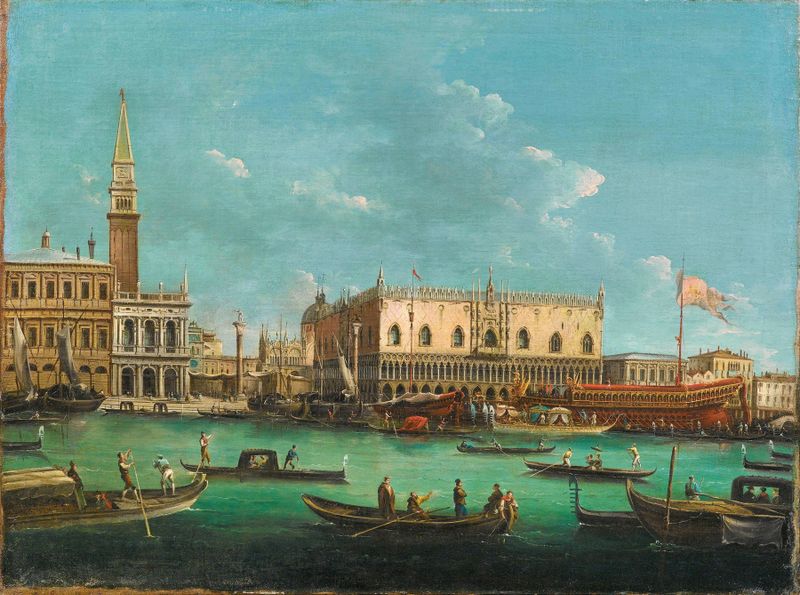
The Bucintoro at the Molo, Venice, on Ascension Day
Giuseppe Bernardino Bison
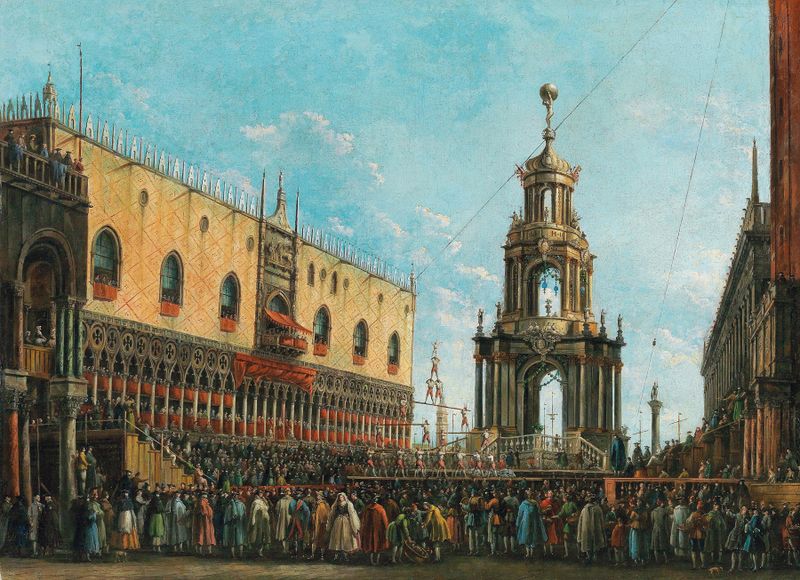
The ‘Giovedi Grasso’ Festival before the Ducal Palace in Venice
Giuseppe Bernardino Bison
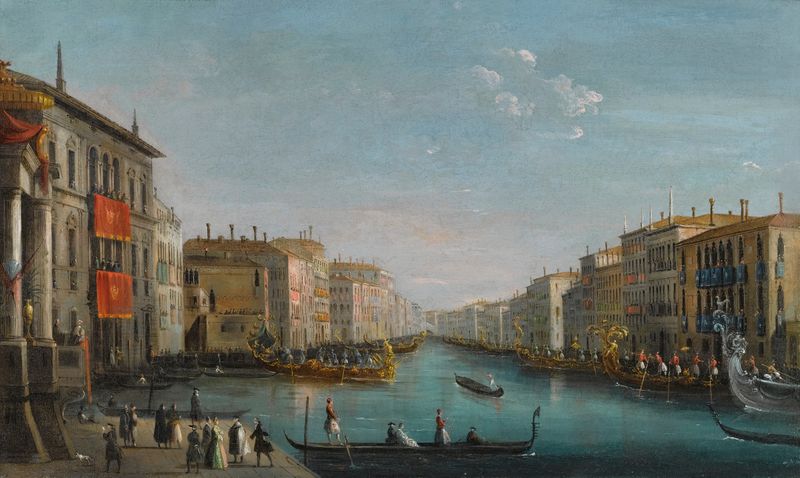
Venice, A View Of The Grand Canal From The Palazzo Balbi Looking Toward The Rialto Bridge With A Regata
Giuseppe Bernardino Bison
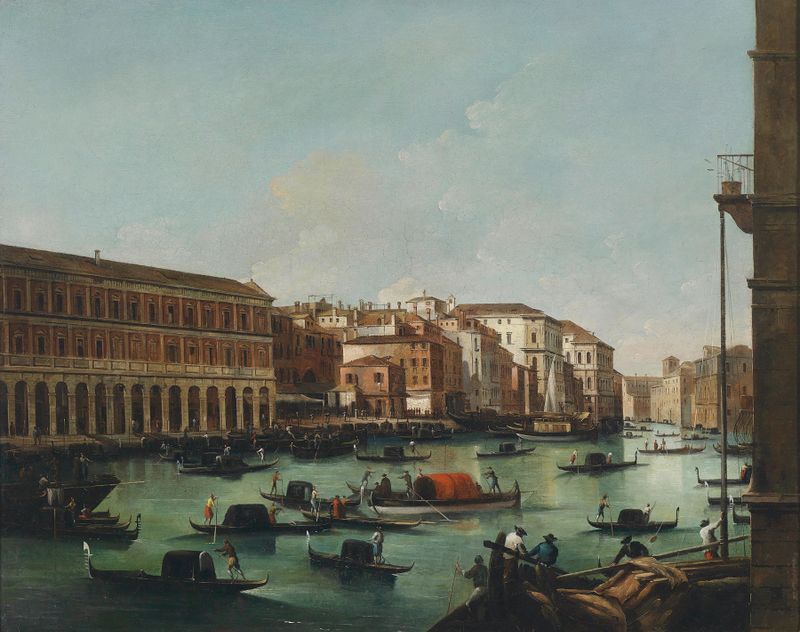
Venedig Canal Grande mit Fabbriche Nuove
Giuseppe Bernardino Bison
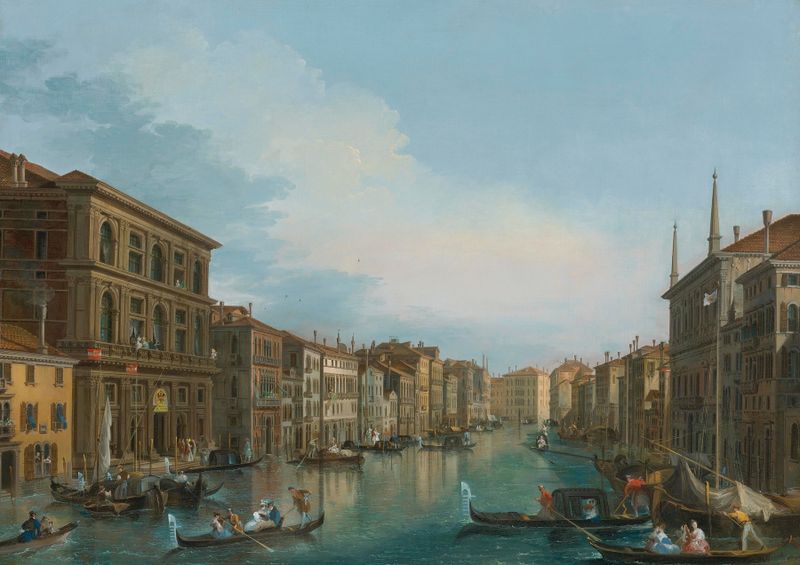
View Of The Grand Canal From The Palazzo Grimani
Giuseppe Bernardino Bison





