
Venedig Canal Grande mit Fabbriche Nuove — History & Facts
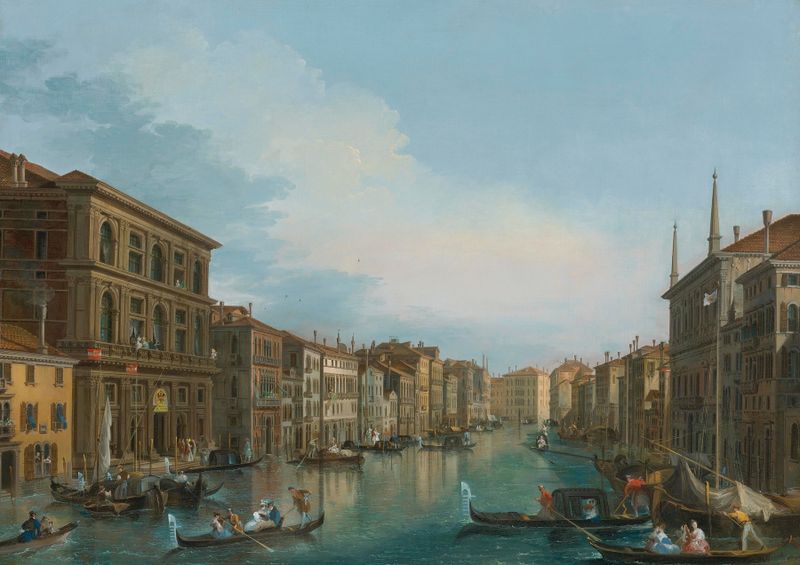
Can beauty exist without sorrow? This question lingers in the air as one gazes upon the tranquil waters of a grand canal, reflecting not just the skyline but the weight of forgotten promises and unspoken betrayals. Look to the left at the architectural elegance, where the sun casts a warm glow upon the meticulously painted façades of the buildings. The artist’s brushstrokes capture the intricate details of Venetian life, from the ornate balconies to the subtle ripples in the water. Your eyes are drawn to the vibrant palette, colors dancing with life yet hinting at an underlying melancholy, as if each hue tells a story of joy entwined with loss. Beyond the picturesque scene, there is a tension woven into the fabric of this landscape.
The placid water suggests serenity while simultaneously concealing the depth of history beneath its surface. The juxtaposition of lively figures in the foreground with the distant, shadowed buildings creates a poignant contrast, perhaps a metaphor for the dual nature of existence itself—lightness that coexists with the heaviness of experience, beauty tainted by betrayal. During a time when Giuseppe Bernardino Bison painted this scene, likely in the early 19th century, Venice was a place of artistic fervor and romantic allure, yet also of decline. The city, once a powerful maritime republic, faced changing tides in both culture and economy.
Immersed in the vibrant art scene of his day, the artist captured the essence of this complex environment, revealing layers of beauty and sorrow in a single moment.
More Artworks by Giuseppe Bernardino Bison
Browse all →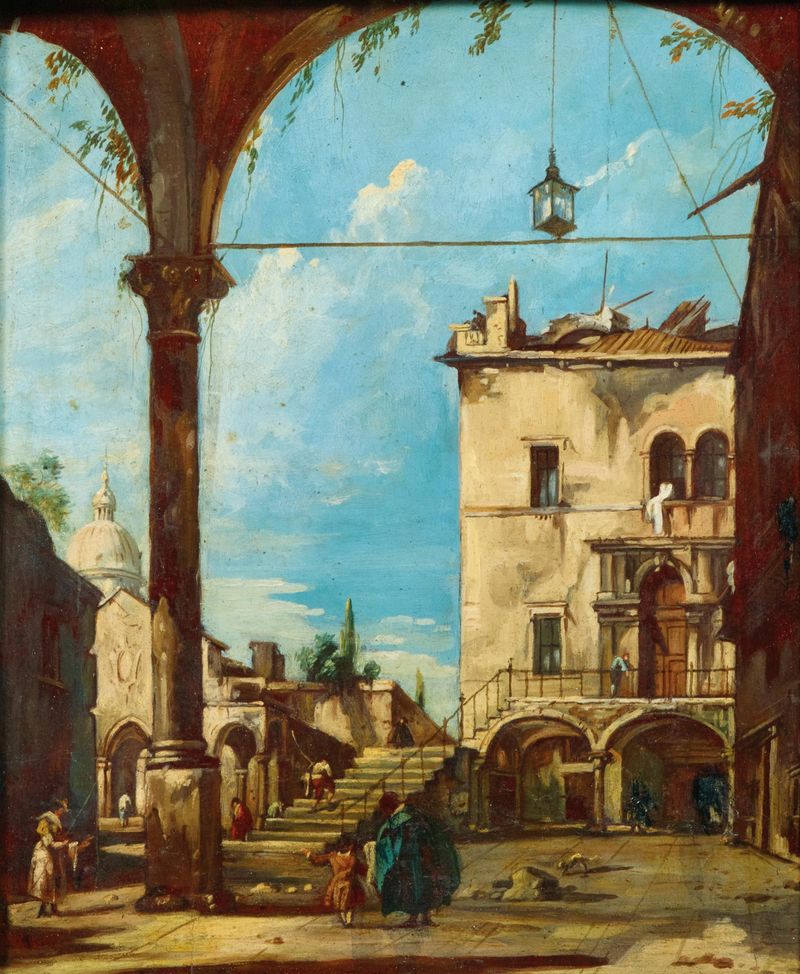
An Architectural Capriccio with Figures
Giuseppe Bernardino Bison
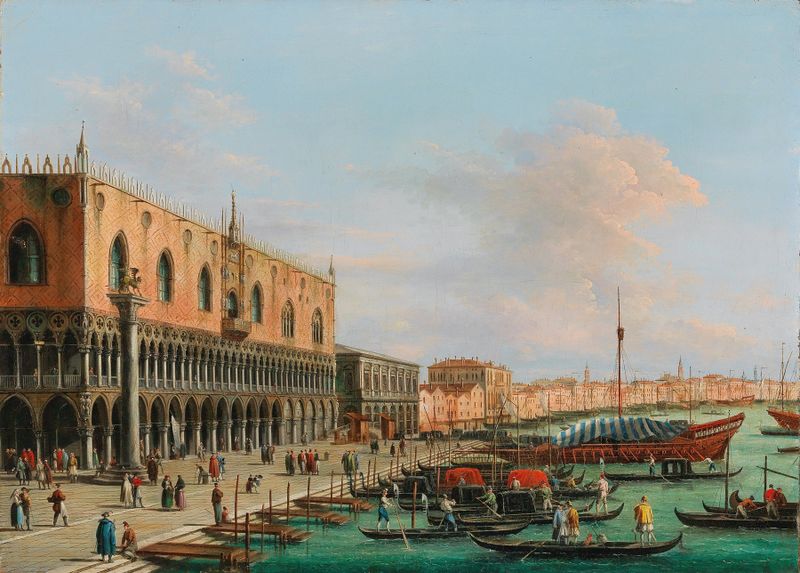
The Palazzo Ducale and the Riva degli Schiavoni, Venice
Giuseppe Bernardino Bison
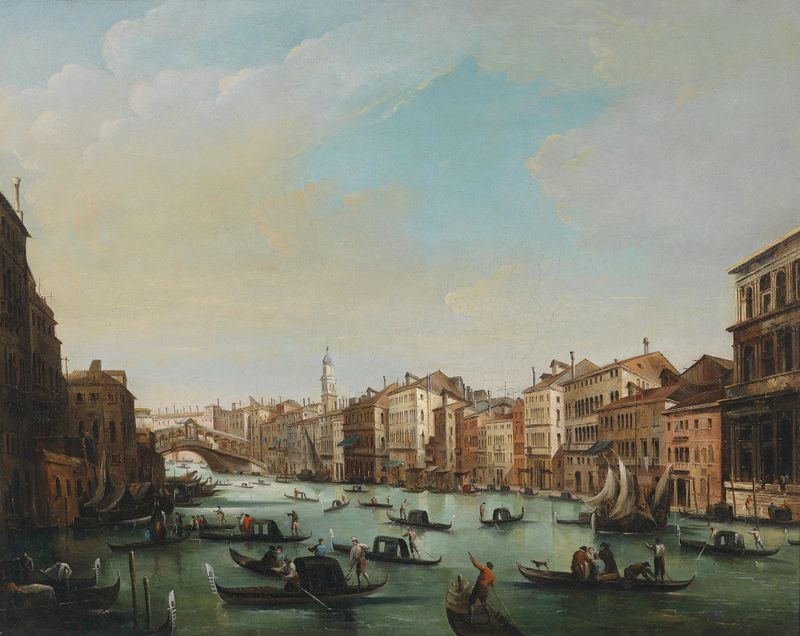
Venedig Canal Grande mit Ponte Rialto
Giuseppe Bernardino Bison
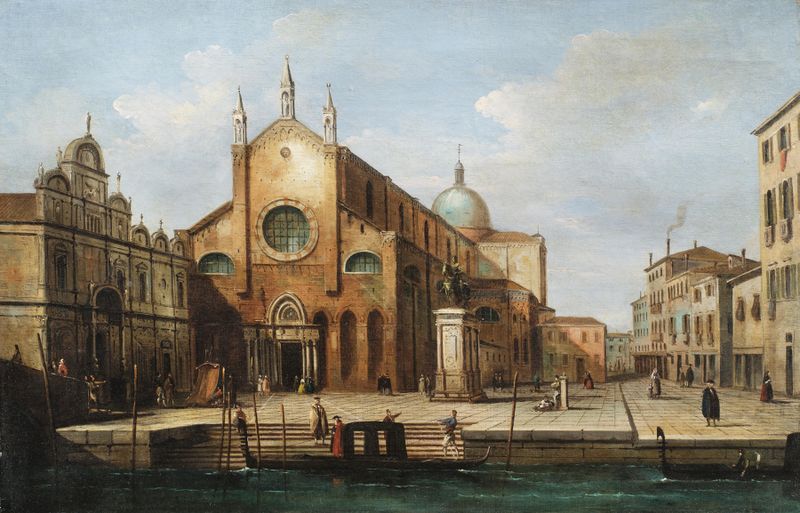
Venice, View of Campo Santi Giovanni e Paolo and the Scuola Grande di San Marco
Giuseppe Bernardino Bison
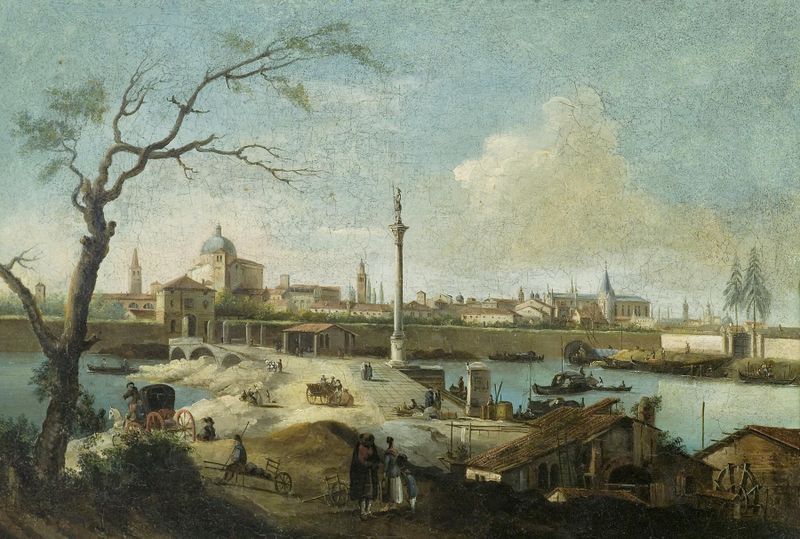
Capriccio mit der Ansicht von Padua
Giuseppe Bernardino Bison
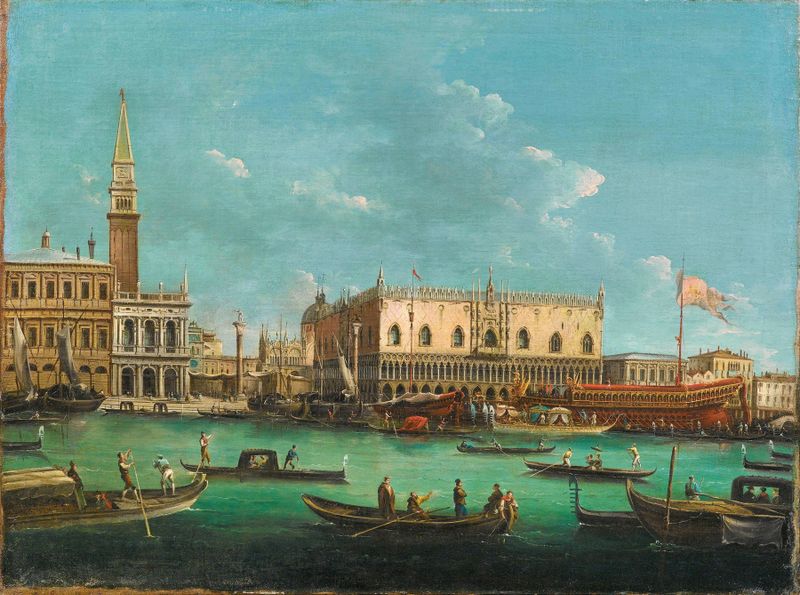
The Bucintoro at the Molo, Venice, on Ascension Day
Giuseppe Bernardino Bison
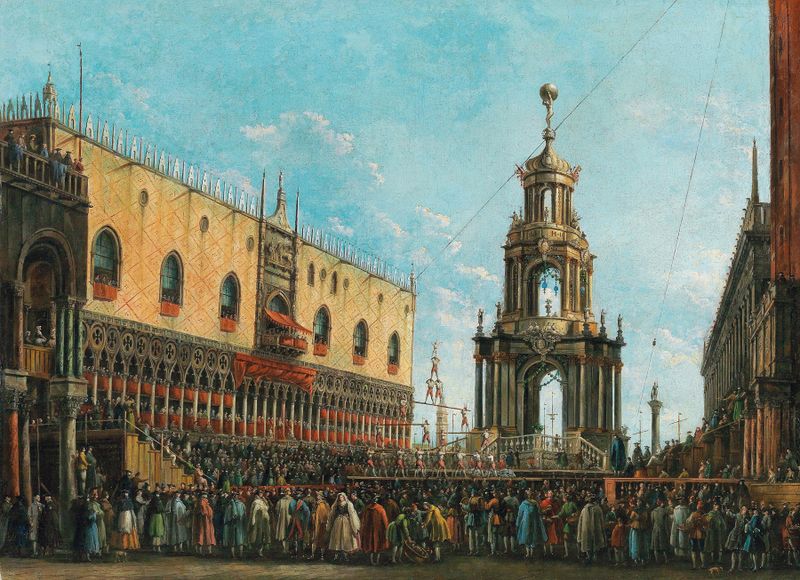
The ‘Giovedi Grasso’ Festival before the Ducal Palace in Venice
Giuseppe Bernardino Bison
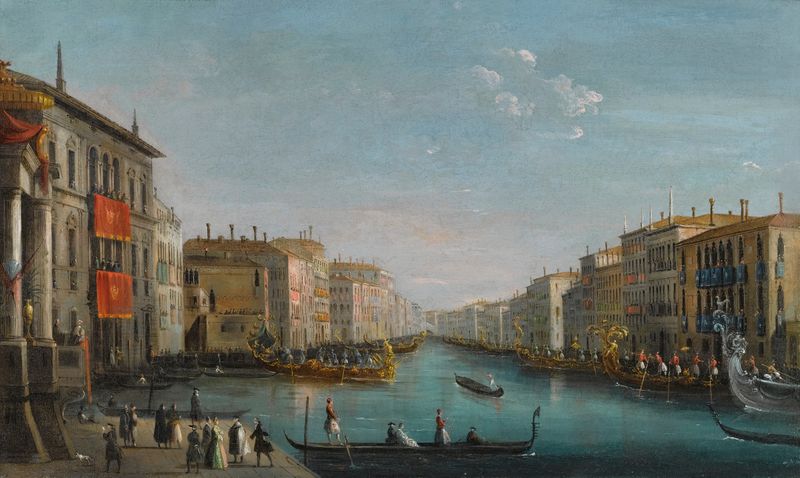
Venice, A View Of The Grand Canal From The Palazzo Balbi Looking Toward The Rialto Bridge With A Regata
Giuseppe Bernardino Bison
View Of The Grand Canal From The Palazzo Grimani
Giuseppe Bernardino Bison
Venice Canal Grande
Giuseppe Bernardino Bison





