
The Monastery of St. George and Cape Fiolente, looking west — History & Facts
Could a single brushstroke hold eternity? In The Monastery of St. George and Cape Fiolente, the answer lies in the delicate interplay of light and shadow, where nature and architecture fuse into a moment of transcendence. Look to the horizon where the monastery stands, its whitewashed walls catching the soft glow of the afternoon sun. Notice how Simpson meticulously applies muted greens and blues to the surrounding landscape, creating a soothing contrast against the vibrant sky.
The play of colors draws you in, while the gentle brushwork captures the texture of the stone, inviting an exploration of both the physical and spiritual realms. The juxtaposition of the stern monastery and the vast, open sea embodies the tension between isolation and belonging. Each detail whispers of devotion and solitude; the distant cliffs, framed by soft clouds, suggest a journey beyond the immediate, evoking feelings of both aspiration and introspection. The calm yet powerful presence of nature serves as a reminder of the eternal truths that dwell between man-made structures and the world beyond. In 1855, the artist found himself in the midst of an evolving art scene, where the Romantic movement was giving way to realism.
Traveling in Crimea, Simpson documented landscapes that resonated with both personal and universal themes. His brush captured the stark beauty of the region during a time of political upheaval, offering viewers a glimpse into a world where art served as a bridge to deeper understanding and reflection.
More Artworks by William Simpson
Browse all →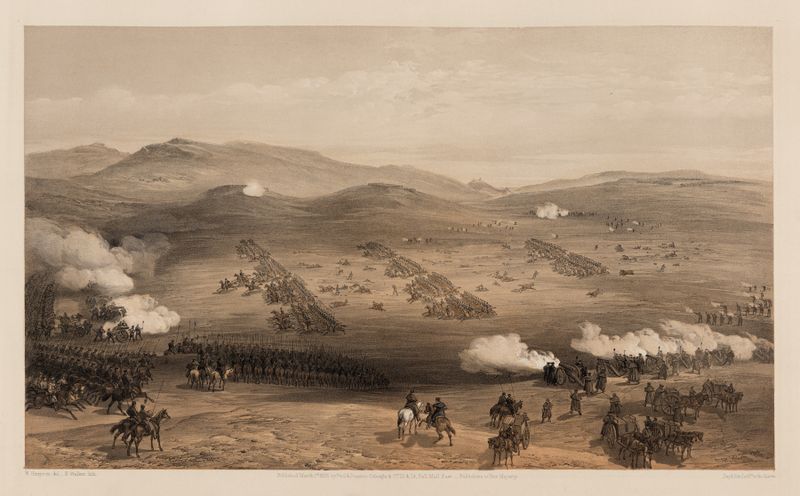
Charge of the light cavalry brigade, 25th Oct. 1854, under Major General the Earl of Cardigan
William Simpson

Charge of the heavy cavalry brigade, 25th Octr. 1854
William Simpson
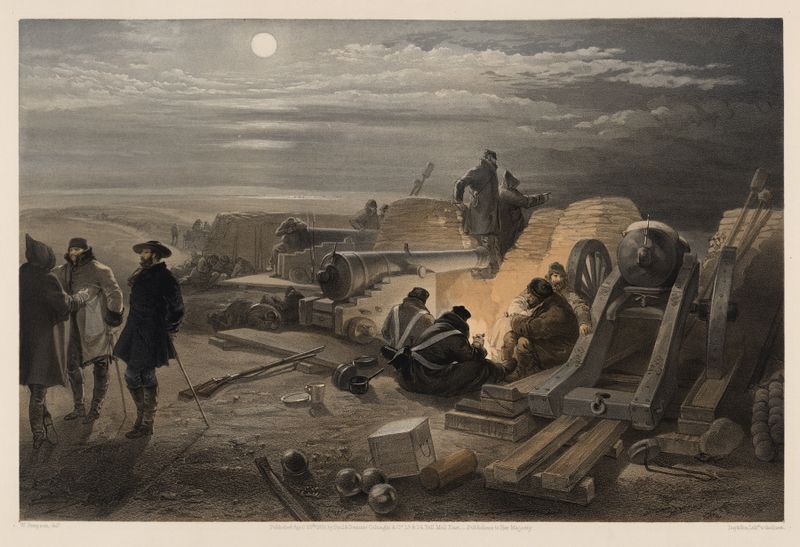
A quiet night in the batteries – a sketch in the Greenhill battery (Major Chapman’s), 29th Jany. 1855
William Simpson

The Great Wall of China
William Simpson
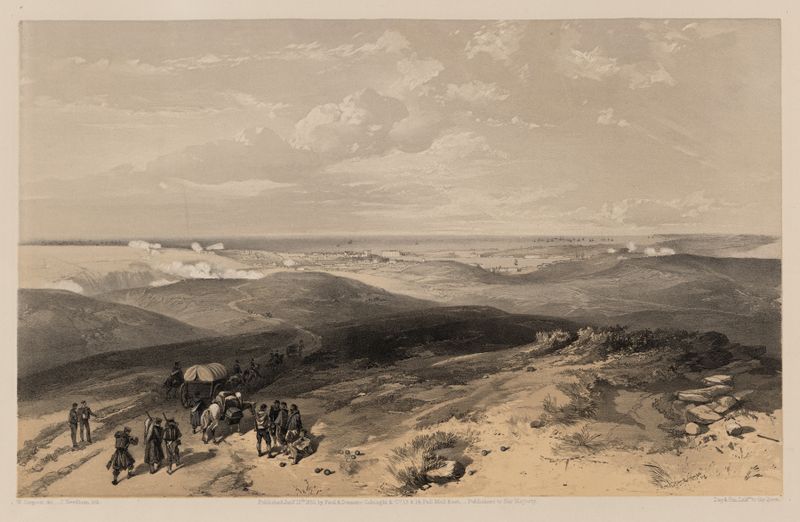
Sebastopol from the rear of the English batteries
William Simpson
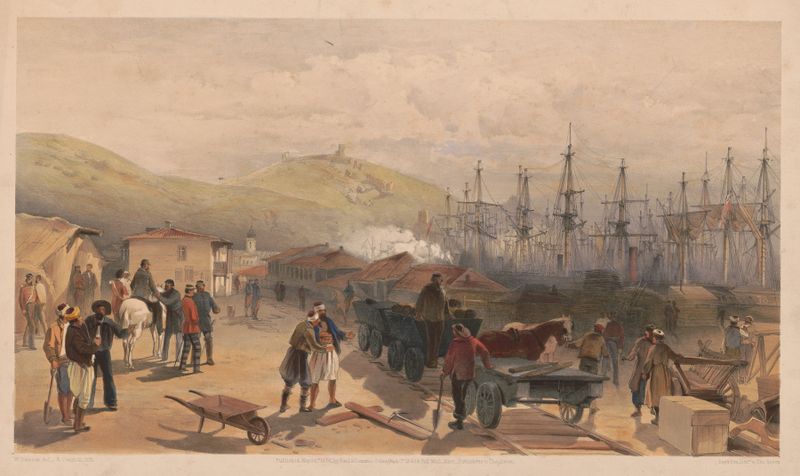
The railway at Balaklava, looking south
William Simpson

The Governor-General’s and Commander-in-Chief’s Camp at Jalandhar, 1 Febuary 1860
William Simpson
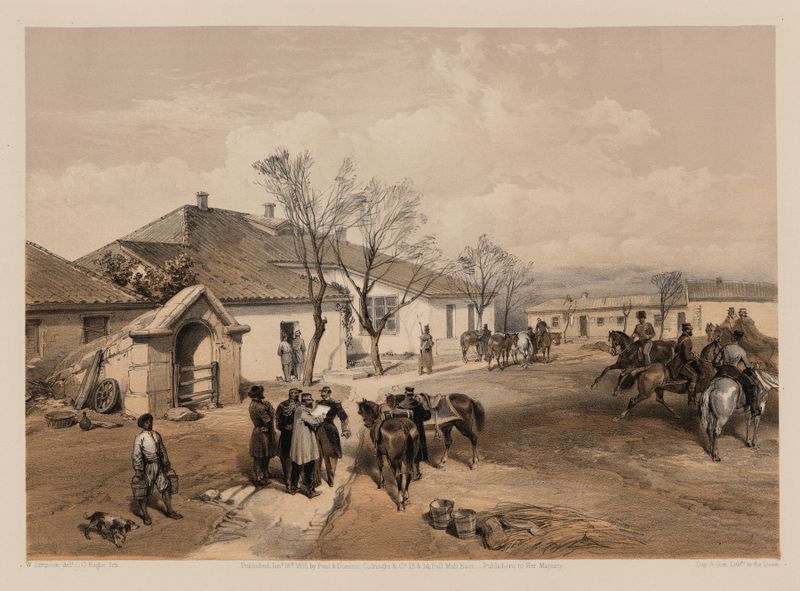
Lord Raglan’s head quarters at Khutor-Karagatch
William Simpson
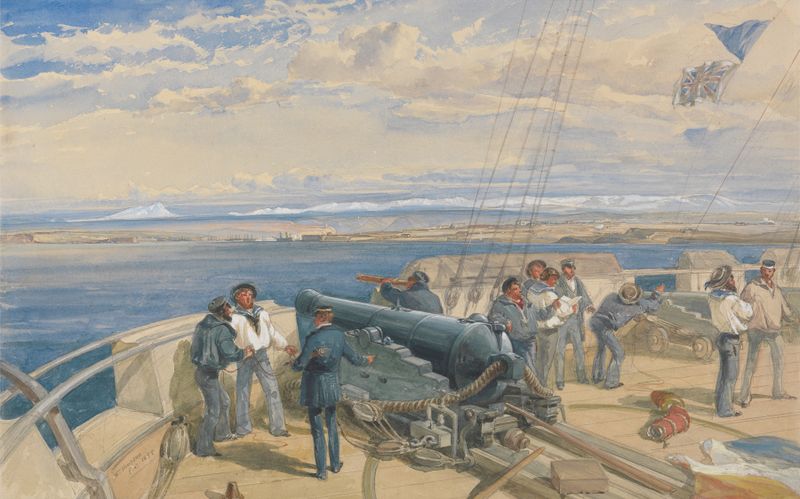
Sebastopol from the Sea, Sketched from the Deck of H. M. S. Sidon, Feb. 1855
William Simpson
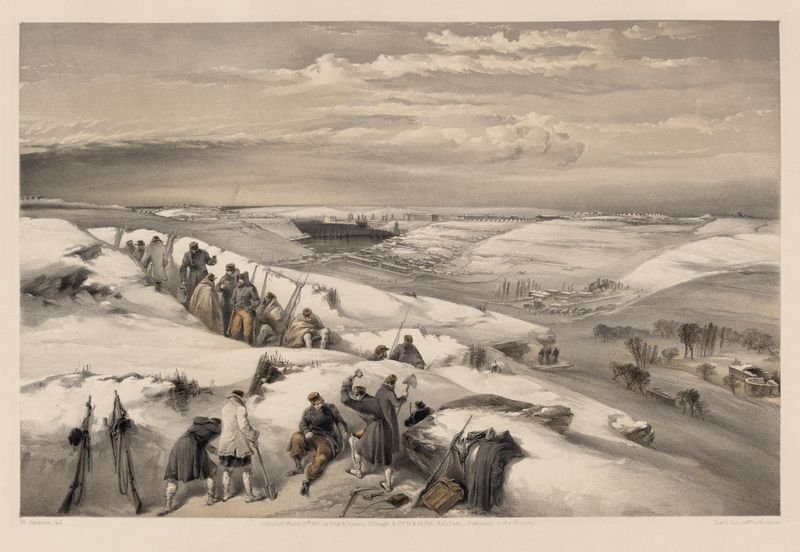
Sebastobol from the 26 gun battery on the extreme right of French attack
William Simpson





