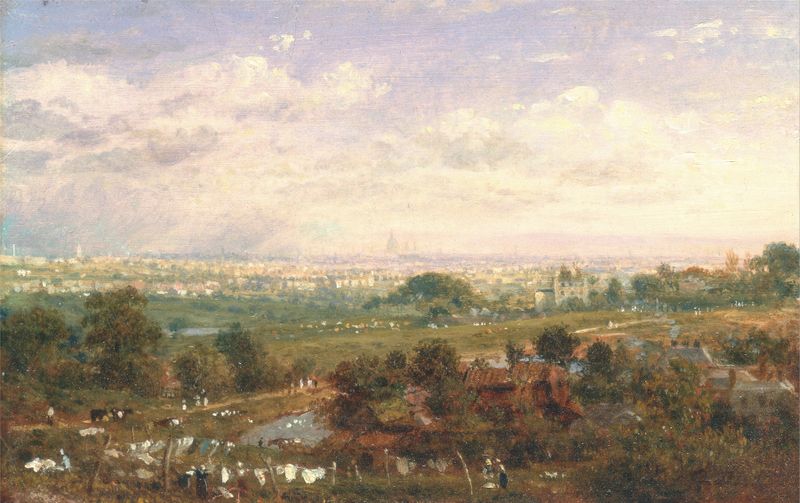
The Monument and London Bridge — History & Facts
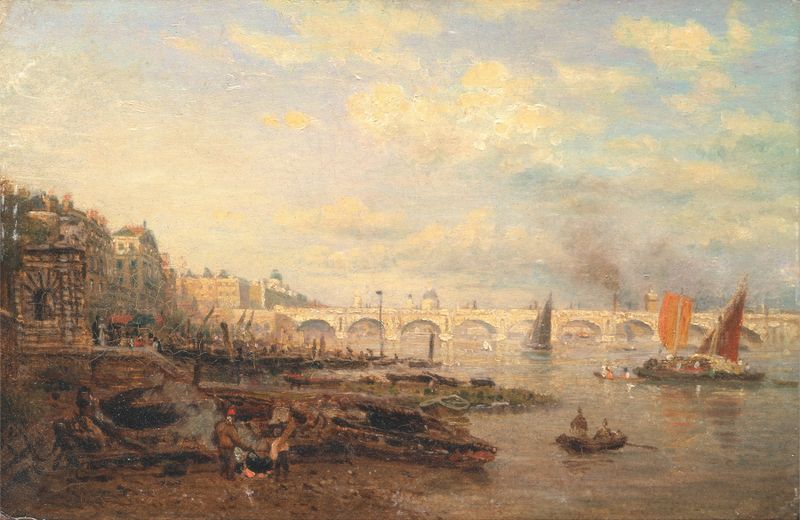
Could a single brushstroke hold eternity? The delicate reflections of light on water reveal a world where time pauses, inviting contemplation of both the past and the present. Look to the center of the canvas, where London Bridge stands resilient, its stone arches gracefully mirrored in the shimmering river below. The muted tones of the buildings frame the scene, while the gentle ripples of the water create an ethereal quality, blurring the boundaries between reality and reflection. Notice how the artist employs soft brushwork to evoke a sense of tranquility, allowing the viewer to feel the stillness of the moment. Beneath the calm surface, there is a tension between permanence and ephemerality.
The bridge symbolizes continuity, standing strong amidst the whispers of history, while the water’s reflections remind us of the fleeting nature of life. This interplay invites us to ponder what remains and what is lost in the passage of time, urging an emotional engagement that resonates deep within us. Frederick Nash painted this work during a period when the art world was shifting towards romanticized depictions of urban landscapes. Active in London during the late 18th and early 19th centuries, Nash found inspiration in the city’s evolving architecture and the serene beauty of its waterways.
His focus on capturing the essence of enduring structures against the dynamic elements of nature reflects a critical moment in art history, blending realism with a growing appreciation for the emotional power of landscape.