The Thames and Waterloo Bridge from Somerset House — History & Facts
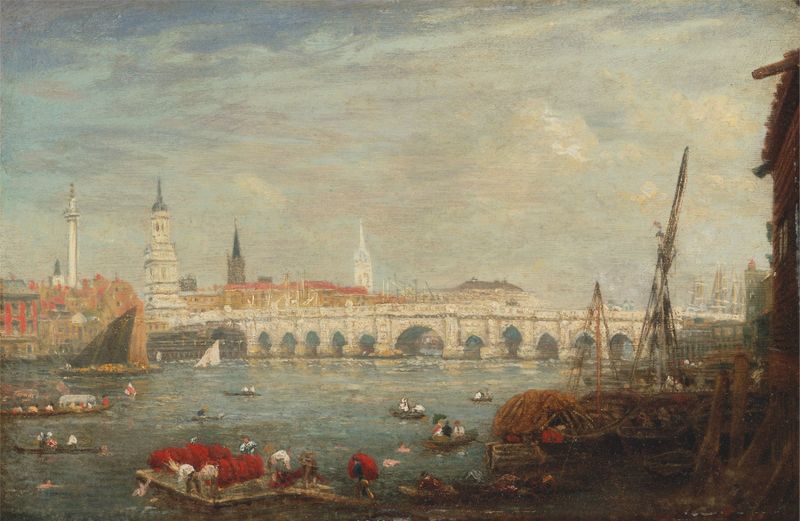
Can paint confess what words never could? The silent brushstrokes of a landscape speak to the enduring legacy of places and moments, echoing the whispers of lives intertwined with history. Look at the serene expanse of the Thames, where the water's surface glimmers under the soft light, beckoning your gaze. Notice how the meticulous details of Waterloo Bridge emerge in the distance, its arching forms simultaneously strong yet delicate. The artist employs a muted palette that evokes a sense of nostalgia, balancing the vibrancy of urban life with the tranquil flow of the river, creating a symphony of color and composition that draws the viewer in. Within this picturesque scene lies a deeper contemplation of progress and permanence.
The juxtaposition of the bustling bridge against the calm waters suggests the tension between the relentless advance of modernity and the timelessness of nature. Tiny figures dotting the banks act as silent witnesses to this dialogue, each one a story waiting to unfold, enriching the legacy of this iconic London locale. The painting invites reflection on our own place within this constantly evolving tapestry. Frederick Nash created this work during a period marked by rapid industrial change and urban expansion in early 19th-century England.
Though the exact date remains uncertain, it reflects his keen observation of the shifting landscape and the emerging role of the Thames as a lifeline for the city. At that time, the art world was embracing romantic ideals, highlighting the beauty of nature amidst the encroaching structures of civilization, a theme Nash adeptly captured in his celebrated landscapes.