
Westminster Bridge — History & Facts
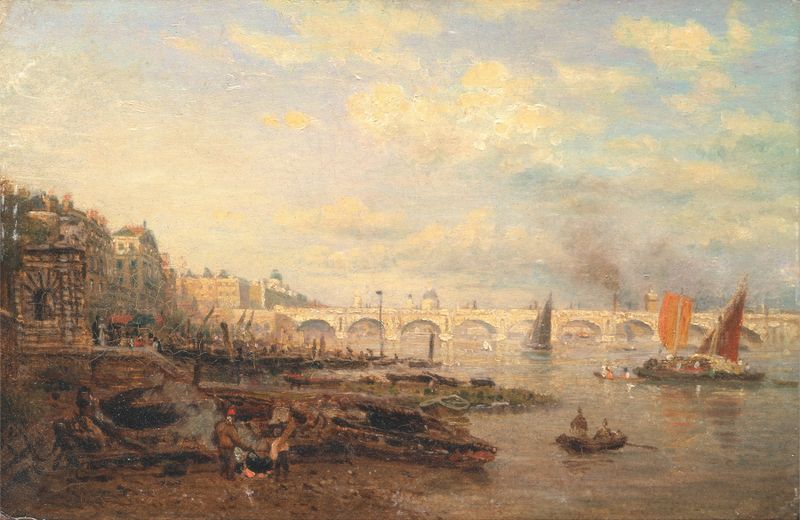
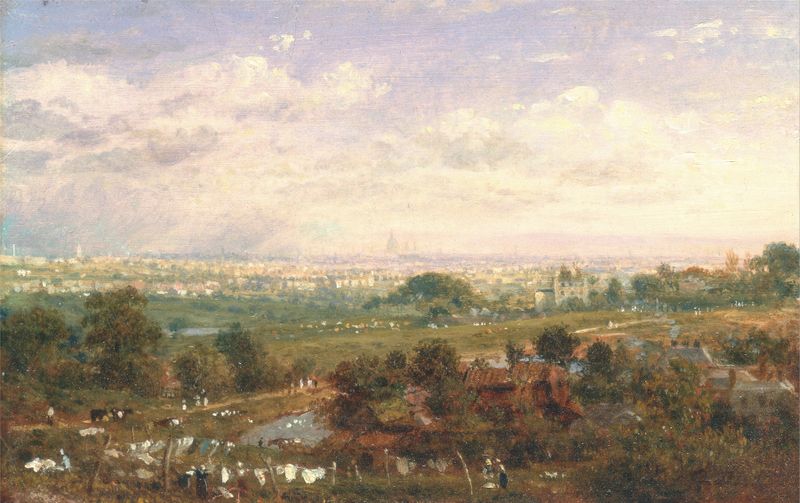
The void that lingers beneath the surface of elegance often tells a deeper story, one of loss and longing hidden in plain sight. Look to the horizon where the bridge arches gracefully over the Thames, its intricate details harmonizing with the expansive sky. The soft hues of a fading sunset bathe the scene in a rich palette of gold and burnt umber, inviting viewers to journey across its span. Notice how the shimmering water reflects the fleeting light, creating a dialogue between nature and architecture, as if the bridge itself were a lifeline connecting two worlds. Yet, amidst this picturesque view lies a subtle tension.
The juxtaposition of the sturdy stone structure against the fluid currents below evokes the struggle between permanence and transience. Each passerby, a mere silhouette, seems to glide through the scene, embodying the fleeting nature of time and the inevitable passage of life. The air is thick with a mixture of nostalgia and yearning, as the void speaks to unfulfilled desires and the weight of history carried in the ebb and flow of the river. Frederick Nash painted this evocative scene during a time when Britain was navigating the complexities of urban expansion and industrial progress.
Working in London in the early 19th century, he sought to capture the evolving relationship between humanity and nature, using the iconic Westminster Bridge as a focal point for his reflections. This moment in his career coincided with the Romantic movement, which emphasized emotion and the sublime, allowing him to infuse his work with both beauty and an underlying sense of yearning.
More Artworks by Frederick Nash
Browse all →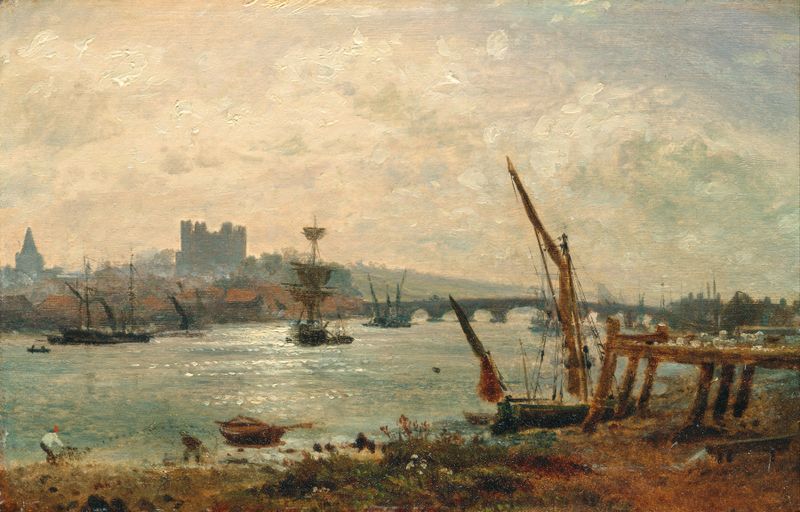
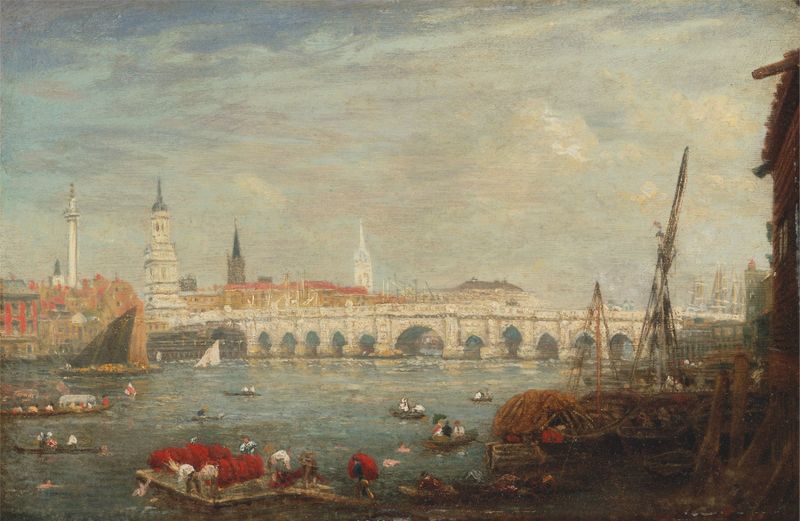
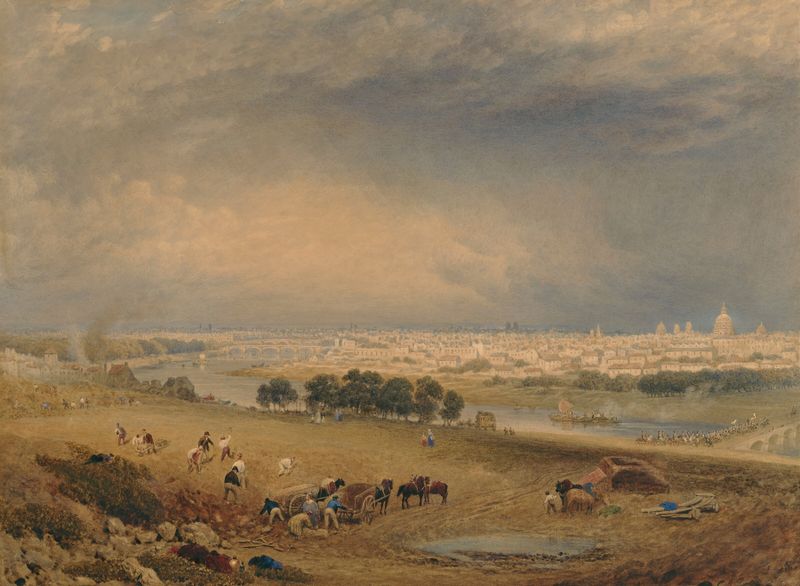

More Architecture Art
Browse all →
The statue of Liberty
Frédéric Auguste Bartholdi

View of Houses in Delft, Known as ‘The Little Street’
Johannes Vermeer

View of Houses in Delft, Known as ‘The Little Street’
Johannes Vermeer

The Cathedral in Rouen. The portal, Grey Weather
Claude Monet

The yellow house
Vincent van Gogh

The Church in Auvers-sur-Oise, View from the Chevet
Vincent van Gogh