The Mountains of Asia Minor, from Rhodes — History & Facts
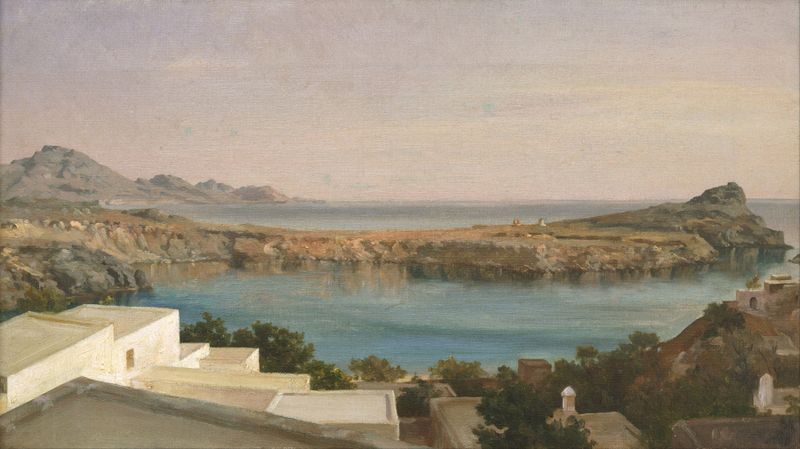
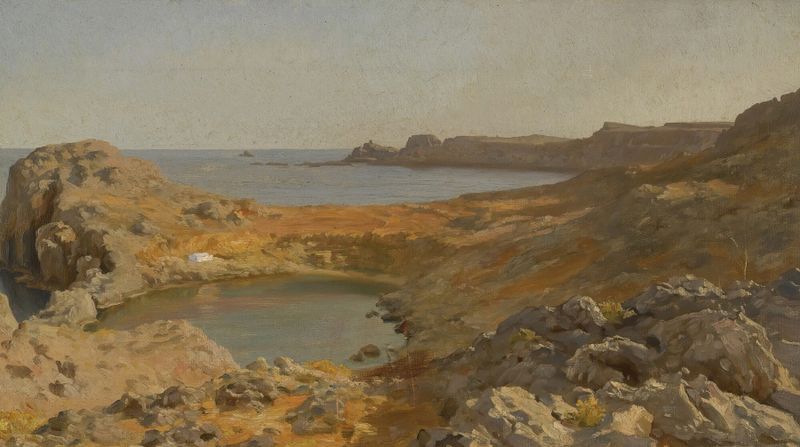
In the quietude of the mountains, serenity drapes itself like a veil over the rugged landscape, tempting the viewer to explore the duality of tranquility and turmoil. Look to the center of the canvas, where peaks rise majestically against a soft, cerulean sky. The play of light and shadow accentuates the textures of the rocks, revealing their weathered history. Rich, warm hues of gold and ochre dominate the foreground, while cooler tones of blue and green recede into the distance, creating a harmonious balance that draws the eye deeper into the scene.
The composition’s sweeping lines and gentle curves guide the viewer’s gaze, evoking a sense of peace amidst the grandeur. Yet, beneath this serene surface lies a tension between grandeur and isolation, as the mountains seem to whisper stories of solitude. The contrasting colors suggest a dichotomy: the vitality of life against the stillness of nature. Small details, like the fluttering of a distant bird or the subtle ripples in a serene pool, hint at an unseen world thriving amidst the stoic landscape, inviting contemplation of existence itself. In the late 19th century, the artist created this work during a period of intense exploration and aesthetic innovation.
Living in a time when the Pre-Raphaelite Brotherhood was reshaping artistic expression, Leighton sought to capture the sublime beauty of nature. His experiences in the Mediterranean, especially the allure of the landscapes of Asia Minor, profoundly influenced his vision, intertwining his passion for classical beauty with a fresh approach to depicting the natural world.