Garden of an Inn, Capri — History & Facts
In a sun-drenched garden on the island of Capri, two figures bask in the warmth of a tranquil afternoon. The vibrant blossoms sway gently in the light breeze, their colors a chorus of reds, yellows, and greens. A moment suspended in time, their laughter mingles with the soft rustle of leaves, captured in the vibrant hues of the canvas. Look to the left at the young woman, her white dress contrasting beautifully with the lush flora surrounding her.
Notice how her delicate hand caresses a blossom, inviting the viewer to share in her wonder. The dappled light filters through the tree branches overhead, casting a playful glow on her face, illuminating her innocence and joy. The artist’s meticulous brushwork highlights the intricate textures of the flowers, each petal alive with detail, while the cool shadows ground the scene in a sense of place. Beneath this idyllic portrayal lies a subtle interplay of innocence and fleeting happiness.
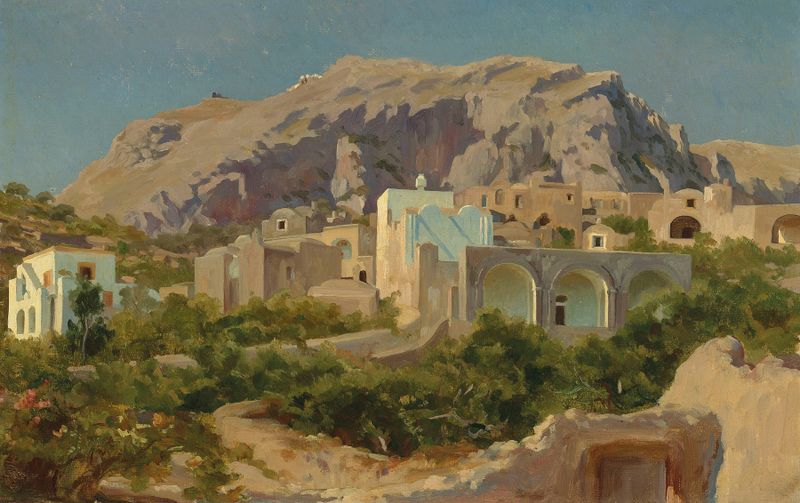
The juxtaposition of the lush garden, a symbol of abundance and life, against the ephemeral nature of youth hints at the transience of such moments. The figures, though seemingly carefree, exist in a world where the passage of time is inevitable, underscoring a poignant longing for permanence within the beauty of the present. Frederic Leighton created Garden of an Inn, Capri in 1859 while staying in Italy, a time when he was deeply influenced by the vibrant artistic culture of the region. As a prominent figure of the Aesthetic Movement, he sought to capture beauty in its purest form, driven by both personal exploration and the broader artistic evolution occurring in Europe.
This work reflects his desire to convey the essence of joy and innocence against the backdrop of nature's splendor.