
The Northern Boundary of St. Bride’s Bay — History & Facts
In this tranquil landscape, nature holds its breath, inviting us to ponder the act of creation itself. The stillness of the scene speaks volumes, revealing the delicate interplay between man and the environment. Look to the left at the gentle curve of the shoreline, where soft waves whisper secrets to the sand. The artist employs a palette of muted greens and blues, harmonizing the cool tranquility of the water with the warm embrace of the sky.
Notice how the light pours over the horizon, casting a golden glow that dances across the surface, drawing your eye into the serene depths of the bay. The meticulous brushwork captures the essence of the landscape, transforming it into a seamless blend of reality and imagination. Within this serene panorama lies a deeper narrative. The juxtaposition of the calm bay against the distant, imposing cliffs evokes a sense of vulnerability amidst grandeur.
The delicate balance of light and shadow suggests the transient nature of existence, where moments of beauty are fleeting yet profoundly impactful. Each brushstroke seems to confess a longing—an eternal quest to connect with the natural world and reflect its quiet majesty. In 1792, the artist found inspiration along the coast of Wales, where he painted this work during a period rich in artistic exploration. It was a time marked by a growing appreciation for landscape painting, and Smith was influenced by the Romantic movement as it began to gain traction.
As he embraced the allure of the natural world, he sought to capture a sense of wonder that would resonate through generations.
More Artworks by John Warwick Smith
Browse all →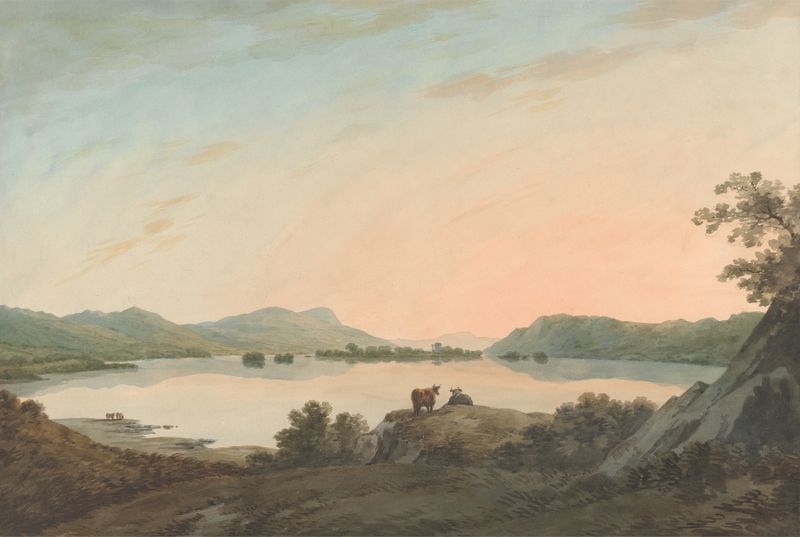
Lake Windermere from Calgarth with Belle Isle
John Warwick Smith
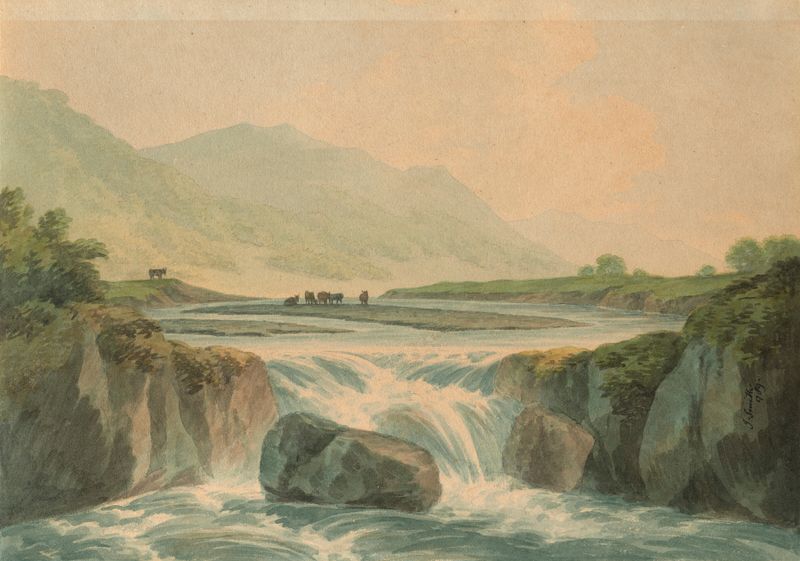
A waterfall on the River Rheidol, with cattle in the distance, North Wales
John Warwick Smith
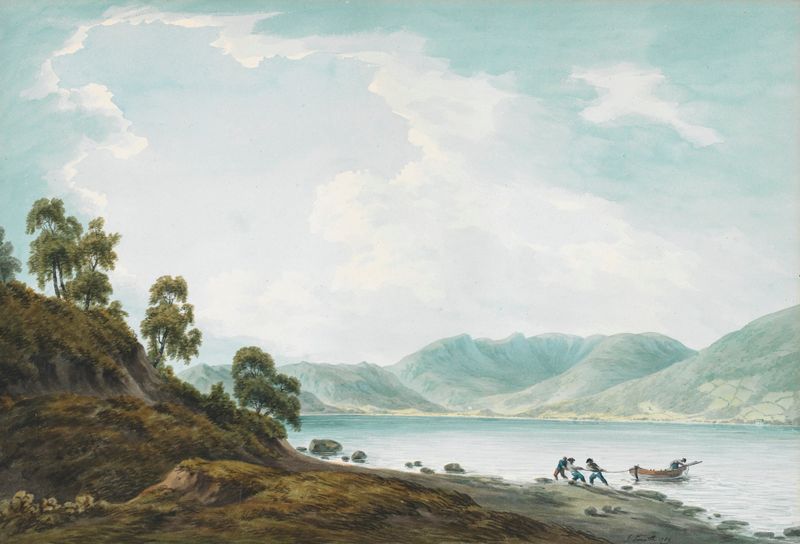
Head of Windermere from Belle Grange Farm
John Warwick Smith
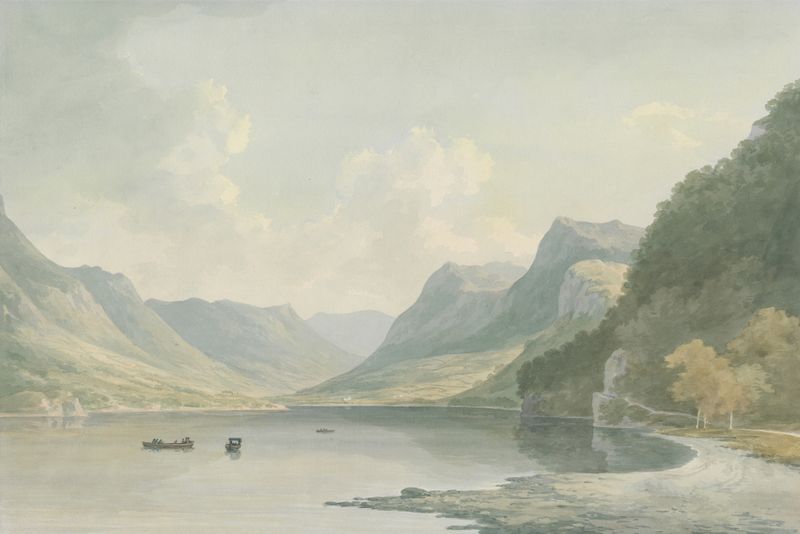
Ullswater, Looking toward Patterdale
John Warwick Smith
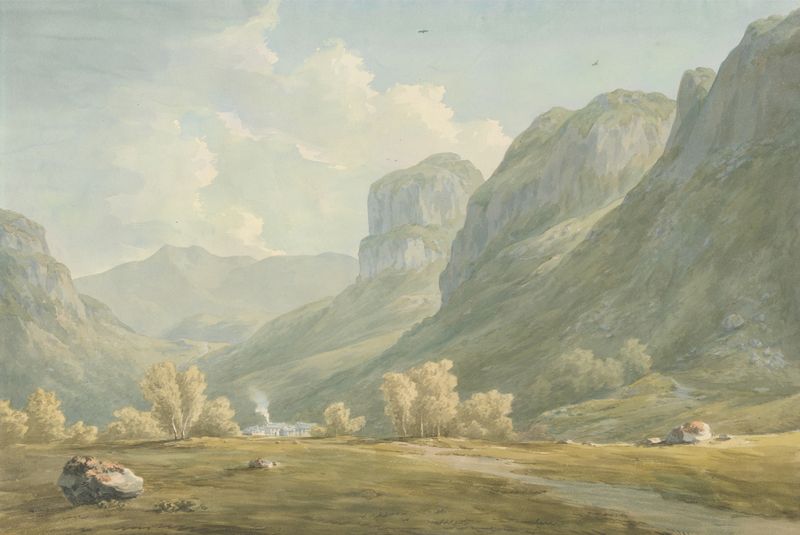
Village of Stonethwaite and Eagle Cragg, Borrowdale
John Warwick Smith
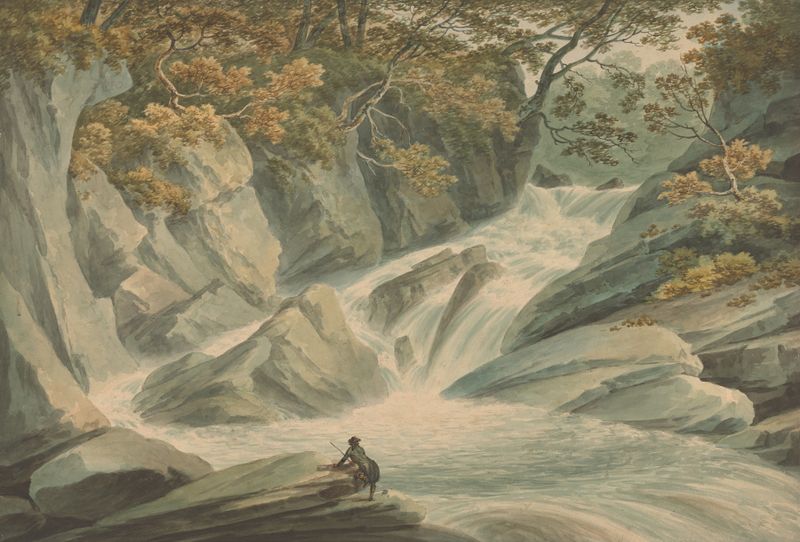
Hafod; Upper Part of Cascade
John Warwick Smith
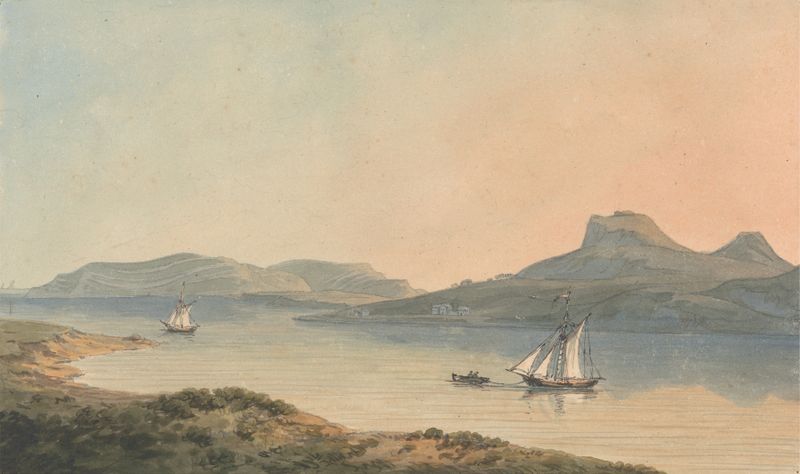
View of the Early Castle of Diganwy
John Warwick Smith
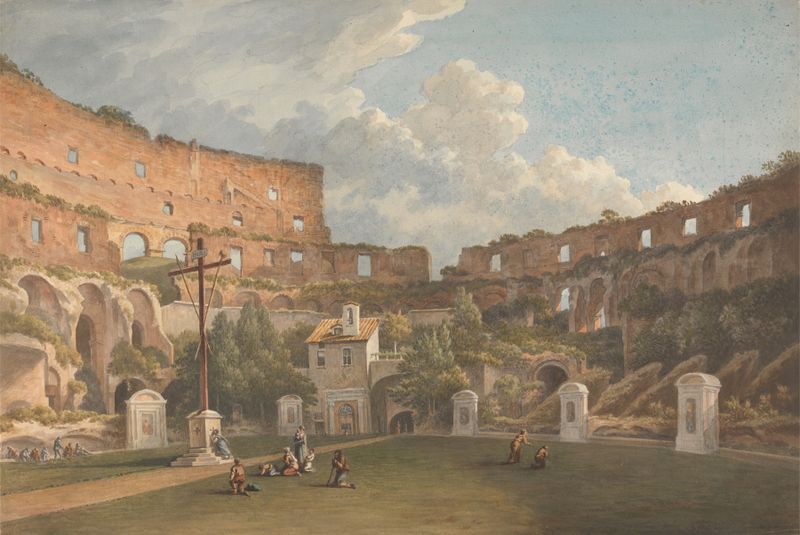
An Interior View of the Colosseum, Rome
John Warwick Smith
Village of Stonethwaite and Eagle Cragg, Borrowdale
John Warwick Smith
In the Bay of Salerno, near Vietri
John Warwick Smith





