The Old Graveyard in Wondelgem (Ghent) — History & Facts
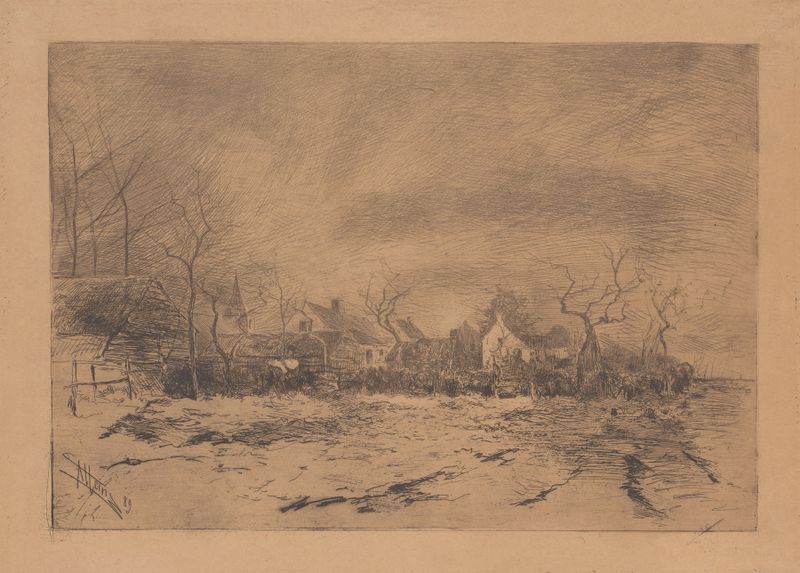
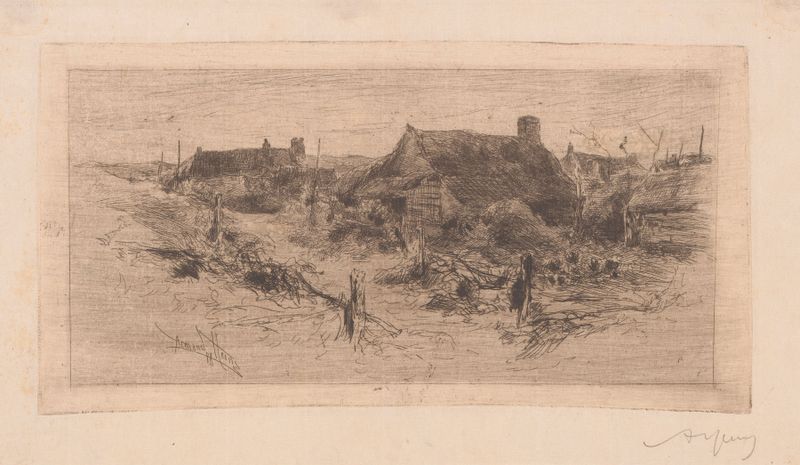
Could a single brushstroke hold eternity? In The Old Graveyard in Wondelgem, Armand Heins invites us to ponder the delicate interplay between life and death, while revealing the timeless essence of memory. Look to the lower left corner, where a cascade of verdant greens melds seamlessly into a patchwork of crumbling gravestones. The fresh foliage appears to embrace the weathered stone, a testament to nature's gentle reclamation. Notice how the soft, dappled light filters through the trees, casting ethereal shadows that enliven the somber landscape.
The muted palette of earthy browns and mossy greens pulls the viewer into a realm where tranquility and sorrow coexist in quiet harmony. Delve deeper and you will find a poignant contrast between the vitality of the surrounding flora and the stillness of the grave markers. Each gravestone, though aged and moss-covered, stands as a silent witness to the lives that once flourished. The illusion of movement created by the brushwork allows us to feel the passage of time—a reminder that while life ebbs, the memories linger, etched in both stone and the heart. In 1881, Heins painted this piece during a period marked by the rise of naturalism in the art world, reflecting the prevailing desire to depict everyday life with authenticity.
Working in Ghent, Heins was influenced by his contemporaries who sought to explore the connection between nature and human experience, echoing the sentiments of a society grappling with the transience of existence.