Gezicht op het kasteel te Bouillon — History & Facts
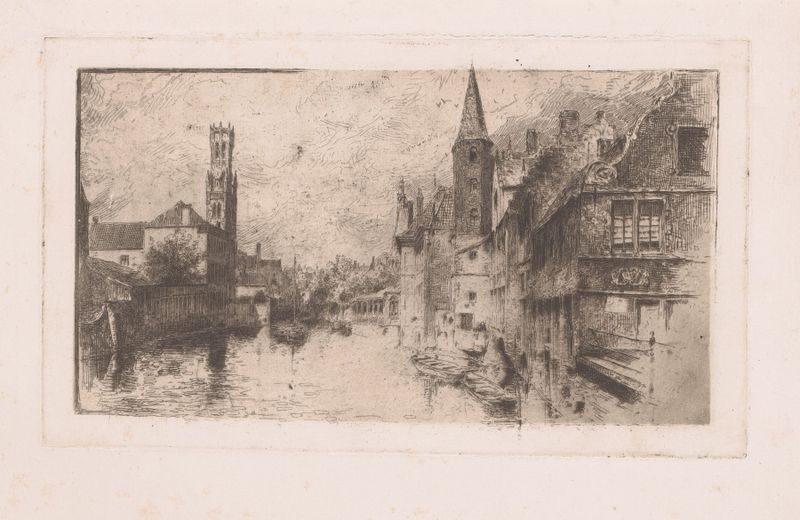
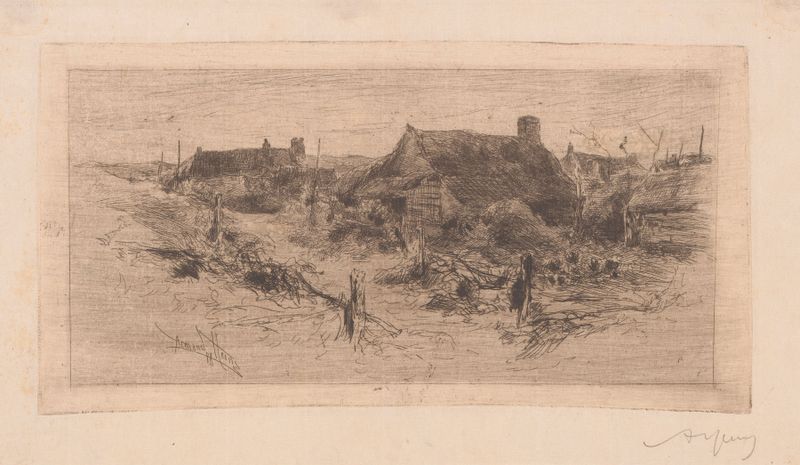
What if silence could speak through light? In the haunting stillness of Gezicht op het kasteel te Bouillon, emptiness resonates, evoking a profound sense of solitude. Look to the foreground, where the crumbling stone of the castle stands defiantly against the expansive sky. The muted palette—soft greys, gentle blues, and faded greens—captures the somber beauty of the landscape. Notice how the light spills from the left, illuminating the castle's weathered façade while leaving the surrounding trees in shadow, enhancing the isolation present in this scene.
Each stroke of the brush invites contemplation, urging the viewer to linger on the details of decay and resilience. Within the composition, the interplay of light and shadow serves as a meditation on impermanence. The castle, sturdy yet fading, symbolizes both strength and vulnerability, suggesting the passage of time and the weight of history. The quietness of the landscape, interrupted only by the distant silhouettes of trees, embodies a tension between presence and absence, as if the echoes of past inhabitants linger in the air.
This juxtaposition fosters an emotional resonance, inviting introspection about the spaces we inhabit and the memories we carry. Armand Heins painted Gezicht op het kasteel te Bouillon between 1866 and 1910, a period marked by a growing interest in realism and the exploration of atmospheric effects in landscape painting. Heins, who often focused on the interplay of light and environment, was influenced by the burgeoning Impressionist movement, which sought to capture fleeting moments in time. During this time, he reflected on themes of history and memory, crafting images that bridge the natural world and human experience.