
The old Regulierspoort in Amsterdam during Winter — History & Facts
A sky swollen with winter clouds presses down on the old Regulierspoort, but the city below is alive with movement and quiet industry. Your eye is drawn first to the imposing gatehouse, its towers and clock standing sentry over the frozen canal, while the Dutch flag atop the moored ship signals pride and connection to the wider world. Skaters sweep across the ice, some in pairs, others in playful clusters, their figures animated against the stillness of the architecture.
The bridge, half-crowded with bundled figures, links the bustle of the quay to the quieter, sunlit gables beyond. Every detail—the windmill on the horizon, the boats locked in ice, the woman guiding a child—serves to anchor this winter day in the rhythms of seventeenth-century Amsterdam. Painted in 1650, The old Regulierspoort in Amsterdam during Winter by Abraham Beerstraaten belongs to a tradition of cityscapes that flourished in the Dutch Golden Age, when urban pride and the pleasures of daily life became worthy subjects in their own right. These works were often commissioned by prosperous citizens or city officials eager to commemorate civic landmarks and the prosperity they represented.
Beerstraaten, known for his wintry scenes and architectural precision, captures not only a likeness of a place but a particular mood: the mingling of cold and community, grandeur and everyday life. History has kept few traces of this specific painting’s journey, but its survival in a modern collection invites us to linger in the world it conjures—where the city’s stone and ice, sky and water, all seem to pause for a single winter’s afternoon.
More Artworks by Abraham Beerstraaten
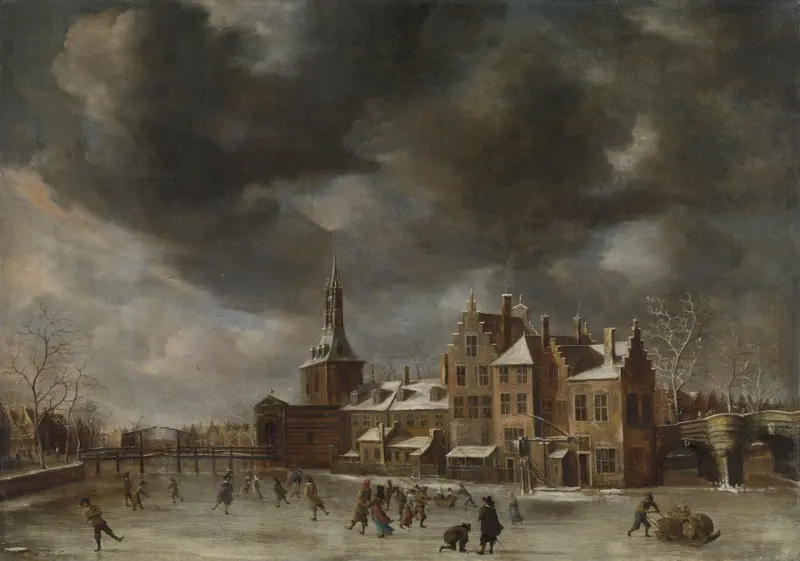
The Blauwpoort in Leiden in the Winter
Abraham Beerstraaten
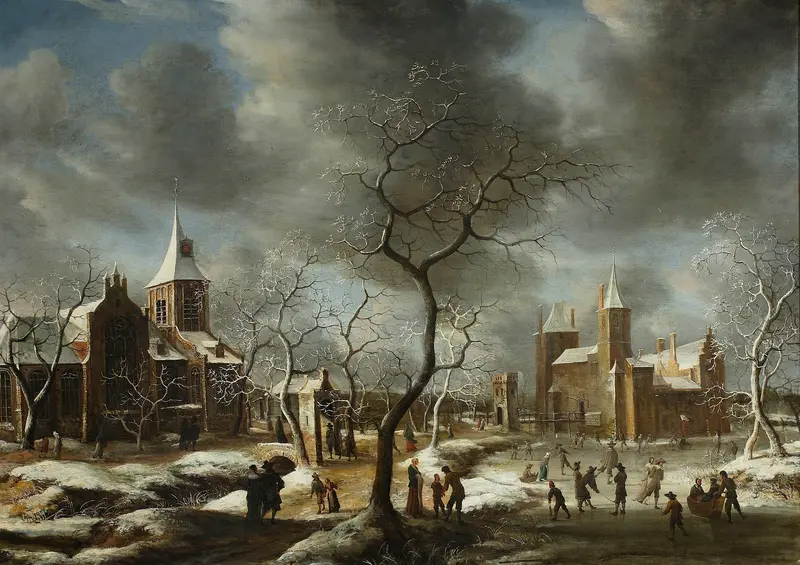
Landscape with ice-skaters
Abraham Beerstraaten
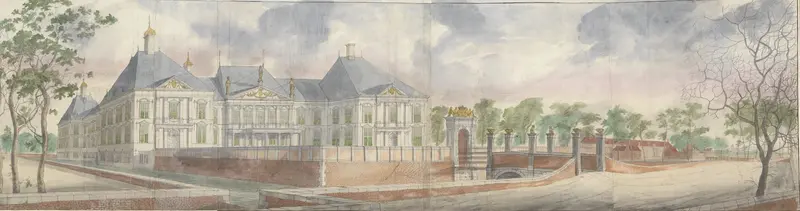
Het Huis te Honselaersdijk en omgeving, over het voorplein te zien
Abraham Beerstraaten
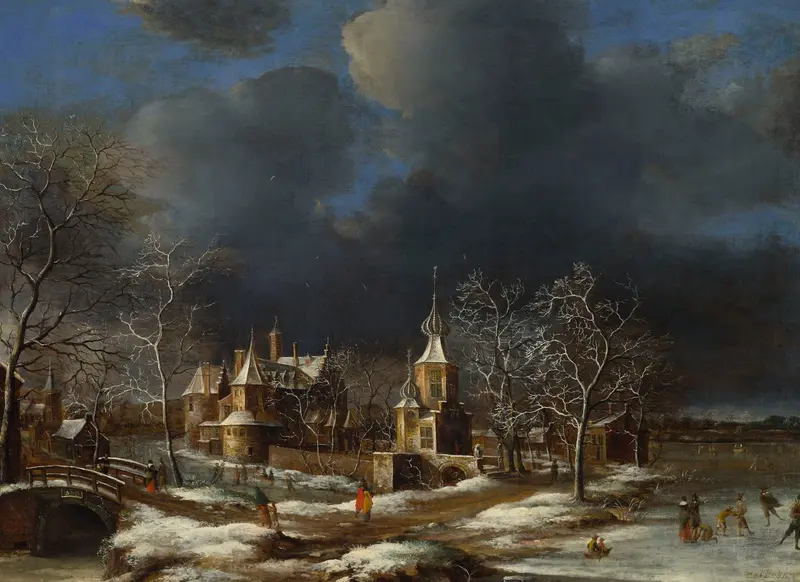
Poelgeest Castle at Koudekerk
Abraham Beerstraaten
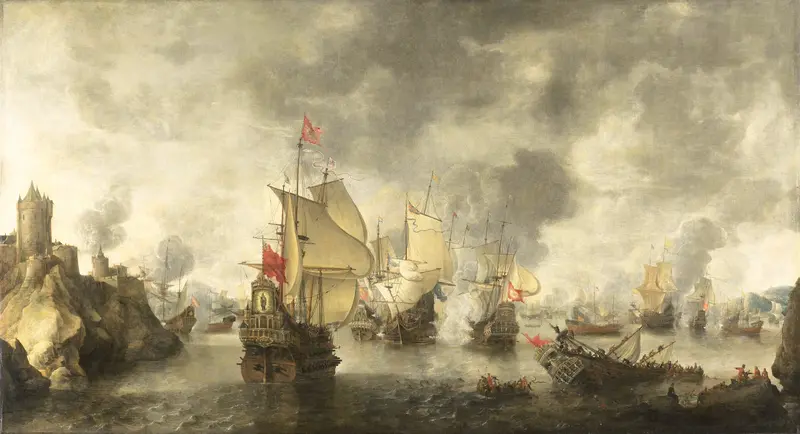
Battle of the Combined Venetian and Dutch Fleets against the Turks in the Bay of Foya, 1649
Abraham Beerstraaten
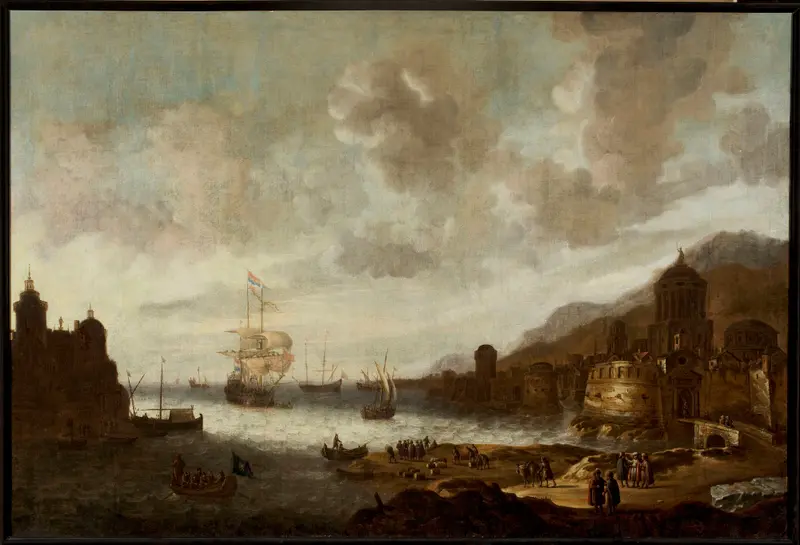
Dutch ship in an exotic port
Abraham Beerstraaten
Battle of the combined Venetian and Dutch fleets against the Turks in the Bay of Foya
Abraham Beerstraaten
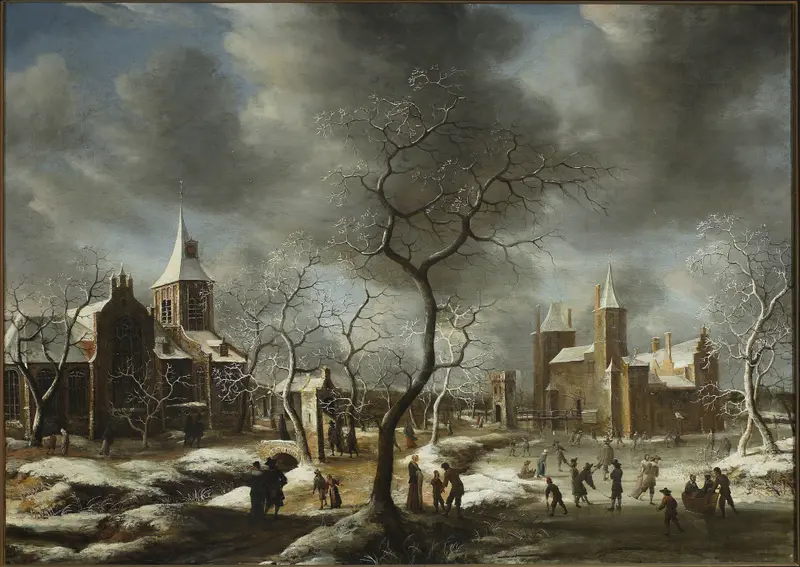
Winter landscape with skaters.
Abraham Beerstraaten
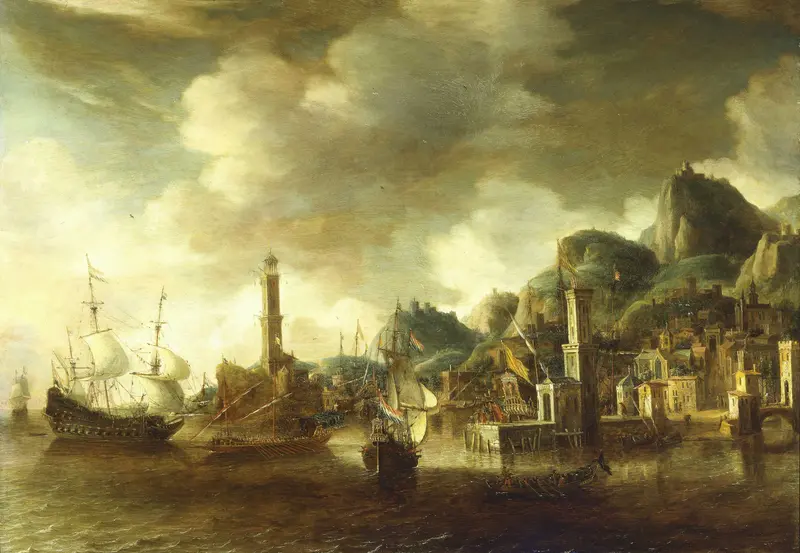
A Dutch Flagship and a Fluyt Running into a Mediterranean Harbour
Abraham Beerstraaten
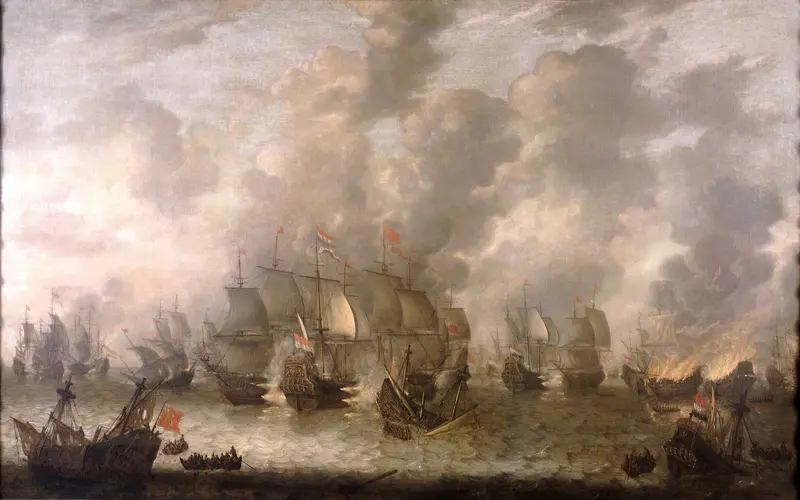
The Battle of Scheveningen, 31 July
Abraham Beerstraaten
More Landscape Art

The Starry Night
Vincent van Gogh

View of Delft
Johannes Vermeer

Water Lilies
Claude Monet

The Grand Canal, Venice, looking north-west from the Ca' Corner to the Ca' Contarini degli Scrigni, with the campanile of Santa Maria della Carità
Canaletto

Windsor Castle
Canaletto

The Grand Canal looking North-East from the Palazzo Dolfin-Manin to the Rialto Bridge
Canaletto