
The Orchard — History & Facts
What if silence could speak through light? In The Orchard, the interplay of color and shadow evokes an innocence that whispers of fleeting moments and untold stories beneath the branches. Look to the left at the vibrant greens of the trees, a symphony of life captured in thick brushstrokes. The golden sunlight breaks through the orchard canopy, painting dappled patterns on the ground, inviting your gaze deeper into the tranquil scene. Notice how the figures, subtly rendered, blend harmoniously with their surroundings, as if they are part of the very fabric of nature itself.
The palette, rich with earthy tones, enhances the sense of warmth and serenity that envelops the viewer. Yet beneath this idyllic surface lies a tension between joy and transience. The figures, seemingly engaged in innocent play, are suspended in a moment that is both eternal and fleeting. The light, while illuminating, also casts long shadows that hint at the inevitability of change.
This contrast speaks to the bittersweet nature of childhood, where the joy of innocence is often shadowed by the awareness of life's impermanence. In 1886, James Ensor created this work during a period of personal exploration and transformation in his artistic career, residing in Belgium. At that time, he was influenced by both Impressionism and Symbolism, seeking to convey emotional depth through simple scenes. His surroundings were marked by a burgeoning art scene, where he began to establish his unique voice, balancing the delicate between realism and the metaphysical, as seen in this serene yet evocative orchard.
More Artworks by James Ensor
Browse all →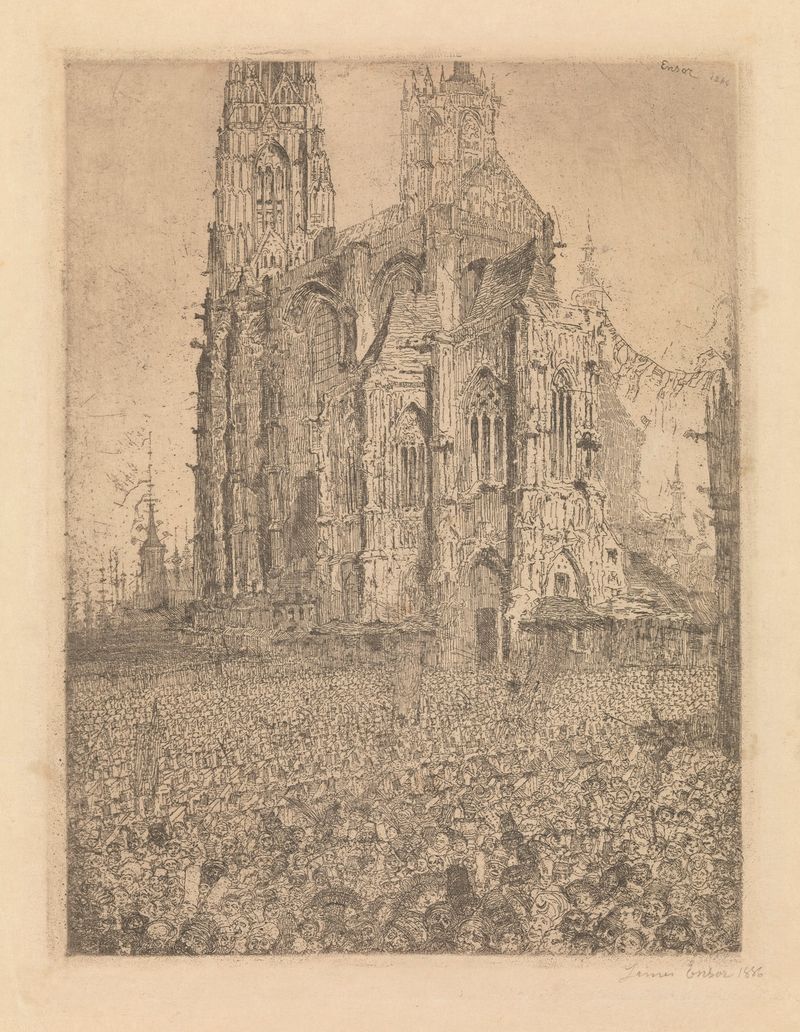
The Cathedral
James Ensor
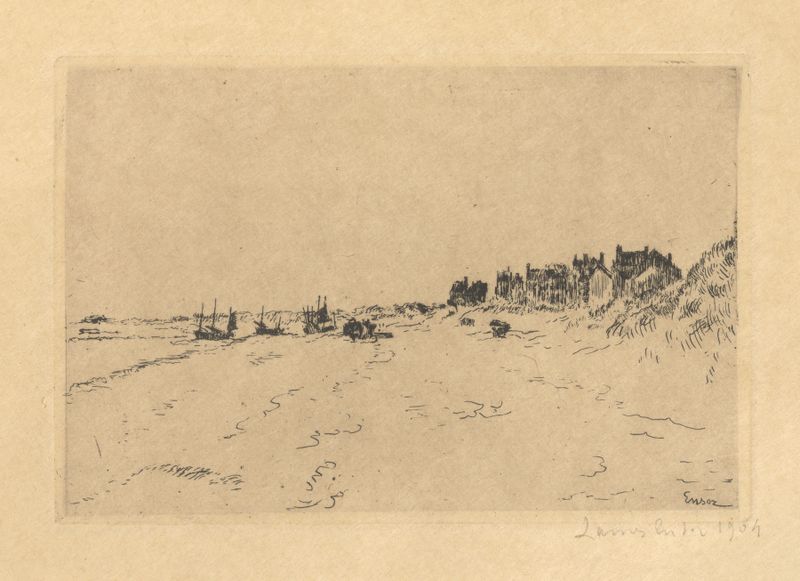
Het strand van De Panne
James Ensor
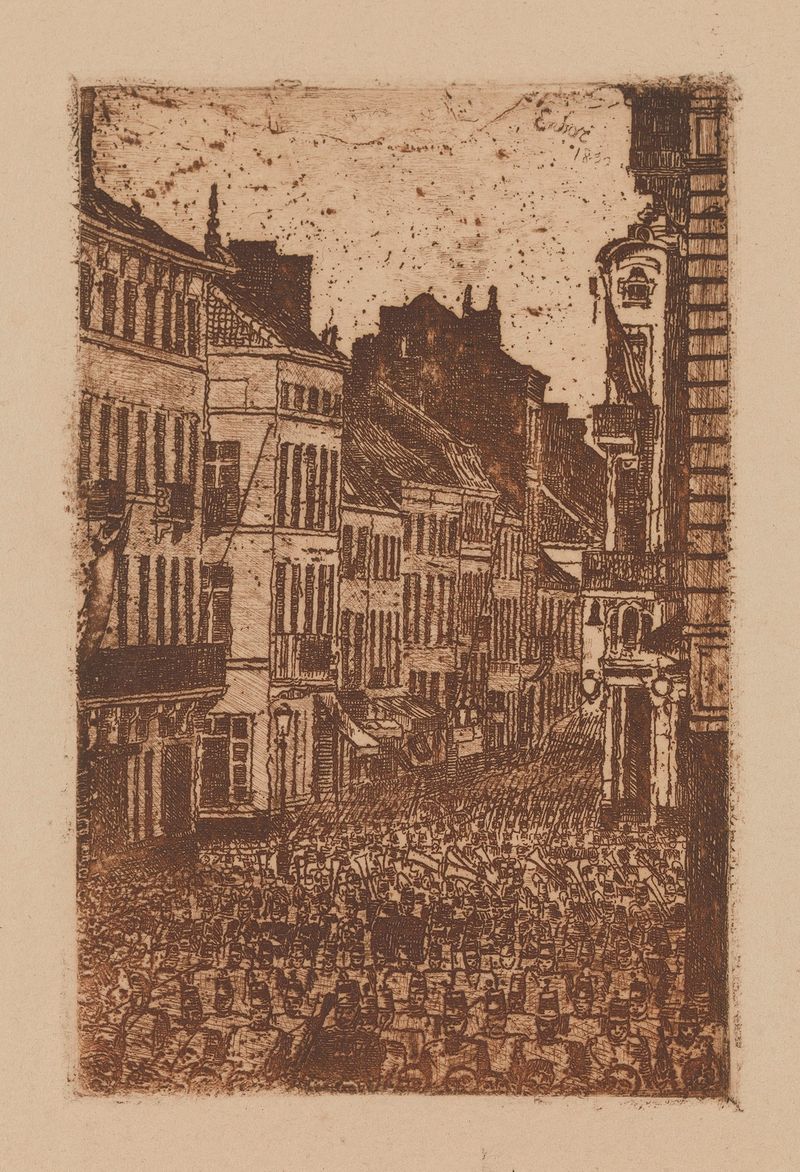
The Music in the rue de Flandre, Ostend
James Ensor
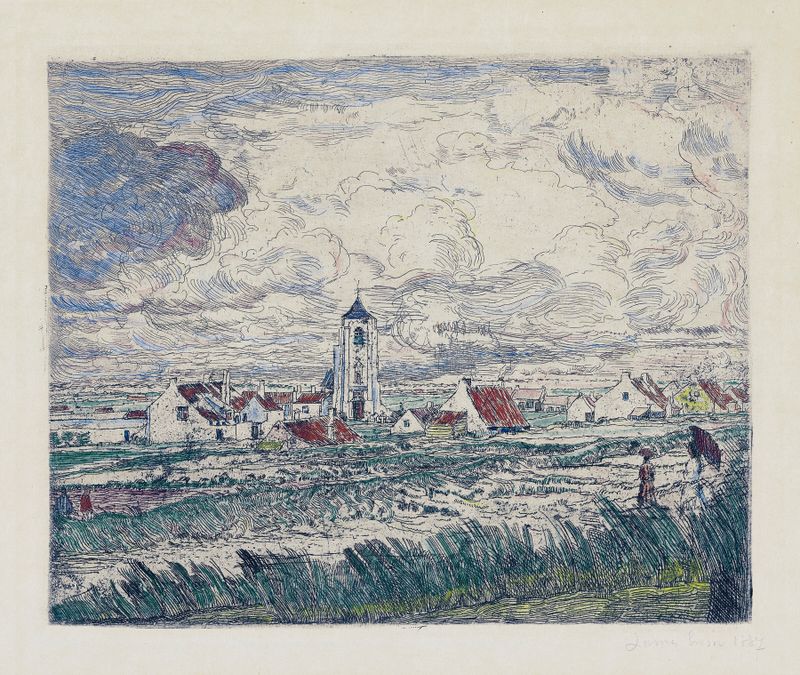
Grande vue de Mariakerke
James Ensor
View of Mariakerke
James Ensor
The Rooftops of Ostend
James Ensor
Huisjes in Mariakerke
James Ensor
The rooftops of Ostend
James Ensor
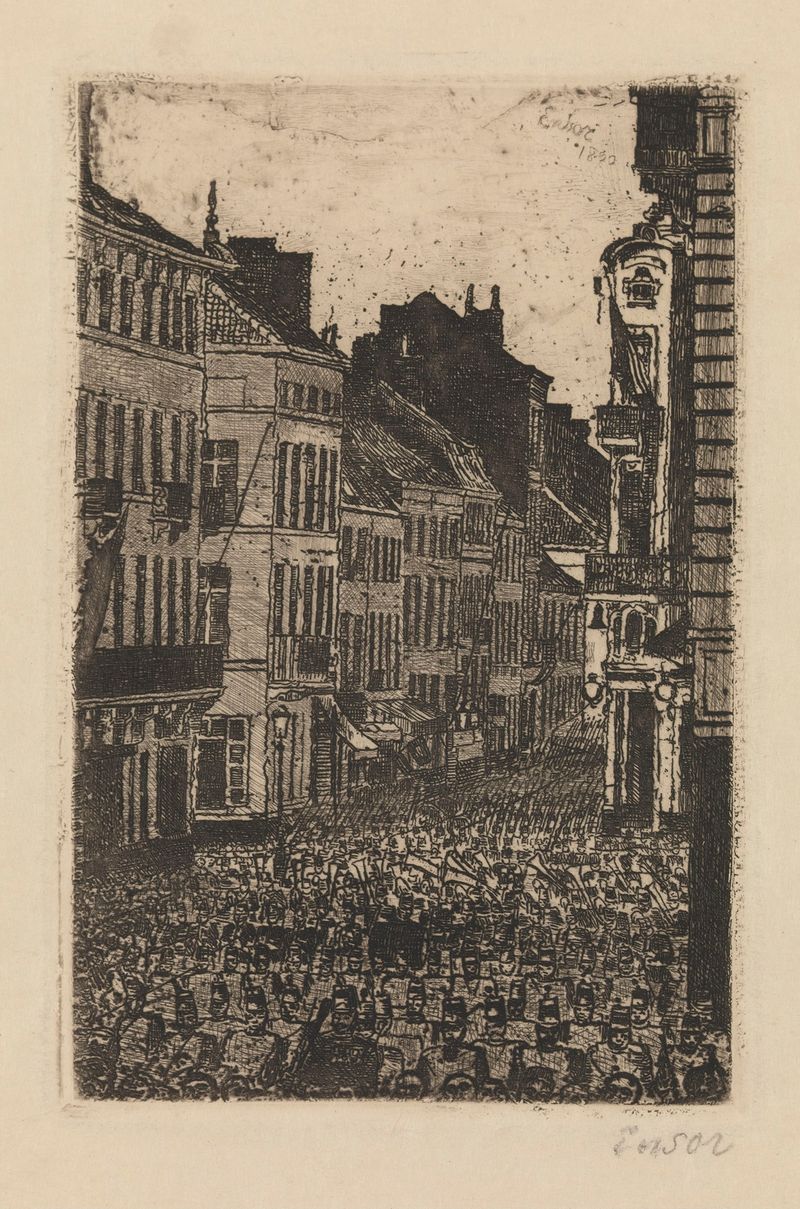
The Music in the rue de Flandre, Ostend
James Ensor
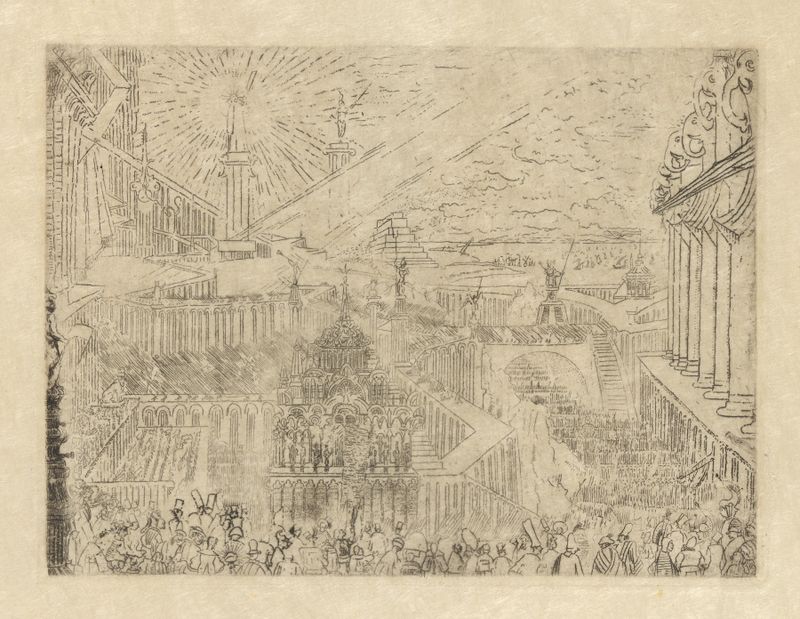
Verovering van een vreemde stad
James Ensor





