
The Poacher, Dunes of Saint Jean de Mont — History & Facts
What if silence could speak through light? In The Poacher, Dunes of Saint Jean de Mont, a tranquil yet potent moment unfolds, revealing the tension between nature and humanity, freedom and restraint. Look to the foreground, where a solitary figure stands, cloaked in shadow against the brilliant coastal backdrop. The artist's deft brushstrokes create a layered texture that contrasts the roughness of the sand dunes with the softness of the setting sun's glow. Notice how the light spills over the figure’s back, illuminating the remnants of a day’s labor, while the surrounding landscape remains shrouded in muted tones, creating a visual echo of the poacher's clandestine actions. Delve deeper into the implications of this composition.
The poacher's posture embodies a mix of defiance and vulnerability, as if he is both a guardian of the land and a trespasser. The restless waves in the background symbolize the constant pull of nature, a reminder that while one may seek to conquer it, they are forever bound to its rhythm. This duality of existence invites the viewer to reflect on the struggles that arise when personal desires clash with the natural world’s sovereignty. Created in 1901, this work came at a time of significant change in France, as the country grappled with industrialization and its impact on rural life.
Lepère, a key figure in the revival of etching and a proponent of realism, captured the complexities of the human experience against the backdrop of societal transformation. His commitment to portraying unvarnished truths reflects the broader artistic movements of the time, which sought to highlight the lives of everyday people amidst a rapidly evolving landscape.
More Artworks by Auguste Louis Lepère
Browse all →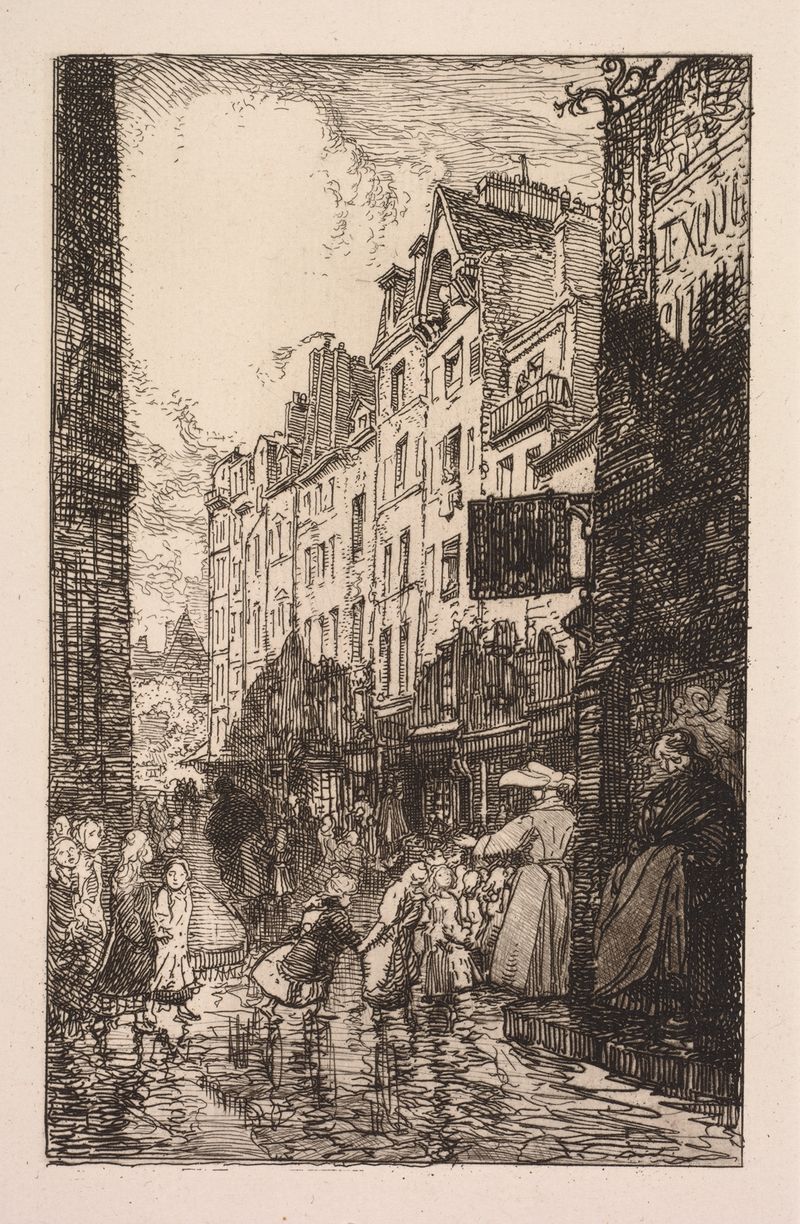
La Rue des Prêtres Saint-Séverin
Auguste Louis Lepère
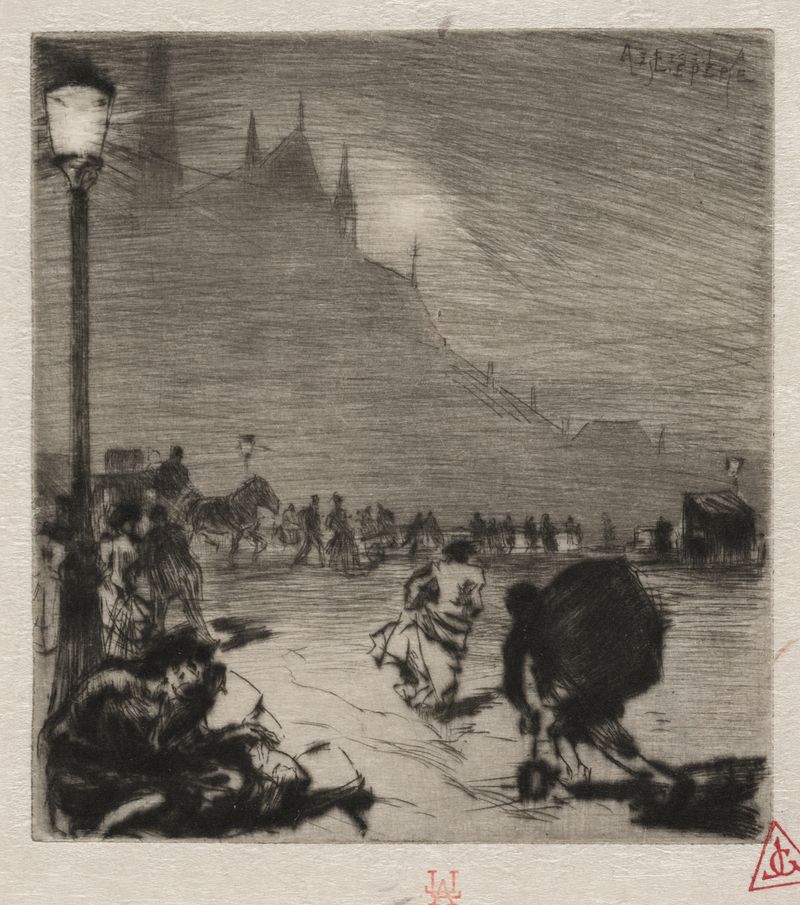
Au Coin du Pont-aux-Doubles
Auguste Louis Lepère
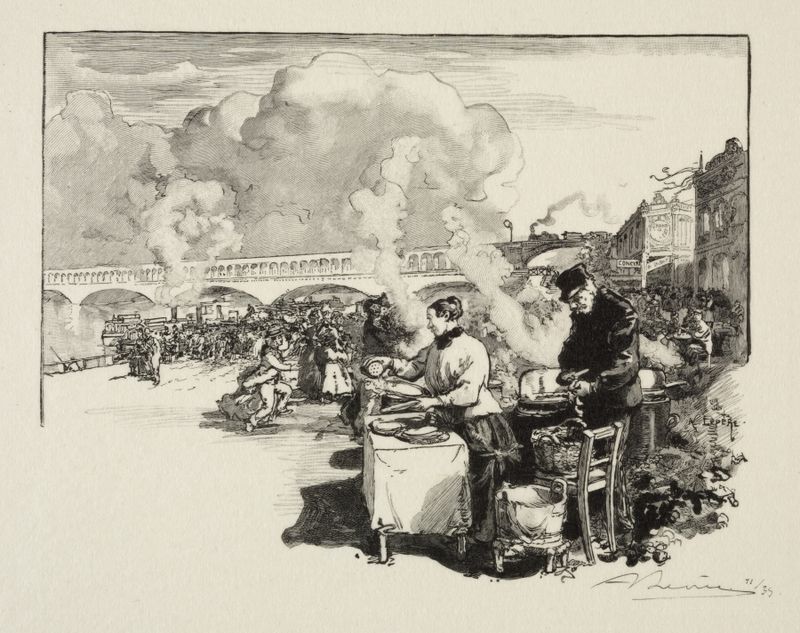
Debarcadère des bateaux-omnibus
Auguste Louis Lepère

La Seine, au quai de la Rapée
Auguste Louis Lepère
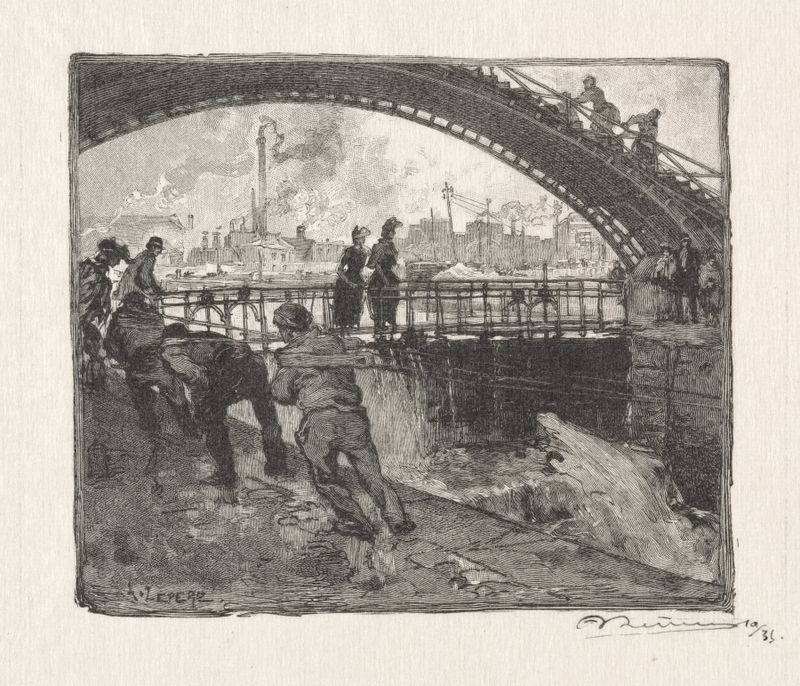
L’Ecluse du Canal St. Martin
Auguste Louis Lepère

Le Boulevard Montmartre, le Soir
Auguste Louis Lepère

Une Chasse au Mont Gérard
Auguste Louis Lepère
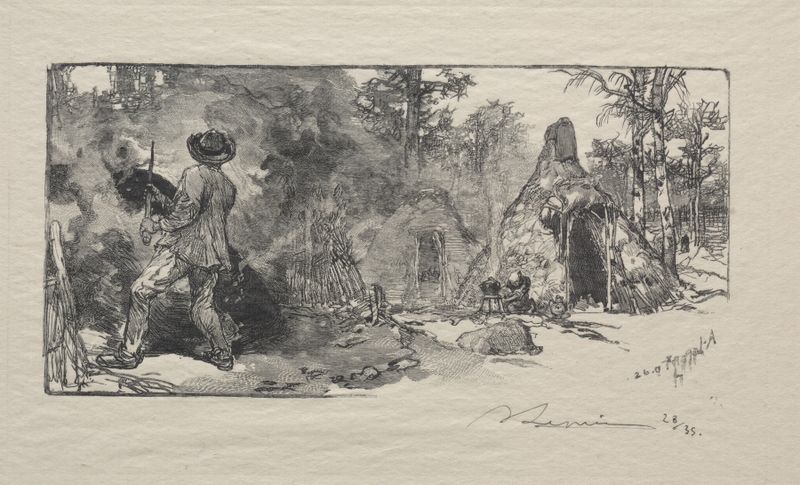
Les Charbonniere
Auguste Louis Lepère
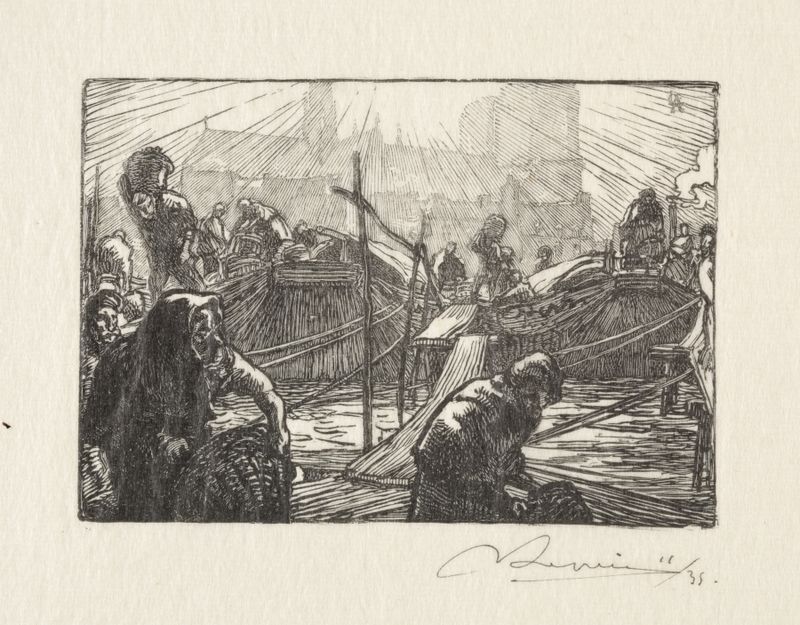
Notre Dame vue du Marché aux pommes
Auguste Louis Lepère

Le Palais des Arts Liberaux, Intèrieur
Auguste Louis Lepère





