
The Port of New York — History & Facts
Can beauty exist without sorrow? As the canvas unfolds before us, the bustling Port of New York reveals both promise and melancholy, a tapestry woven from the threads of hope and heartache. Look to the left at the delicate play of sunlight shimmering on the water’s surface, casting a luminous glow that entices the viewer to explore deeper. The ships, painstakingly detailed, stand as sentinels of commerce and adventure, their sails unfurled against a backdrop of cloudy skies. Notice how the vibrant reds and blues of the vessels contrast with the muted grays of the harbor, reflecting a world teetering between prosperity and the void of uncertainty. In this artwork, the port serves as a symbol of opportunity yet also hints at the transient nature of life.
The figures laboring along the docks embody the spirit of perseverance, yet their distant gazes suggest an awareness of the struggles that lie ahead. The bustling activity contrasts sharply with the quiet loneliness of the water, a reminder that even amidst progress, there lingers an unspoken sorrow in the heart of the city. Created in 1878, this piece emerged during a transformative era in American art, as Currier & Ives sought to capture the spirit of the nation’s growth and expansion. Living in New York, the artists were inspired by the city's dynamic energy, yet they understood that such progress often came with a cost.
This work reflects not just a moment in time but a broader narrative about the American experience—one marked by both triumph and tragedy.
More Artworks by Currier & Ives.
Browse all →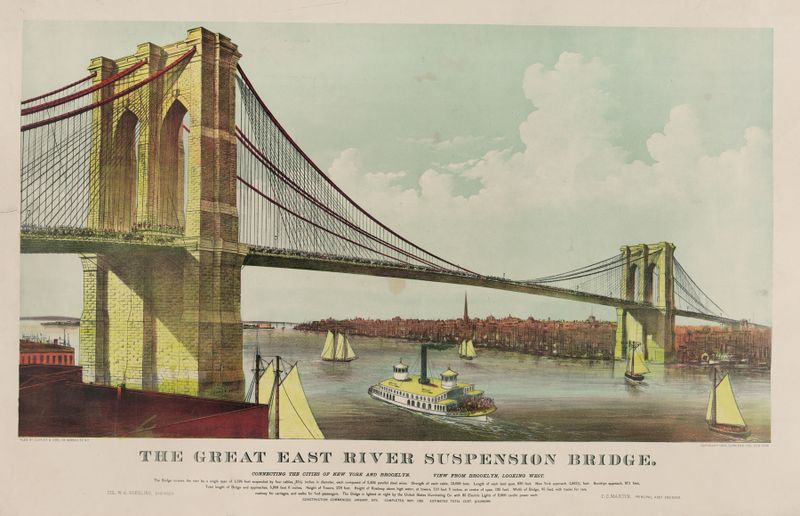
The great East River suspension bridge; connecting the cities of New York and Brooklyn View from Brooklyn, looking west.
Currier & Ives.
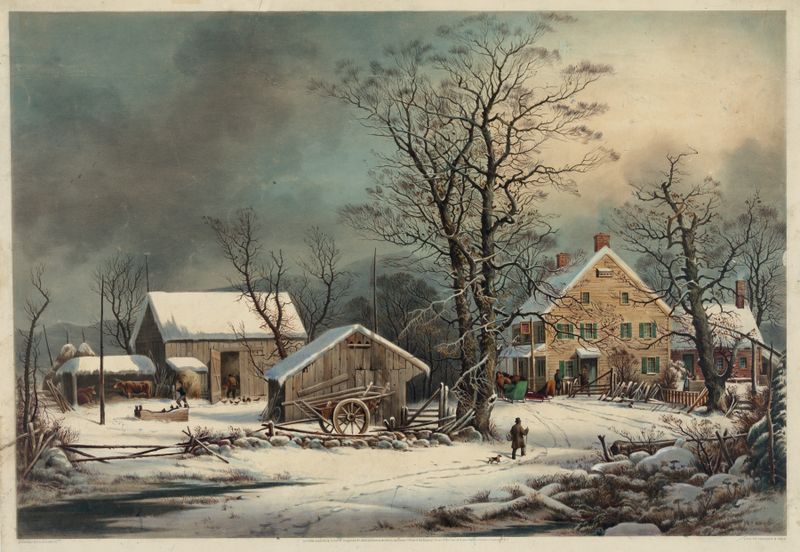
Winter in the country; a cold morning
Currier & Ives.
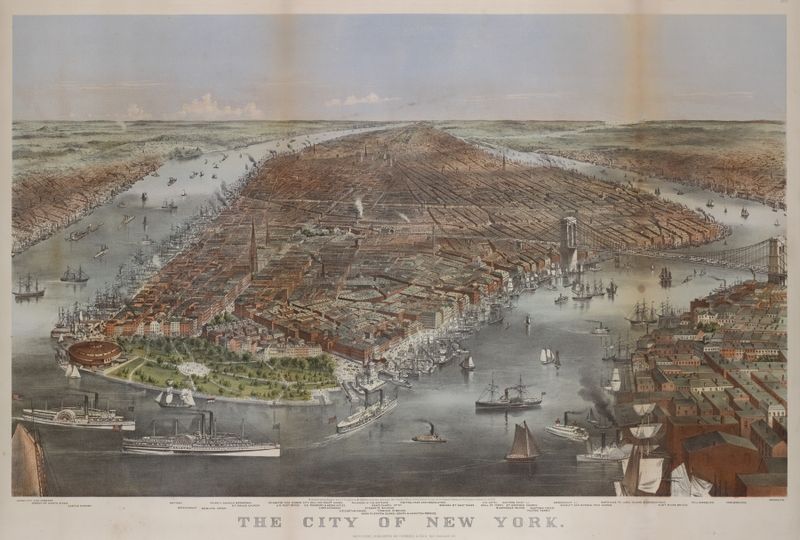
The City of New York
Currier & Ives.
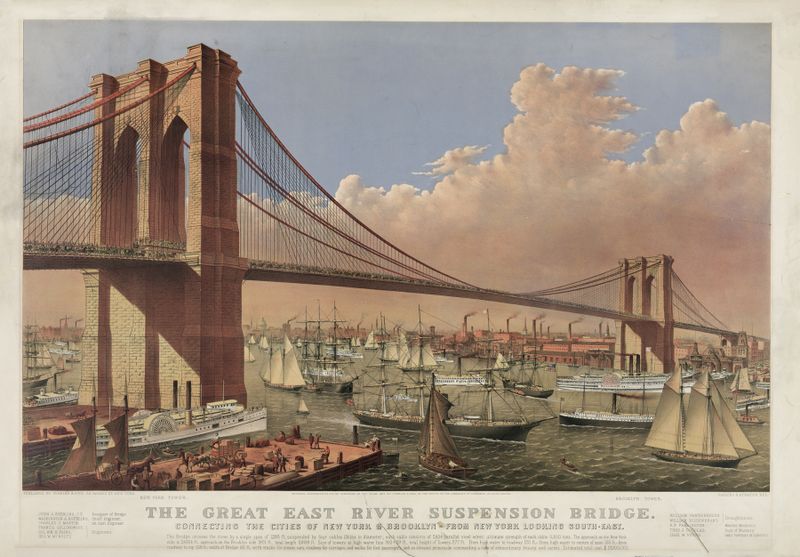
The great East River suspension bridge; connecting the cities of New York & Brooklyn From New York looking south-east.
Currier & Ives.
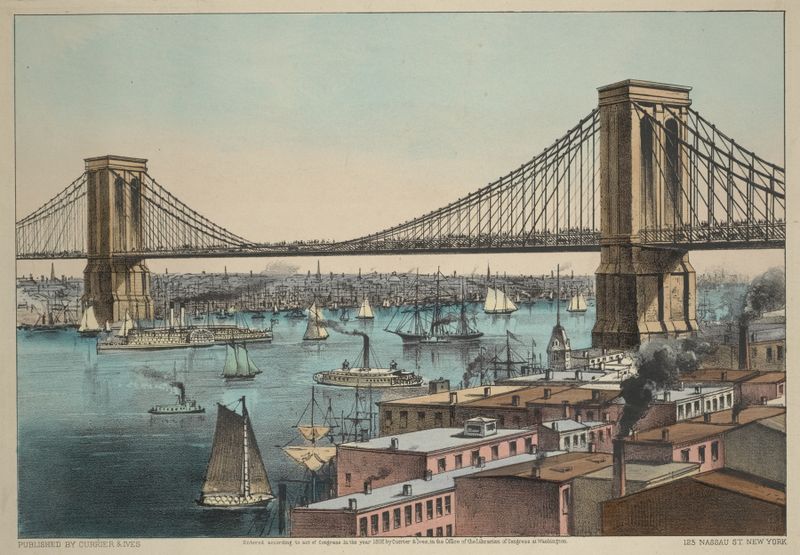
The Great East River Bridge. To connect the cities of New York & Brooklyn
Currier & Ives.
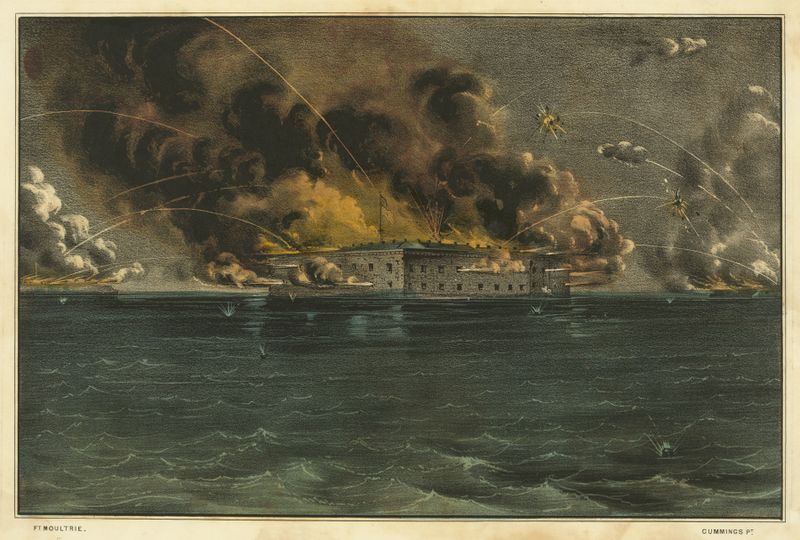
Bombardment of Fort Sumter, Charleston Harbor; 12th & 13th of April, 1861
Currier & Ives.
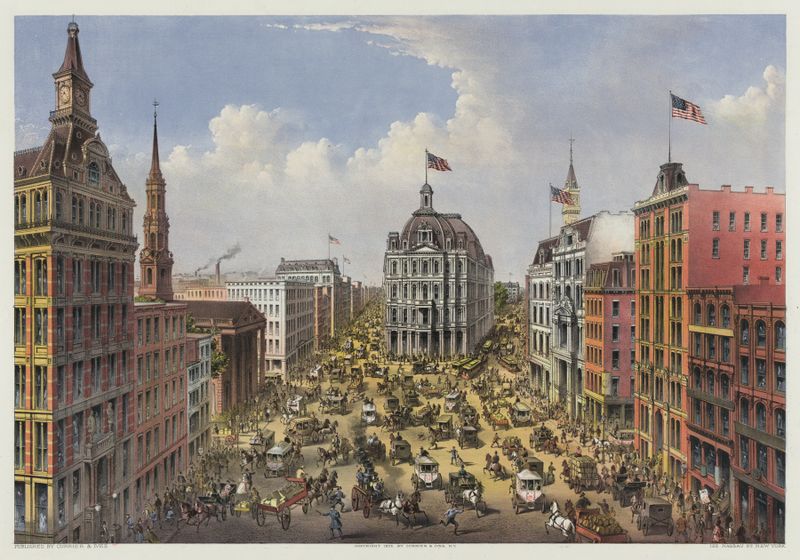
Broadway, New York; From the western union telegraph building looking north
Currier & Ives.
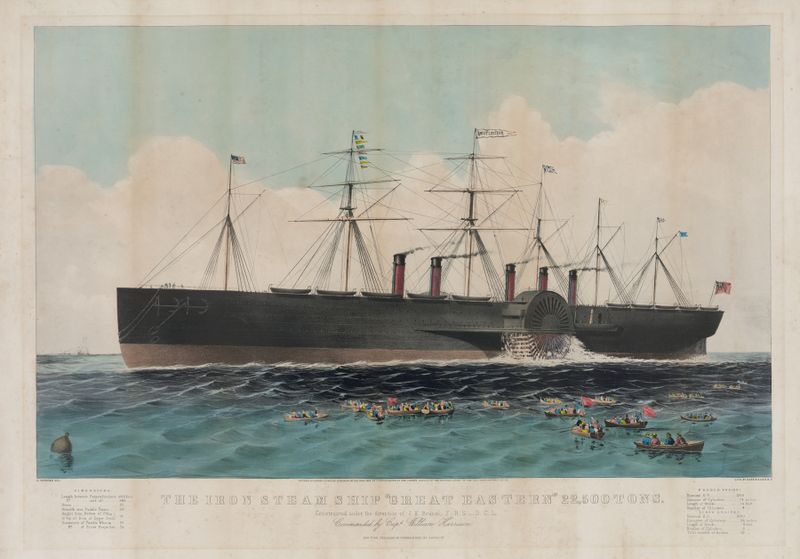
The iron steam ship ‘Great Eastern’ 22,500 tons; constructed under the direction of I.K. Brunel, F.R.S. — D.C.L. commanded by Capt. William Harrison
Currier & Ives.
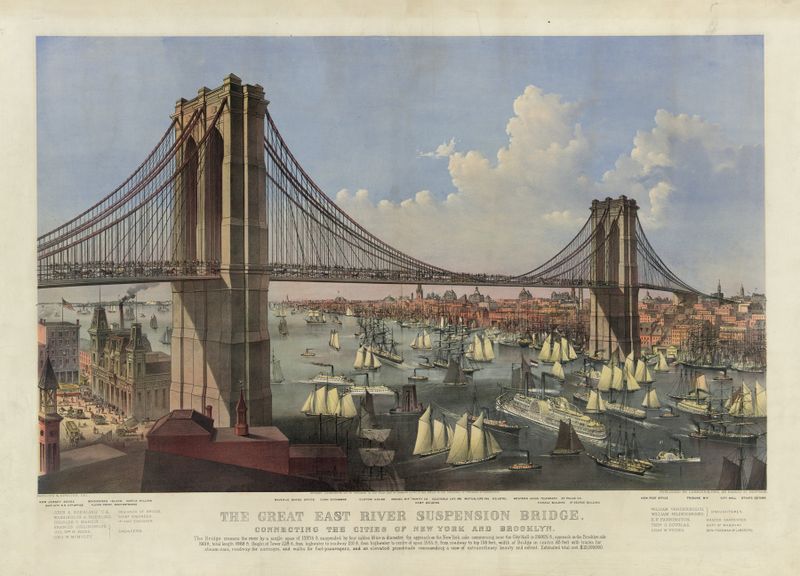
The great East River suspension bridge–Connecting the cities of New York and Brooklyn
Currier & Ives.
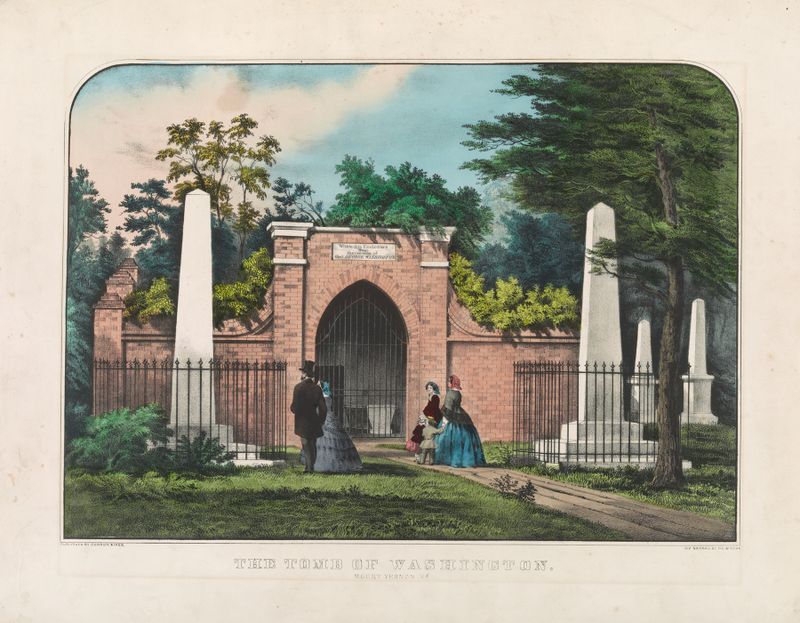
The tomb of Washington; Mount Vernon, Va.
Currier & Ives.





