
The Raging One — History & Facts
Can beauty exist without sorrow? This question resonates deeply within the confines of the canvas, where tumultuous emotions collide and intertwine. Look closely at the swirling forms that dominate the composition; they express an unsettling energy, a chaotic dance of brushstrokes that leads the eye to the center. The bold, tempestuous colors—deep reds and turbulent blues—create an atmosphere thick with tension, while the lighter hues intermittently pierce through like fleeting moments of clarity. Notice how the figures appear both lost and liberated, their gestures suggesting a struggle against intangible forces, beckoning the viewer to delve deeper into their turbulent existence. The interplay of madness and beauty conveys a palpable emotional tension.
The distorted forms reflect an internal chaos, perhaps embodying the artist's own struggles or broader societal anxieties of the era. This tumultuous scene hints at a fleeting moment of transcendence amidst despair, suggesting that in madness, there may lie vestiges of profound beauty. The chaotic brushwork and intense palette invite viewers to confront their discomfort, forcing a dialogue between chaos and serenity. In 1890, Auguste Louis Lepère painted this work during a time of significant change in France, where Impressionism was taking root, evolving into newer forms of expressionism.
It was a period marked by the juxtaposition of industrial progress and the anxieties that accompanied it. As Lepère engaged with this shifting landscape, The Raging One reflects both his artistic evolution and the emotional turbulence of a world on the brink of modernity.
More Artworks by Auguste Louis Lepère
Browse all →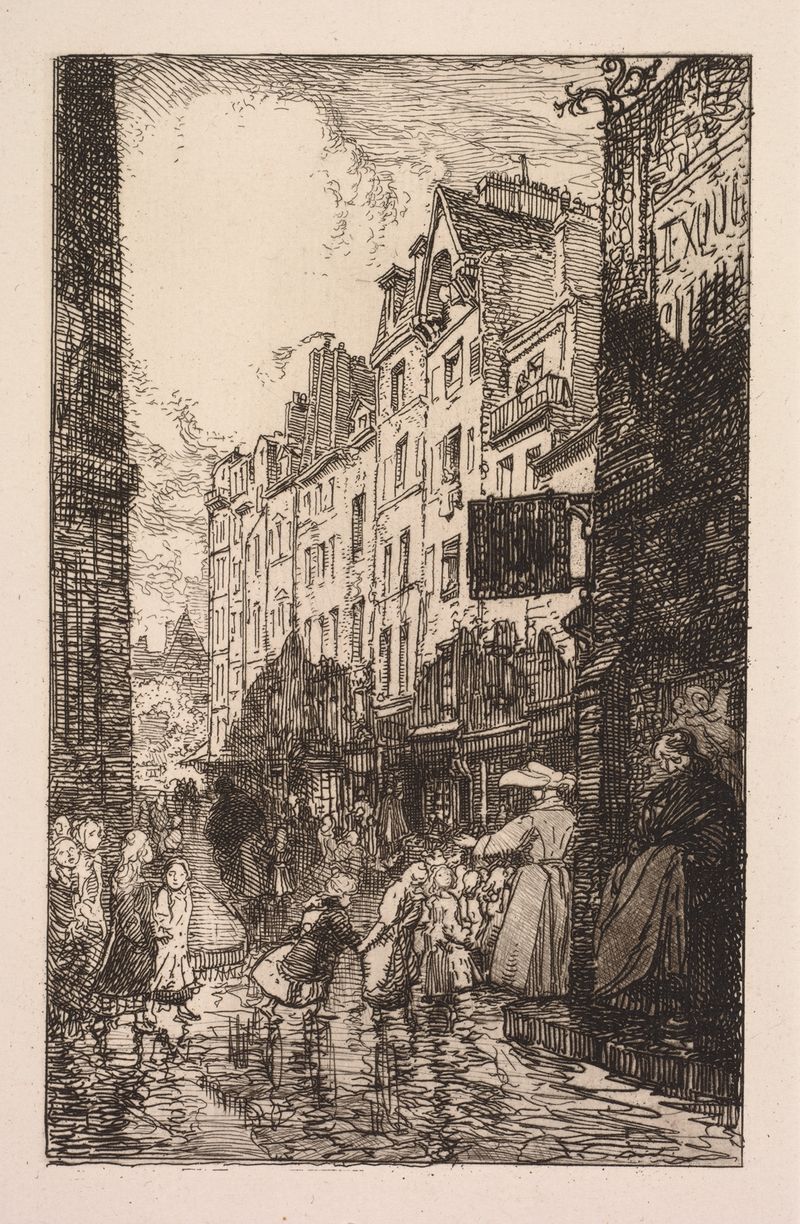
La Rue des Prêtres Saint-Séverin
Auguste Louis Lepère
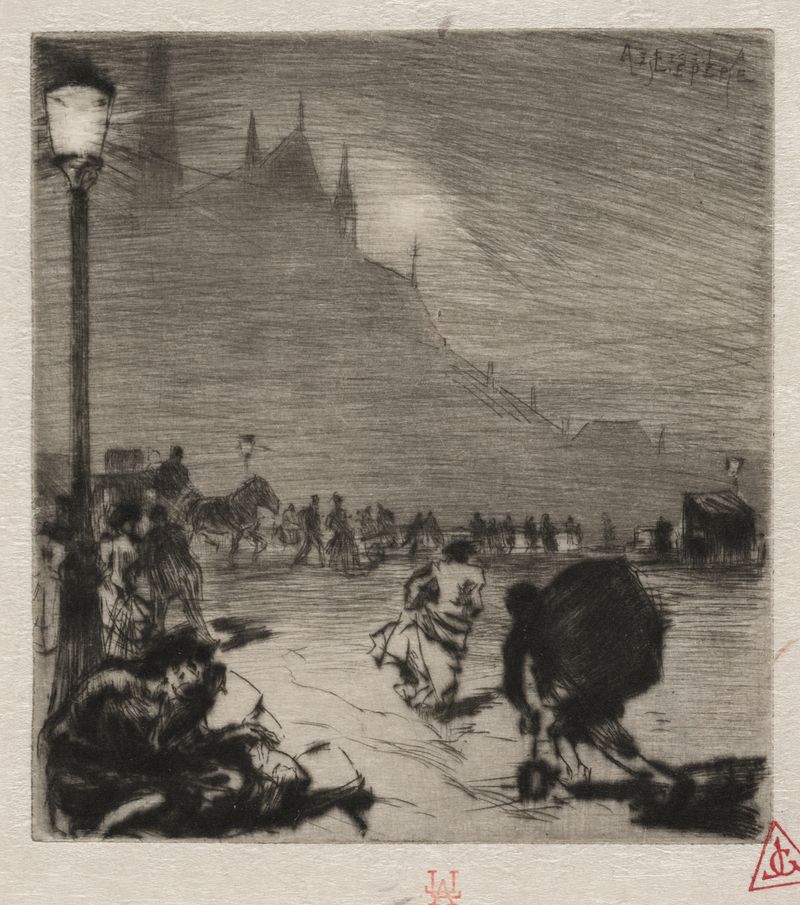
Au Coin du Pont-aux-Doubles
Auguste Louis Lepère
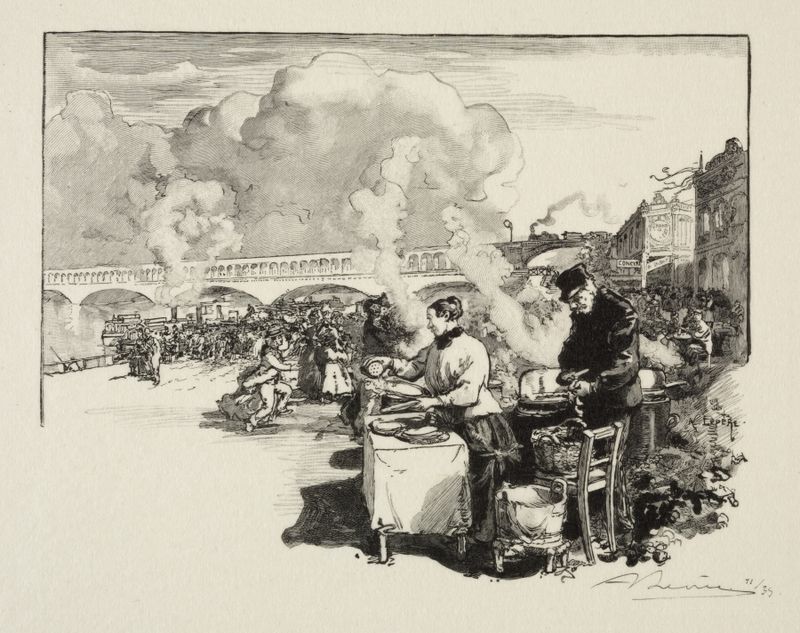
Debarcadère des bateaux-omnibus
Auguste Louis Lepère

La Seine, au quai de la Rapée
Auguste Louis Lepère
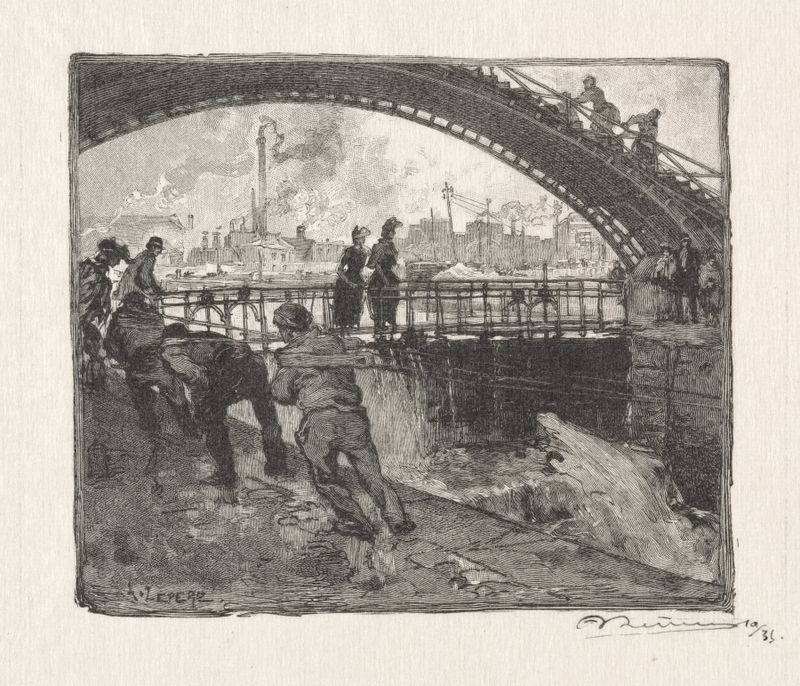
L’Ecluse du Canal St. Martin
Auguste Louis Lepère

Le Boulevard Montmartre, le Soir
Auguste Louis Lepère

Une Chasse au Mont Gérard
Auguste Louis Lepère
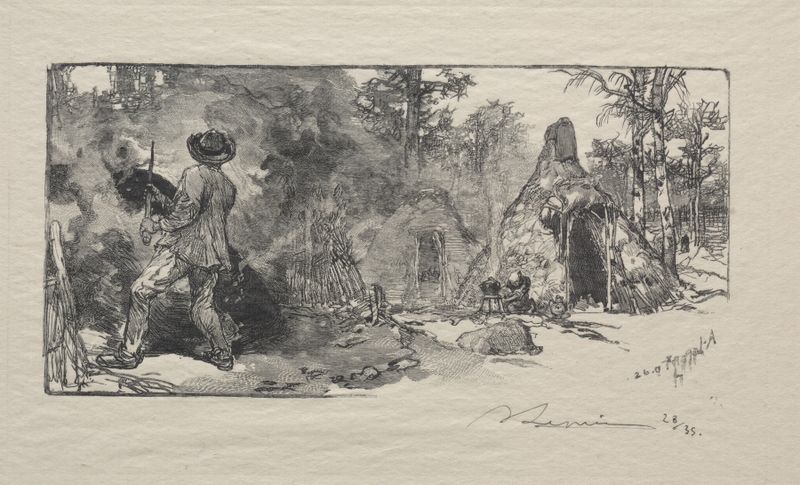
Les Charbonniere
Auguste Louis Lepère
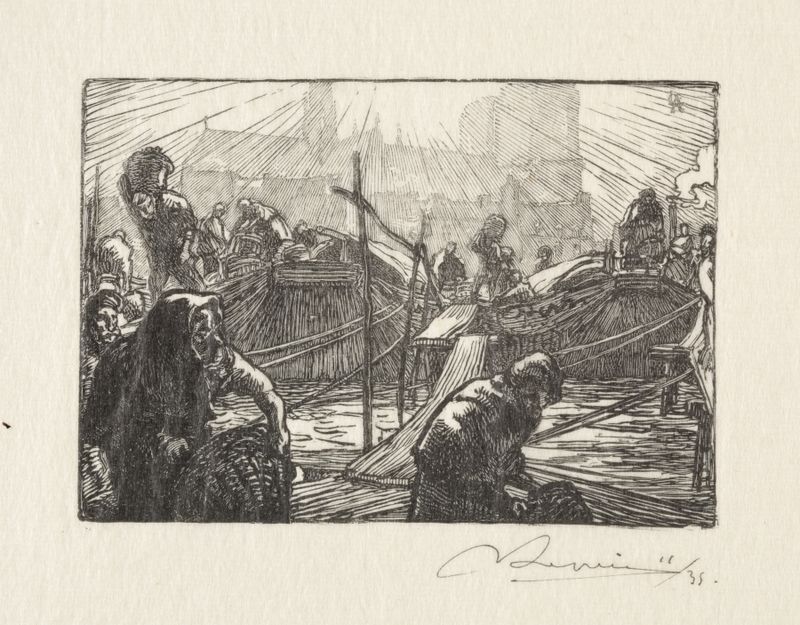
Notre Dame vue du Marché aux pommes
Auguste Louis Lepère

Le Palais des Arts Liberaux, Intèrieur
Auguste Louis Lepère





