
The road to Cailhau — History & Facts
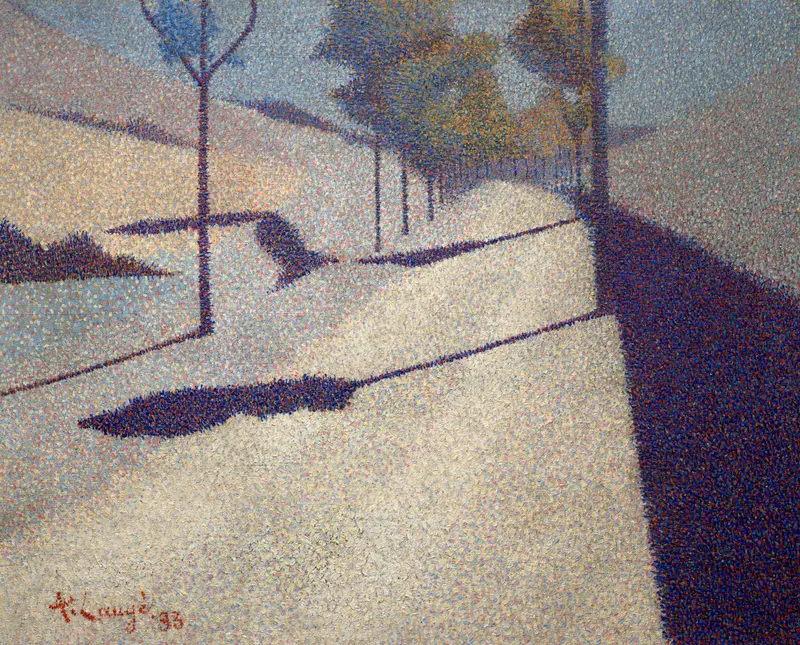
What draws the eye first in The road to Cailhau is the sense of quiet anticipation that fills the empty avenue. The road, pale and sun-warmed, sweeps forward beneath a colonnade of trees whose branches are touched with the russet of late autumn. Each tree stands like a sentinel, their trunks casting long, cool shadows that stripe the earth.
The distant village, nestled under a soft blue sky, anchors the horizon with a promise of arrival. The painter’s touch is visible in the thick, stippled brushwork, which gives every leaf and blade of grass a vibrating presence, as if the air itself is alive with light. Painted in 1910, this work belongs to a period when artists like Achille Laugé were exploring the language of color and light in the rural landscapes of southern France. Such scenes were often commissioned or cherished by those who wished to celebrate the beauty of their native countryside, at a time when modernity was beginning to change the face of rural life.
The image’s careful geometry and luminous palette recall the innovations of Neo-Impressionism, yet its mood is more meditative than scientific. Little is recorded about the specific history of this painting, now in a private collection, but its quiet road invites the viewer to enter, to walk beneath the trees, and to imagine the world just beyond the bend.
More Artworks by Achille Laugé

Ruelle au balcon fleuri
Achille Laugé
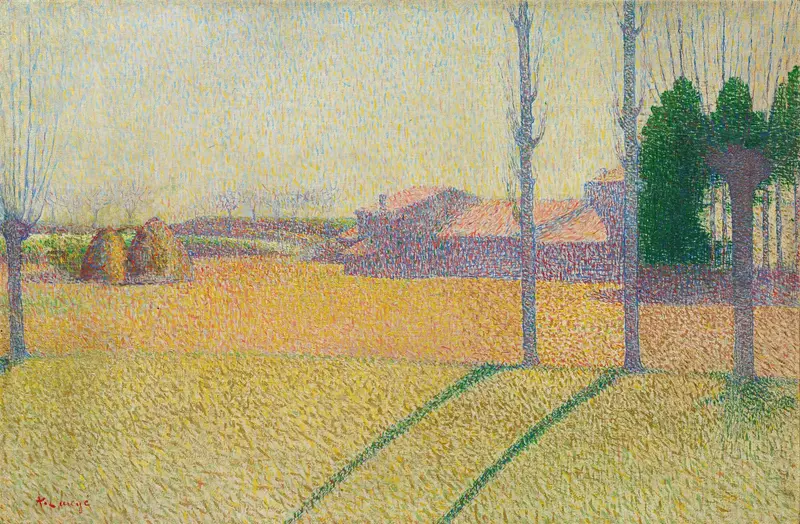
L’hort À Cailhau
Achille Laugé
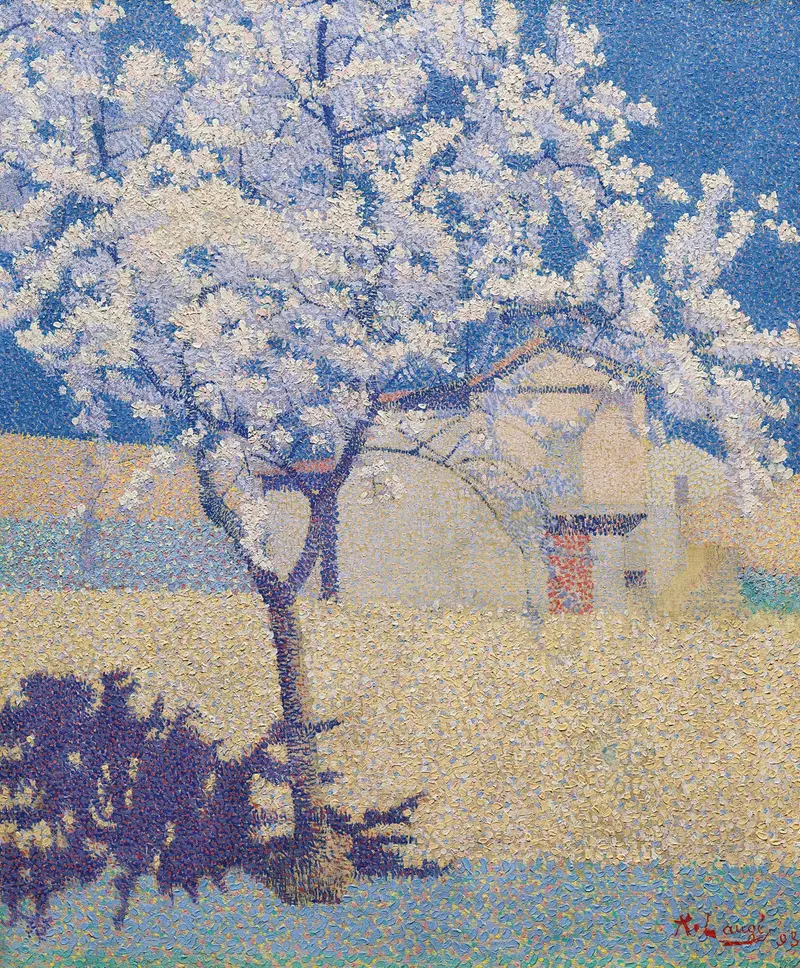
L’Arbre En Fleur
Achille Laugé
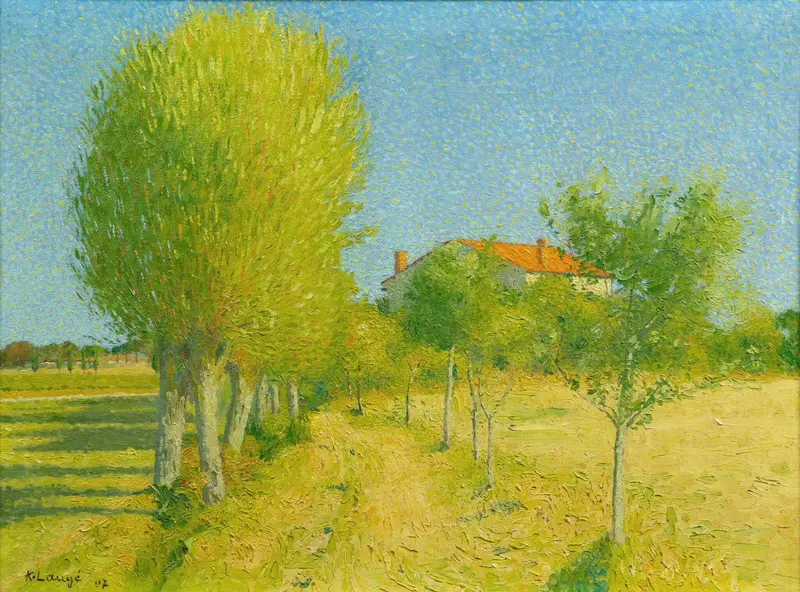
L’allée de saules derrière l’Alouette à Cailhau
Achille Laugé
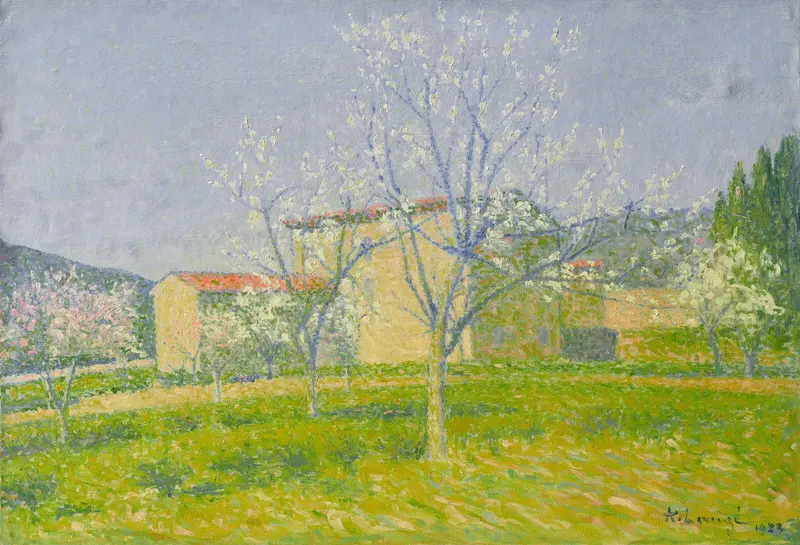
Verger en fleurs à Alet-les-Bains (Aude)
Achille Laugé
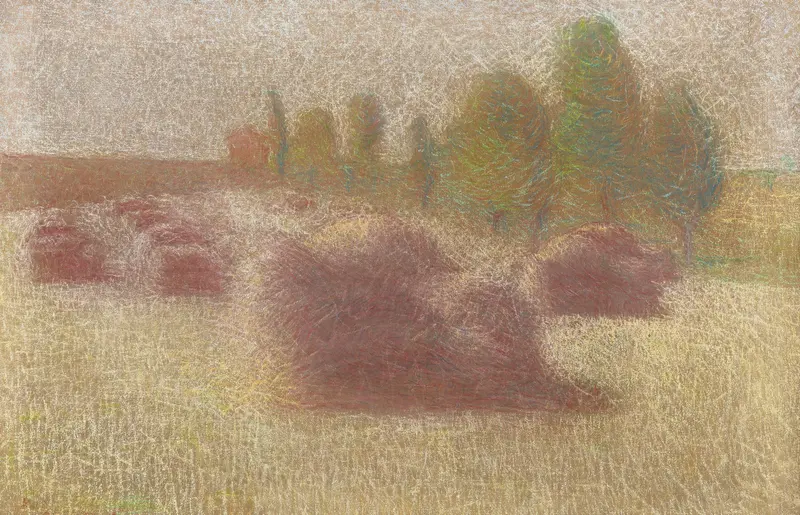
Les Gerbes
Achille Laugé
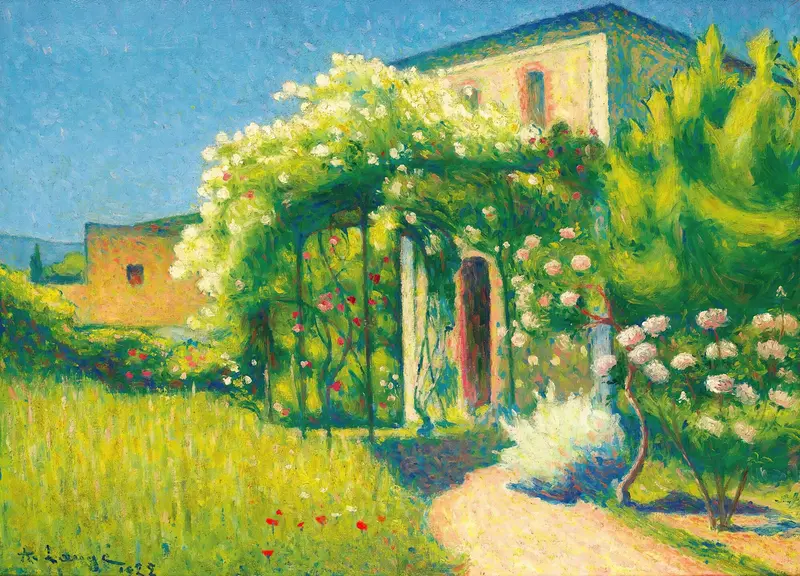
L’Atelier À Alet-Les-Bains
Achille Laugé
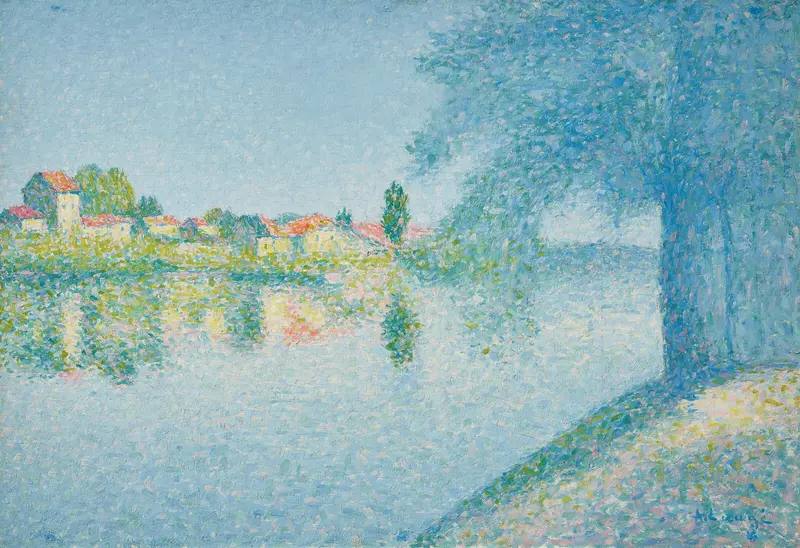
Vue des quais de la Garonne
Achille Laugé
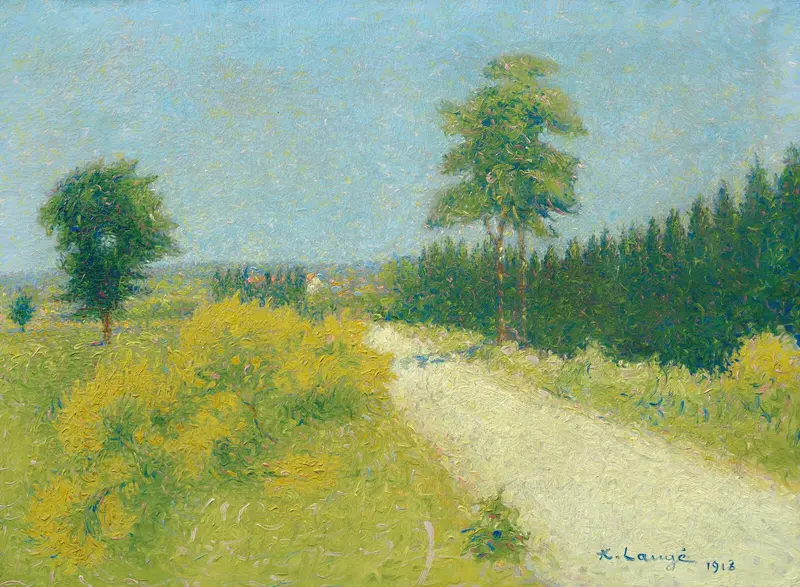
La route de Belvèze vers le relais
Achille Laugé
La route (The Road)
Achille Laugé
More Landscape Art

The Starry Night
Vincent van Gogh

View of Delft
Johannes Vermeer

Water Lilies
Claude Monet

The Grand Canal, Venice, looking north-west from the Ca' Corner to the Ca' Contarini degli Scrigni, with the campanile of Santa Maria della Carità
Canaletto

Windsor Castle
Canaletto

The Grand Canal looking North-East from the Palazzo Dolfin-Manin to the Rialto Bridge
Canaletto