
The Round Course at Newmarket, Cambridgeshire, Preparing for the King’s Plate — History & Facts
In the delicate interplay of light and shadow, a world unfolds, revealing layers of intention and emotion waiting to be discovered. Focus on the vibrant green of the grass, where the horses are poised, their forms taut with anticipation. Notice how the rich browns of the jockeys’ uniforms contrast against the brightness of the landscape, creating a tension that reverberates through the composition. The eye is naturally drawn to the horses, their powerful musculature beautifully captured in a moment just before action, while the distant spectators are mere silhouettes against the skyline, suggesting both excitement and restraint. Subtle details offer deeper layers of meaning; the shadows cast by the horses hint at the burden of expectation while the sky, painted in soft pastels, reflects a fleeting tranquility before the chaos of the race.
Each element seems to breathe with urgency, symbolizing not only the thrill of competition but also the unspoken pressures of prestige and the weight of legacy. The juxtaposition of stately presence and natural beauty speaks to the duality of elegance and raw power, perfectly encapsulating the spirit of the event. Peter Tillemans created The Round Course at Newmarket, Cambridgeshire, Preparing for the King’s Plate during the early 18th century, a time when racing was gaining popularity among the British aristocracy. Working in the context of a society captivated by equestrian pursuits, Tillemans found himself in the heart of a cultural shift that celebrated both sport and spectacle.
His meticulous attention to detail reflects the rise of thoroughbred racing, capturing a moment in time that resonates with historical significance.
More Artworks by Peter Tillemans
Browse all →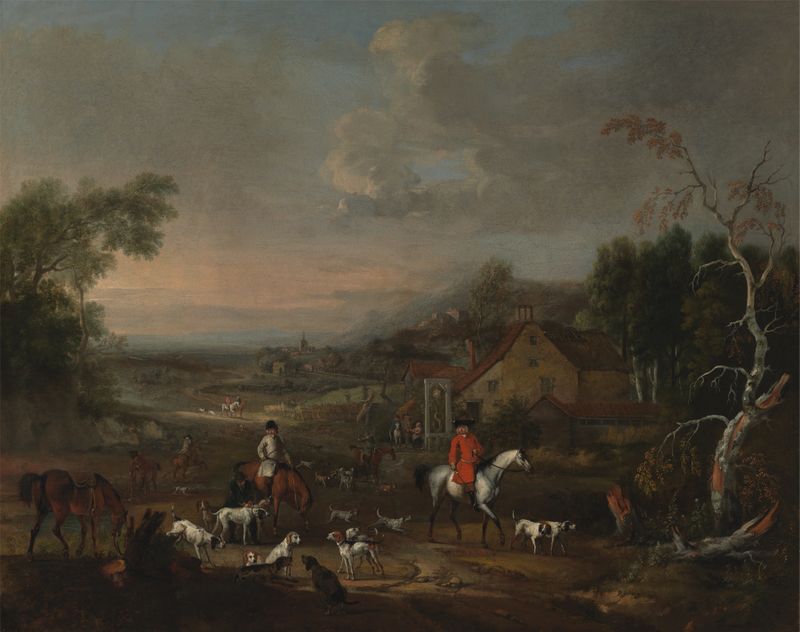


More Historical Art
Browse all →
The Night Watch Militia Company of District II under the Command of Captain Frans Banninck Cocq
Rembrandt van Rijn

Lincoln Memorial
Henry Bacon

The Third of May 1808
Francisco de Goya

Isaac and Rebecca, Known as ‘The Jewish Bride’
Rembrandt van Rijn

The Charge of the Mamelukes (1814)
Francisco de Goya

De vier ruiters van de apocalyps
Albrecht Dürer