
The ruins of Inkermann and city of caverns — History & Facts
Is this a mirror — or a memory? A place where innocence dances with the shadows of the past, begging for remembrance amidst the remnants of time. Focus first on the sprawling ruins that dominate the foreground, each stone layered with history and whispers. The chiaroscuro technique enhances the depth, as dark shadows intermingle with patches of light, guiding your gaze toward the fragmented architecture. Look closely at the intricate details of the structures; their weathered surfaces tell stories of both grandeur and decay, inviting a sense of contemplation about what once was. Beneath the surface, the juxtaposition of the dilapidated ruins against the distant city suggests an emotional tension — a struggle between the permanence of memory and the transience of life.
The light filtering through the clouds casts a melancholic glow, evoking nostalgia for the innocence lost. Each crumbling wall serves as a metaphor for dreams faded, highlighting the fragility of human endeavors amidst the relentless passage of time. In 1855, during a period of heightened awareness of imperial conflicts and the realities of war, William Simpson painted this evocative scene. He was in the midst of documenting the Crimean War, capturing not only the battlefield but the broader human condition in the face of destruction.
This work reflects his desire to convey the poignant beauty of ruins, allowing viewers to both mourn and appreciate the stories embedded within them.
More Artworks by William Simpson
Browse all →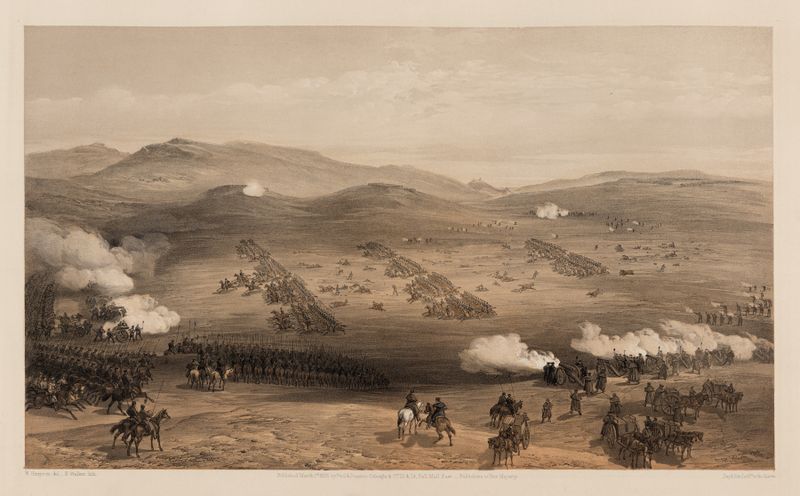
Charge of the light cavalry brigade, 25th Oct. 1854, under Major General the Earl of Cardigan
William Simpson

Charge of the heavy cavalry brigade, 25th Octr. 1854
William Simpson
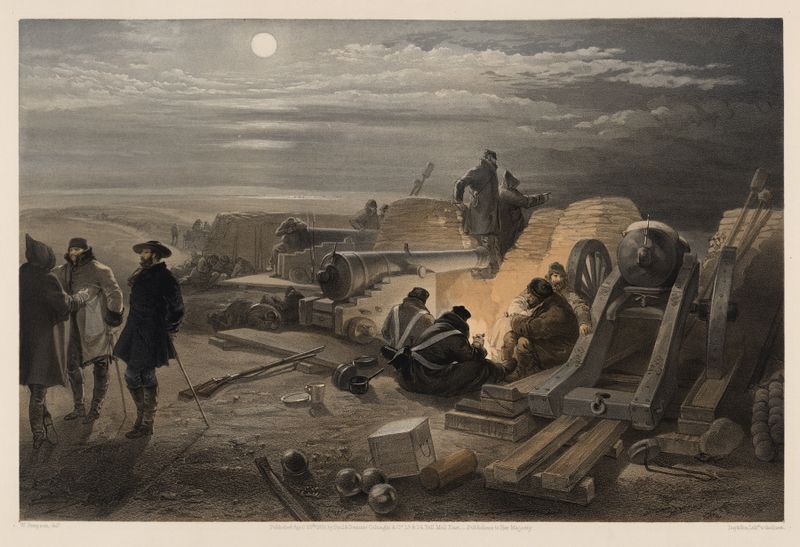
A quiet night in the batteries – a sketch in the Greenhill battery (Major Chapman’s), 29th Jany. 1855
William Simpson

The Great Wall of China
William Simpson
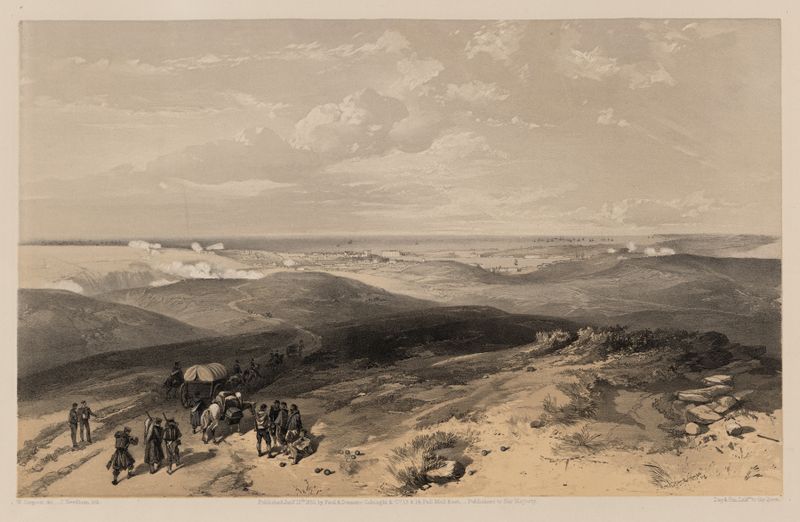
Sebastopol from the rear of the English batteries
William Simpson
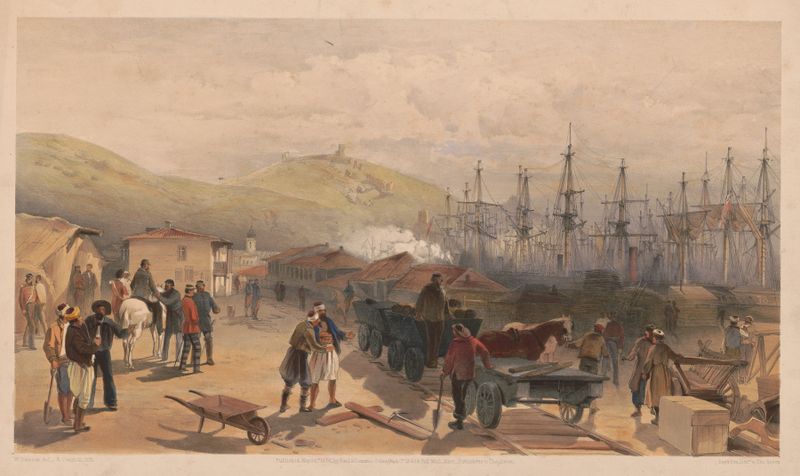
The railway at Balaklava, looking south
William Simpson

The Governor-General’s and Commander-in-Chief’s Camp at Jalandhar, 1 Febuary 1860
William Simpson
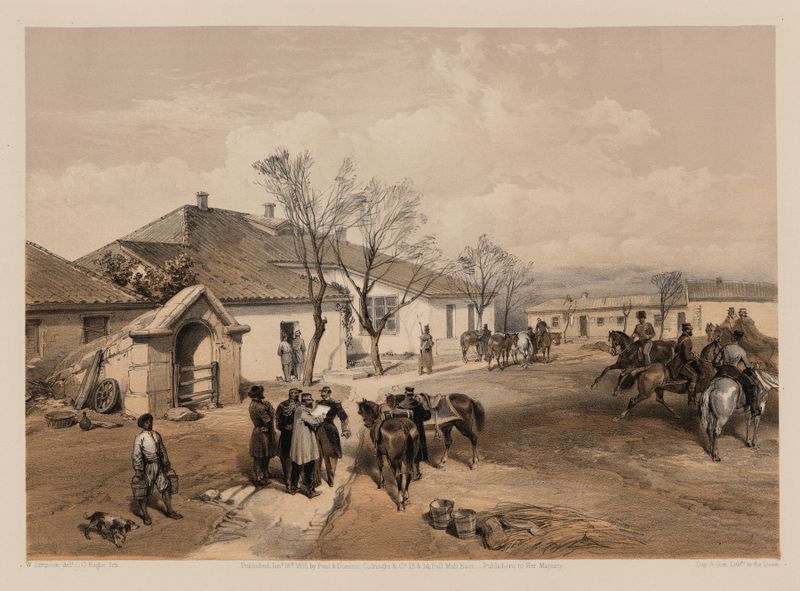
Lord Raglan’s head quarters at Khutor-Karagatch
William Simpson
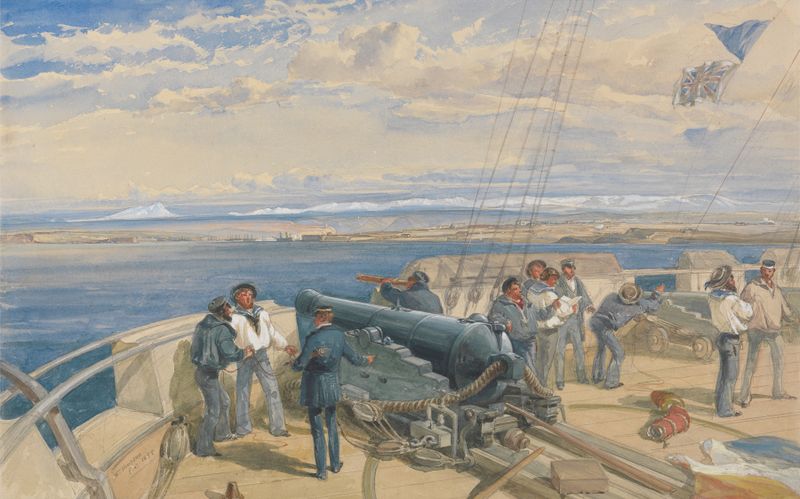
Sebastopol from the Sea, Sketched from the Deck of H. M. S. Sidon, Feb. 1855
William Simpson
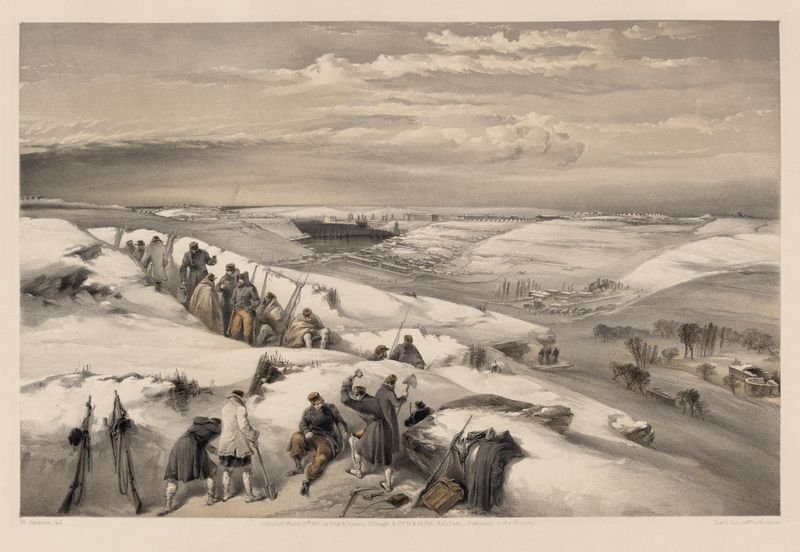
Sebastobol from the 26 gun battery on the extreme right of French attack
William Simpson





