
The Seine at Bas-Meudon — History & Facts
In the quiet embrace of twilight, an unseen tension lingers, momentarily suspended over the banks of the Seine. The stillness of the water reflects an ethereal palette, whispering secrets of the late afternoon sky. Nature stands poised, as if holding its breath, inviting contemplation in the hushed murmur of a serene landscape. Look to the right at the delicate strokes of greens and blues; they dance across the canvas, suggesting the gentle flow of the river.
Notice how the light falls upon the water, each ripple captured in a soft, shimmering glow. The horizon is treated with a subtle gradation of color, where the sky begins its descent into night, creating a seamless transition between day and dusk. The composition draws your eye toward the distant trees silhouetted against the fading light, framing the scene with a contemplative stillness. Hidden within this tranquil vista lies a poignant contrast between the vivid hues of nature and the profound silence that envelopes it.
The solitary figures on the riverbank, rendered with minimal detail, evoke a sense of isolation amidst the expansive landscape. The interplay of light and shadow speaks to the fleeting quality of time, inviting viewers to pause and reflect on their own existence within this tableau of serenity. In 1865, while working in France, Jongkind painted this piece during a period when Impressionism was beginning to emerge. He was influenced by the natural beauty of the Seine and its surroundings, capturing the subtleties of light and atmosphere.
At this time, Jongkind was forging his path as a pioneer in landscape painting, making significant contributions to the movement that would later define modern art.
More Artworks by Johan Barthold Jongkind
Browse all →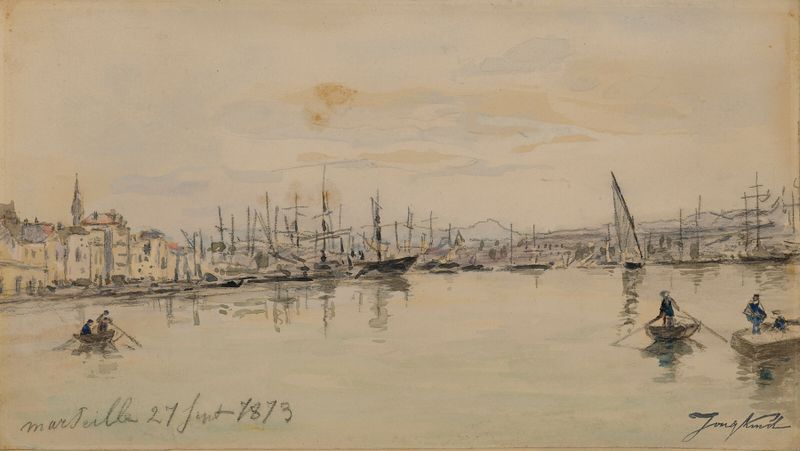
Le Port de Marseille
Johan Barthold Jongkind

Canal Saint-Martin
Johan Barthold Jongkind

Countryside near Brezins, between Grenoble and Vienne
Johan Barthold Jongkind

Notre-Dame vue du quai de la Tournelle
Johan Barthold Jongkind

Environs de Grenoble
Johan Barthold Jongkind

Clair de lune à Overschie (environs de Rotterdam)
Johan Barthold Jongkind

Port de Honfleur
Johan Barthold Jongkind
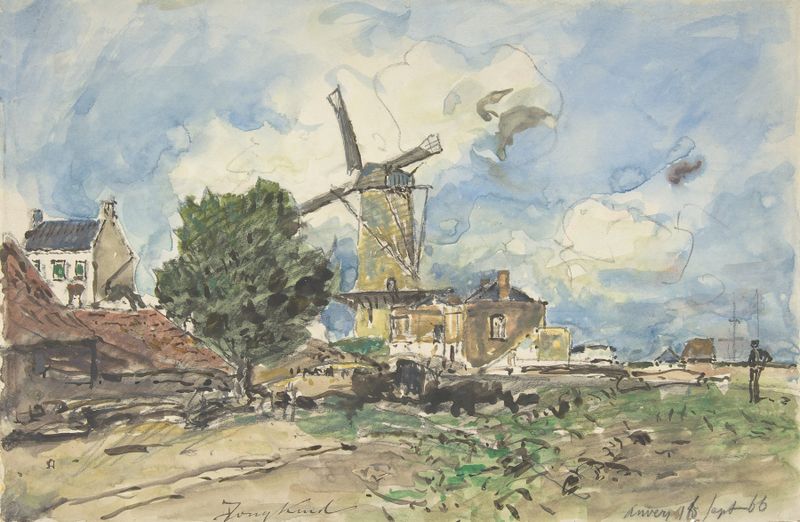
Wind Mill at Antwerp
Johan Barthold Jongkind

Le Havre
Johan Barthold Jongkind

The Church of Overschie
Johan Barthold Jongkind





