
The Singing Bird of Heaven — History & Facts
What first seizes the eye in The Singing Bird of Heaven is the improbable grandeur of the bird itself, perched high above the earthbound figures. Its tail arcs extravagantly, drawing a golden curve through the muted sky, while its plumage glows with a heat that the rest of the landscape seems to lack. Below, two figures—one with a bow, both draped in patterned robes—stand in a hush of anticipation, their faces turned upward.
The bird’s gaze is steady, almost regal, and the branch it claims is slender but unyielding, as if the world itself bends to accommodate this moment. The composition leads the viewer upward, from the stony riverbank and the clustered trees, past the watchful humans, and into the charged space where the bird reigns. Created in 1910 for a book of Japanese fairy tales, this image by Warwick Goble belongs to a moment when European illustrators were captivated by the visual language of East Asian art. Such works were often commissioned for luxury editions, meant to enchant readers with visions of distant worlds.
Goble’s style, with its delicate lines and washes of color, echoes the Japonisme that swept through Edwardian England, blending Western narrative illustration with motifs borrowed from Japanese woodblock prints. Though little is recorded about the fate of this particular drawing beyond its appearance in Green Willow and Other Japanese Fairy Tales, it stands as a testament to the era’s hunger for wonder and the illustrator’s gift for transforming a page into a portal. Let your eye linger on the bird’s impossible tail—how it both divides and unites the world below.
More Artworks by Warwick Goble
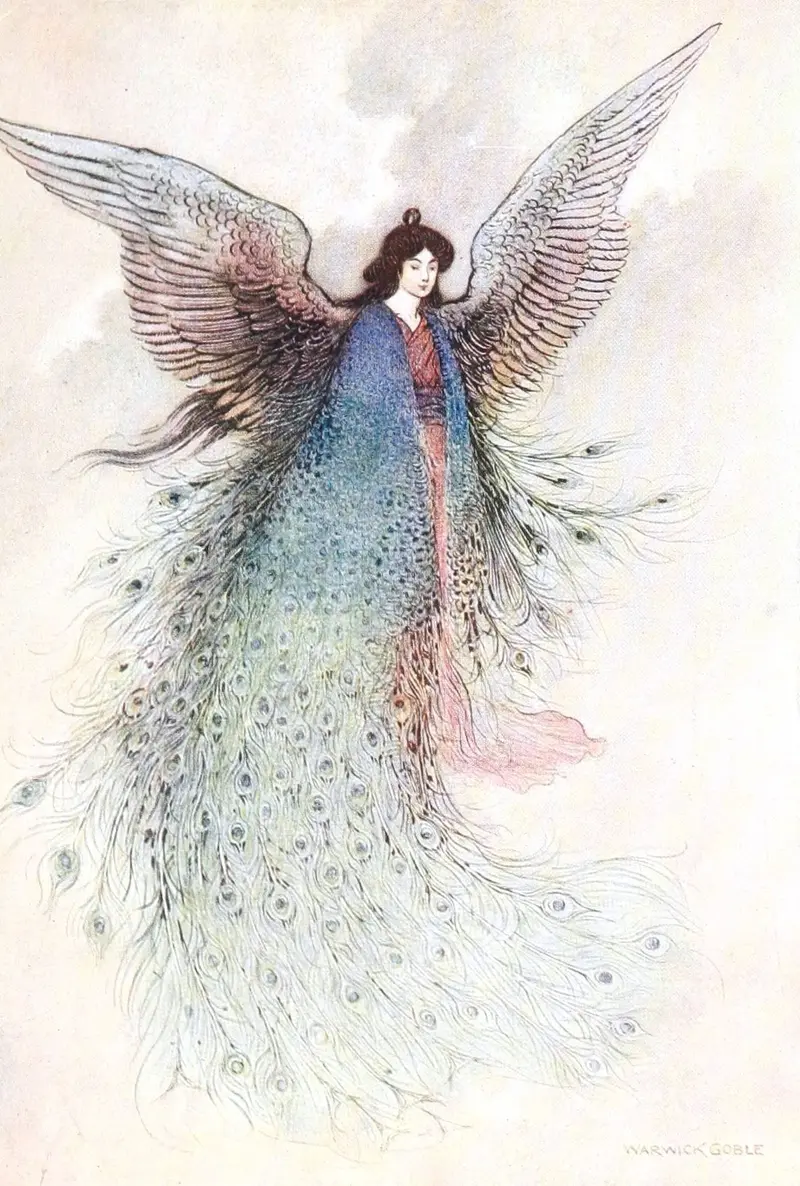
The Moon Maiden (Green Willow)
Warwick Goble
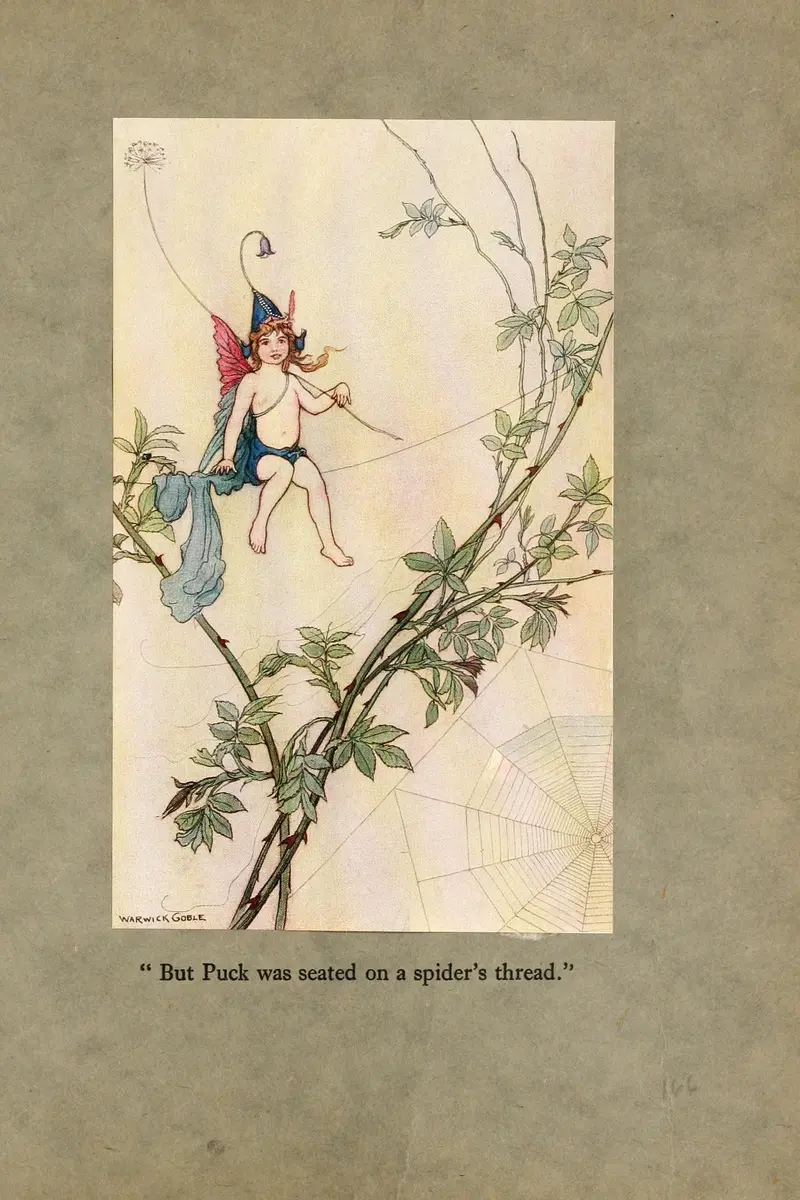
Puck
Warwick Goble

The Ordeal of Queen Draupadi
Warwick Goble

Momotaro
Warwick Goble
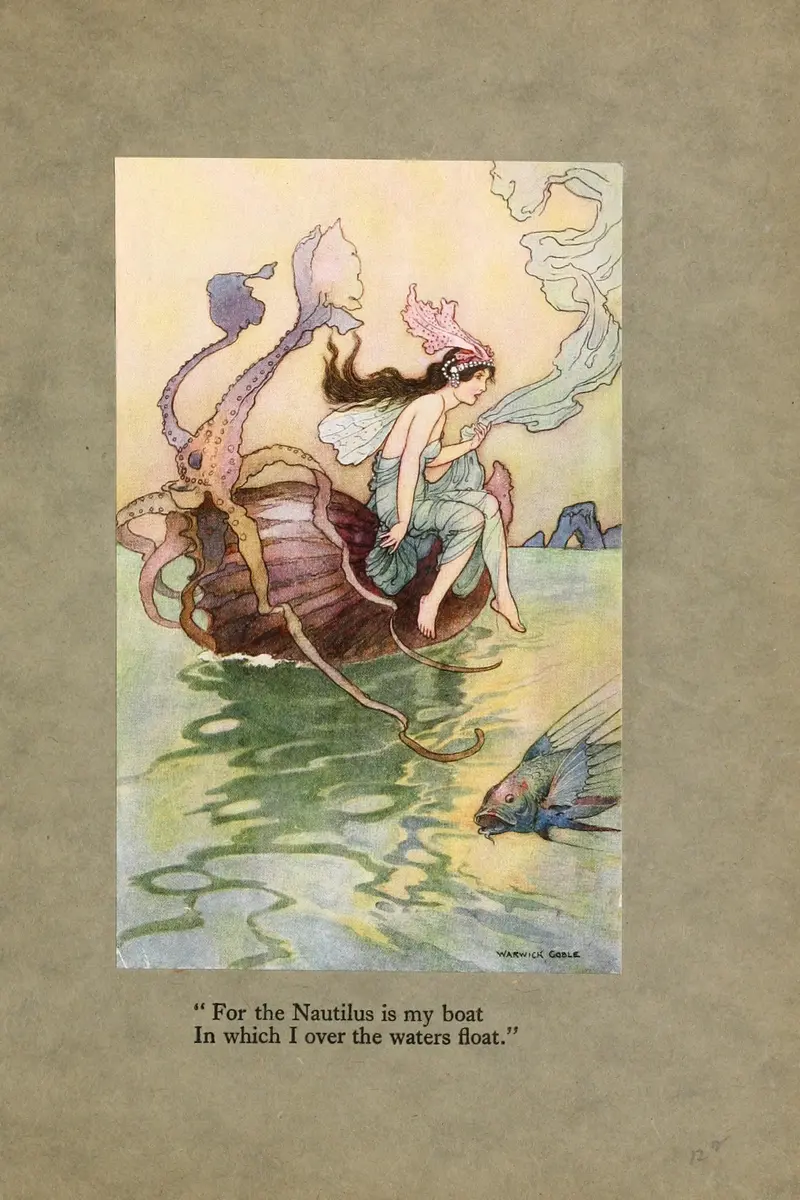
Fairies on the Seashore
Warwick Goble
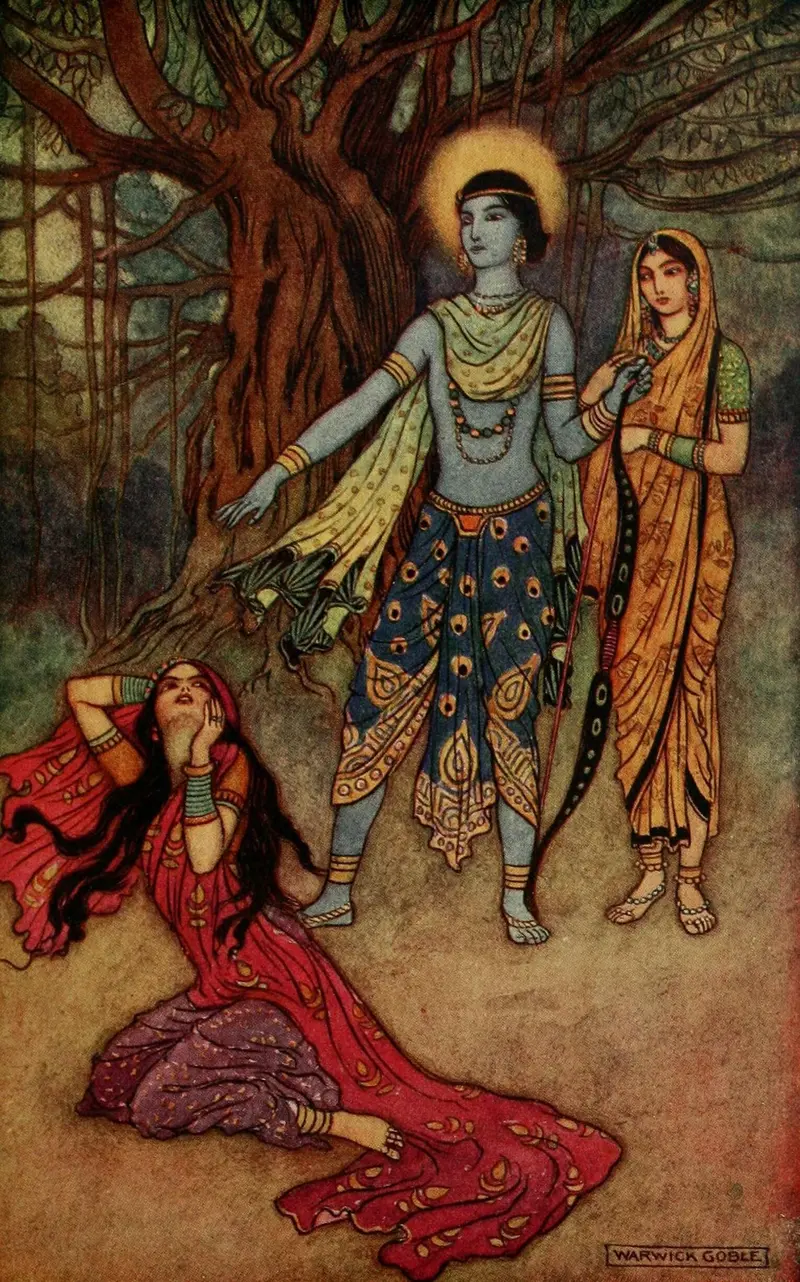
Rama Spurns the Demon Lover
Warwick Goble
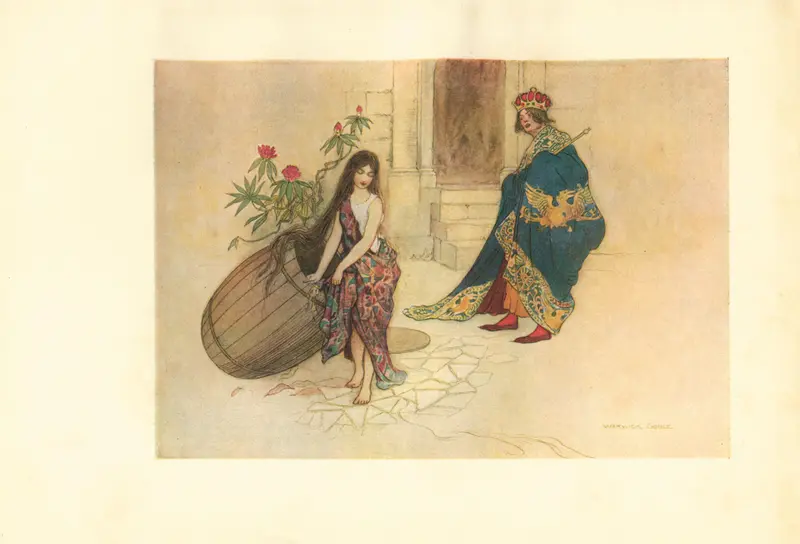
Cannetella Released from the Cask
Warwick Goble
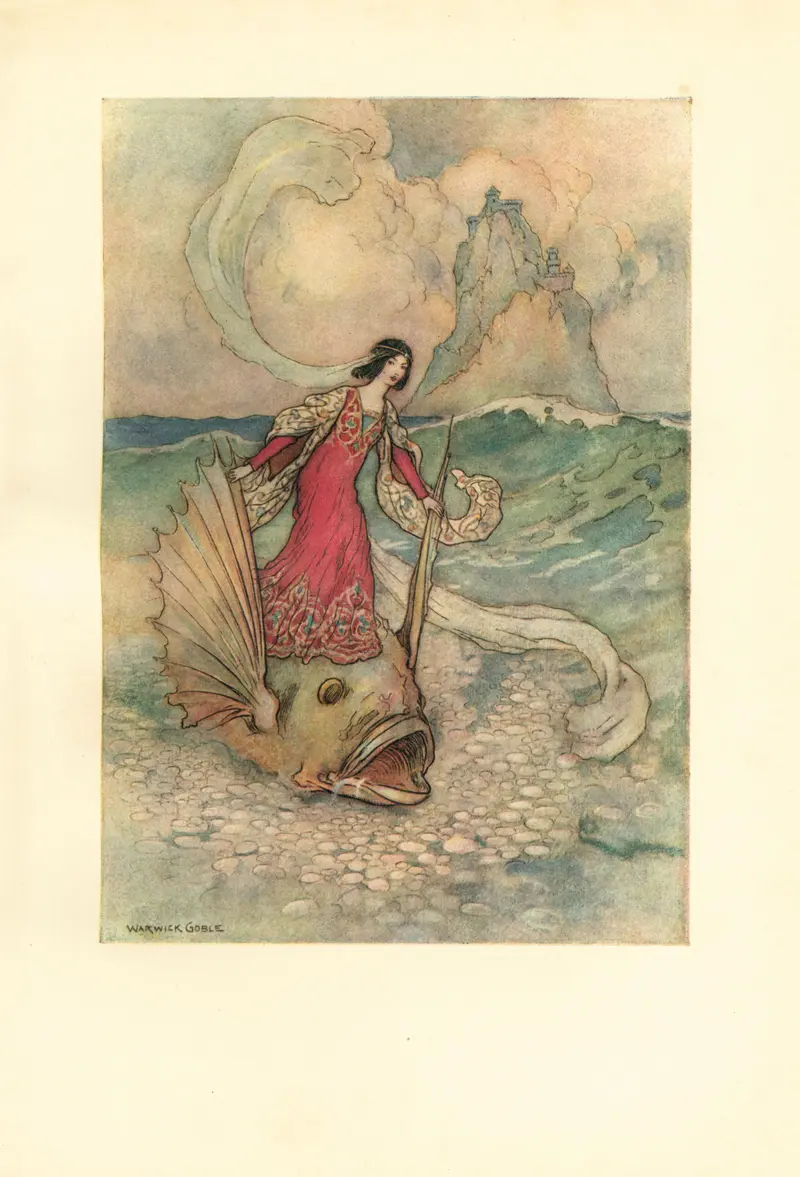
Rita Riding on the Dolphin
Warwick Goble
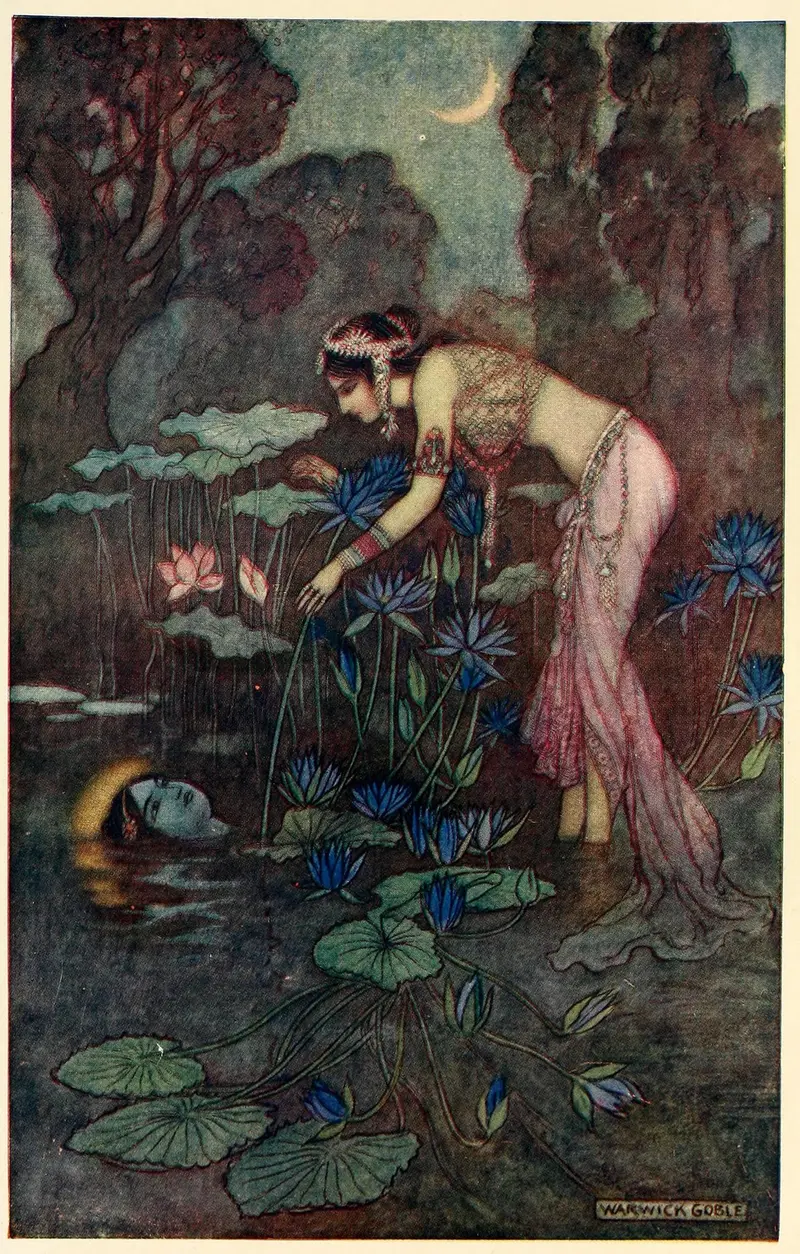
Sita Finds Rama Among Lotus Blooms
Warwick Goble
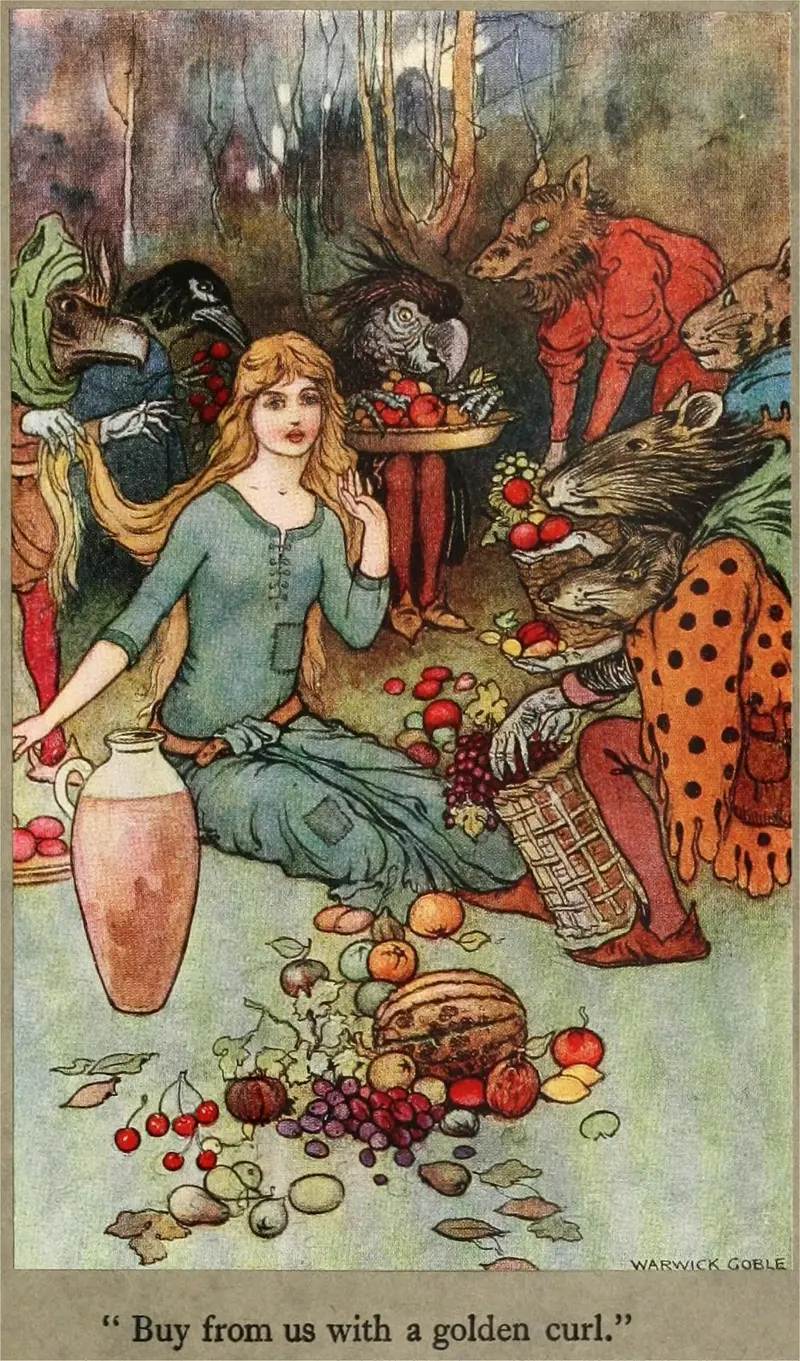
Goblin Market
Warwick Goble





