
The Slate Quarries at Bron Llwyd — History & Facts
Where does light end, and longing begin? In the ethereal interplay of nature and industry, The Slate Quarries at Bron Llwyd evokes an ache that transcends time and place. Focus on the horizon where slate-grey mountains loom, their rugged surfaces softened by the gentle caress of twilight. Notice how the dying light casts an amber glow upon the scattered remains of quarrying tools, whispering tales of laborers long gone. The juxtaposition of the striking natural landscape and the remnants of human endeavor creates an atmosphere heavy with nostalgia—a reminder of what has been lost to progress. Delve deeper into the layers of meaning: the quiet stillness of the quarry hints at the passage of time and the erosion of memory, while the looming mountains guard secrets of both triumph and desolation.
The cool palette of blues and greys evokes a sense of melancholy, contrasting sharply with the warm hues that symbolize fleeting moments of joy. Each brushstroke tells a story of resilience and grief intertwined, inviting the viewer to reflect on their own experiences of absence. During the late 18th century, when this piece was likely created, John Warwick Smith found himself at the heart of a burgeoning Romantic movement in England. As an artist residing in Wales, he captured the beauty of the Welsh landscape at a time when industrialization began to reshape it dramatically.
This work reflects his fascination with the sublime in nature, while also hinting at the underlying tensions between human activity and the unyielding majesty of the natural world.
More Artworks by John Warwick Smith
Browse all →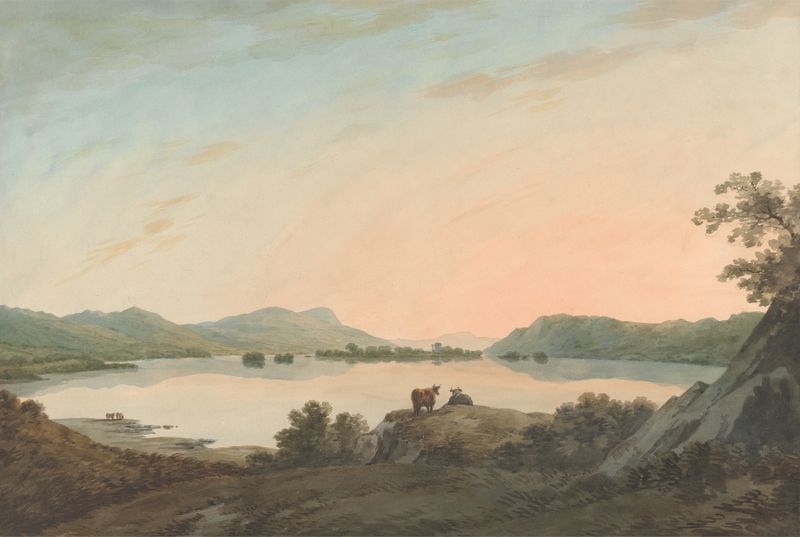
Lake Windermere from Calgarth with Belle Isle
John Warwick Smith
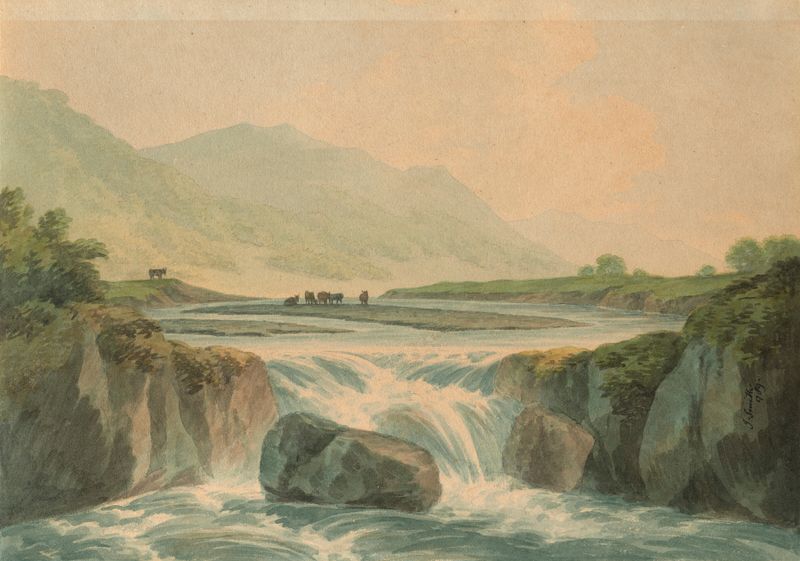
A waterfall on the River Rheidol, with cattle in the distance, North Wales
John Warwick Smith
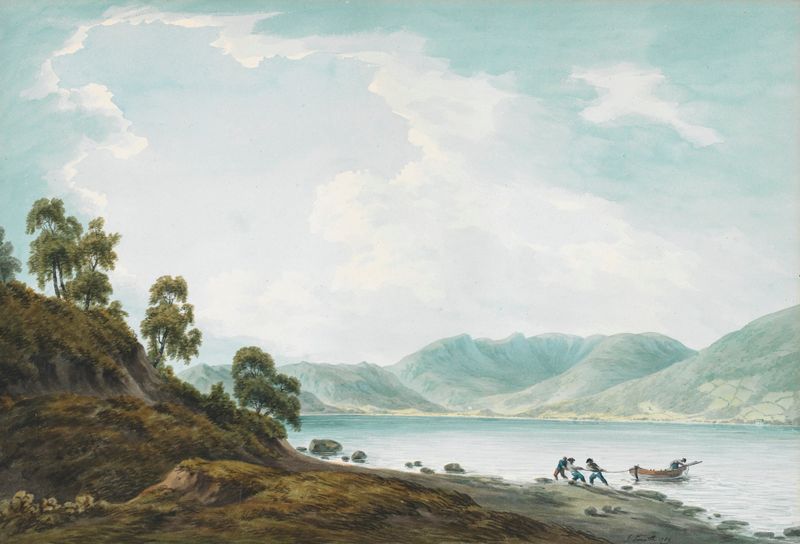
Head of Windermere from Belle Grange Farm
John Warwick Smith
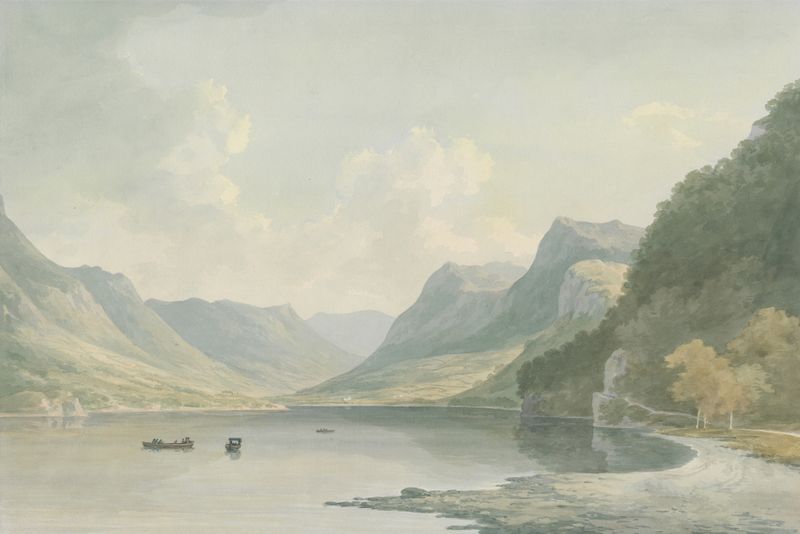
Ullswater, Looking toward Patterdale
John Warwick Smith
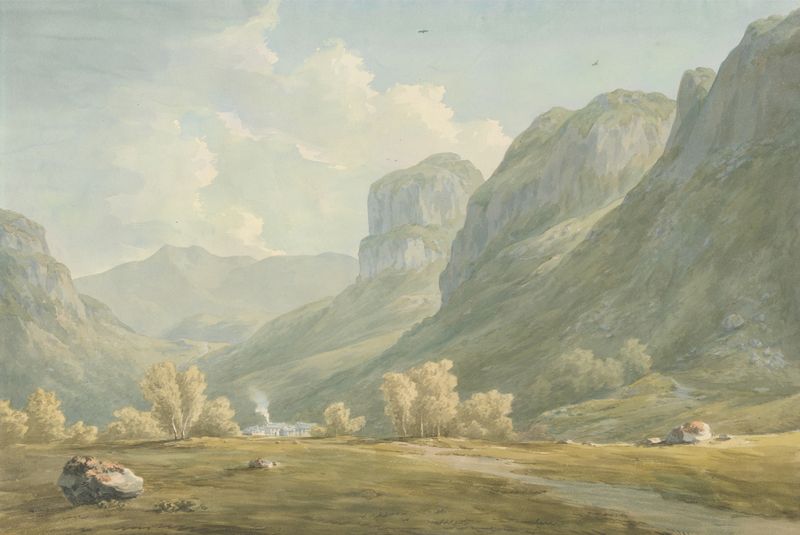
Village of Stonethwaite and Eagle Cragg, Borrowdale
John Warwick Smith
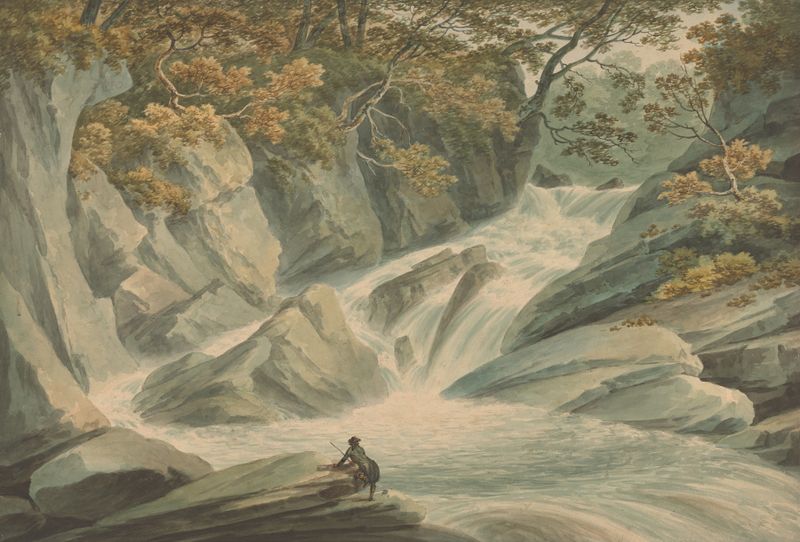
Hafod; Upper Part of Cascade
John Warwick Smith
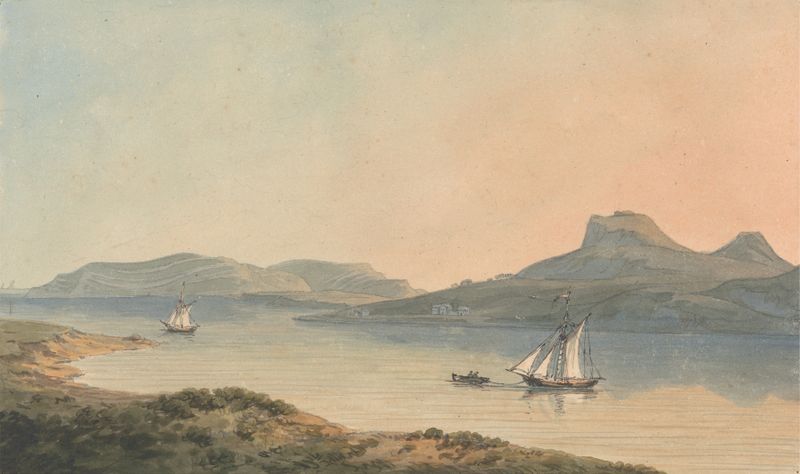
View of the Early Castle of Diganwy
John Warwick Smith
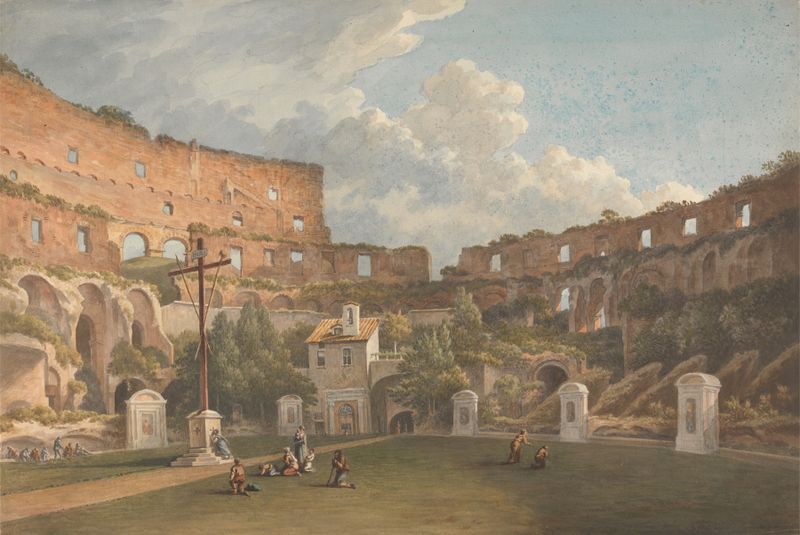
An Interior View of the Colosseum, Rome
John Warwick Smith
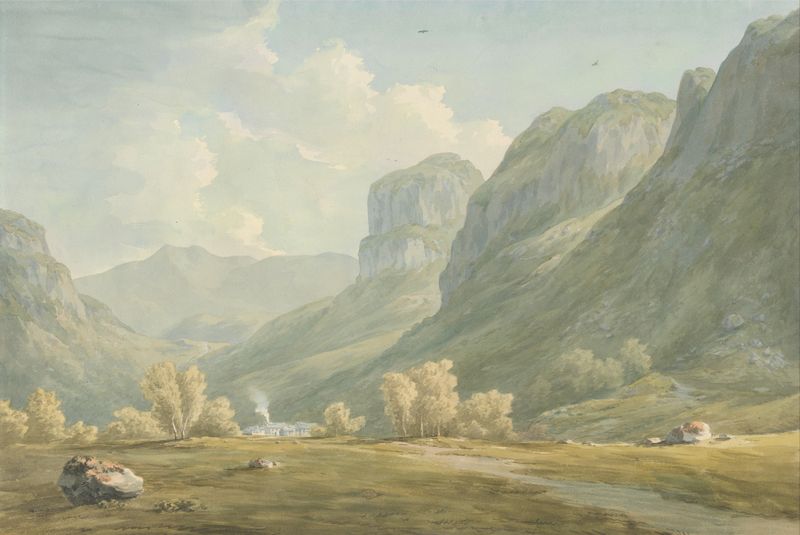
Village of Stonethwaite and Eagle Cragg, Borrowdale
John Warwick Smith
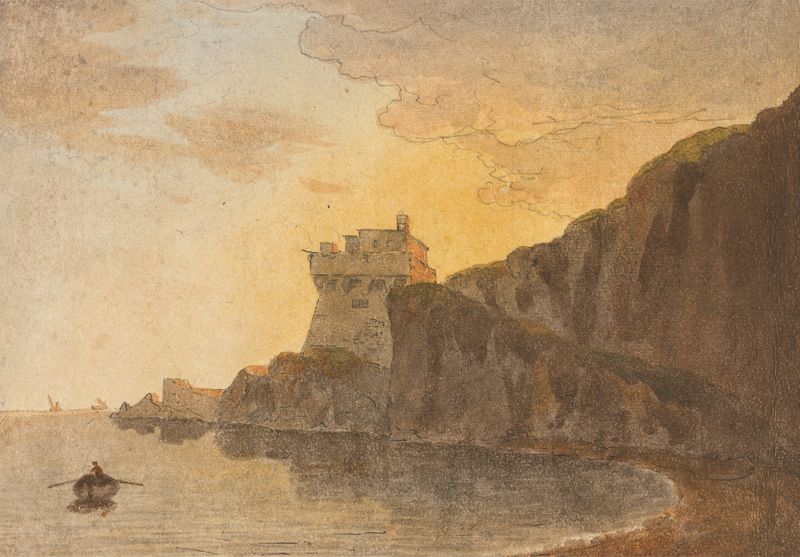
In the Bay of Salerno, near Vietri
John Warwick Smith





