
The Village Doctor — History & Facts
A hush of anticipation fills this room, where every gaze fixes on the village doctor as he measures out a dose with steady, practiced hands. The scene is a quiet drama of trust and hope, the warm light falling on the doctor’s weathered face and illuminating the careful ritual of healing. The clutter of earthenware and glass on the desk, the open book, and the sprigs of dried herbs hanging on the wall all speak of a world where science and tradition meet in the service of the community.
The child in the foreground, clutching a bowl, leans forward with a mixture of curiosity and apprehension, while the adults’ postures range from anxious to quietly expectant. The palette of browns and golds wraps the scene in a sense of intimacy and everyday dignity, inviting the viewer to linger over each detail. Painted in 1879, The Village Doctor by Albert Anker belongs to a tradition of genre painting that flourished in the nineteenth century, when artists across Europe turned their attention to the rhythms and rituals of rural life. Such works were often commissioned by middle-class patrons who saw in them a reflection of their own values—hard work, care, and community.
In an age when medicine was rapidly professionalizing, images like this one captured the enduring importance of the local healer, whose authority rested as much on personal trust as on formal training. History has kept few traces of this particular painting beyond its survival as a postcard, but its quiet observation of human connection remains as compelling as ever—look again at the child's wide eyes, and the story deepens.
More Artworks by Albert Anker

Portrait Of A Girl
Albert Anker
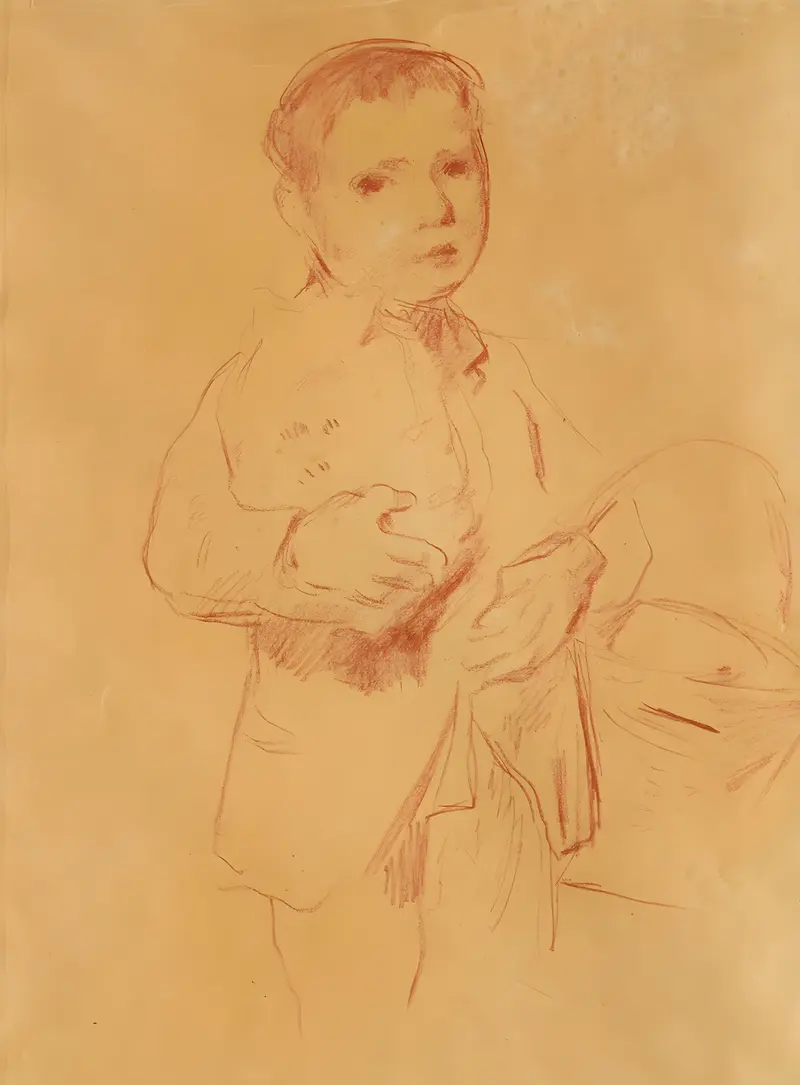
Boy with a basket
Albert Anker
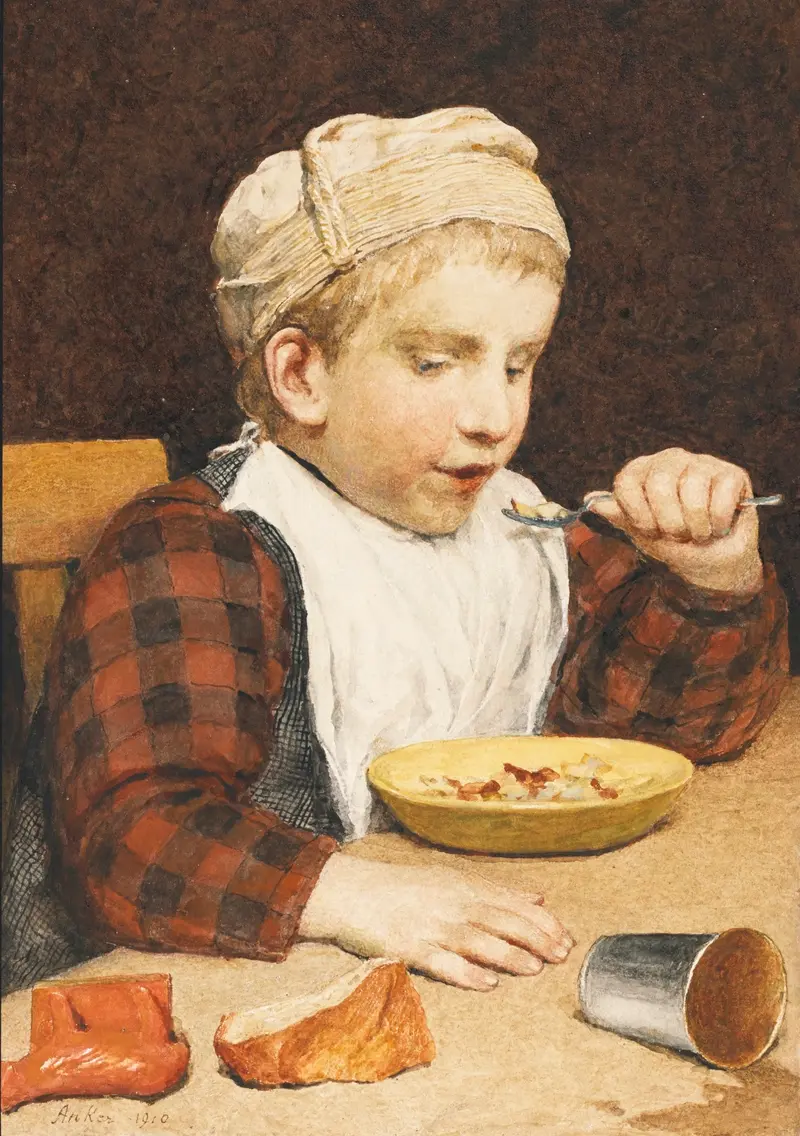
Knabe Mit Mütze Beim Essen
Albert Anker
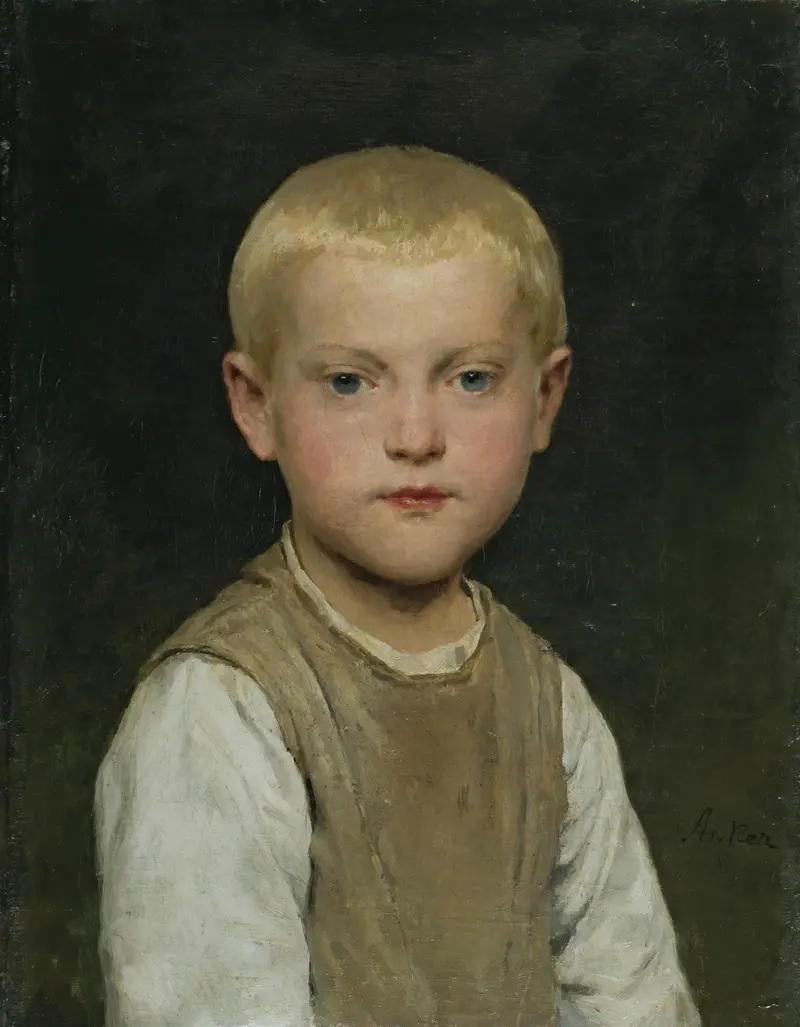
Knabenbildnis (Dr Heiri)
Albert Anker
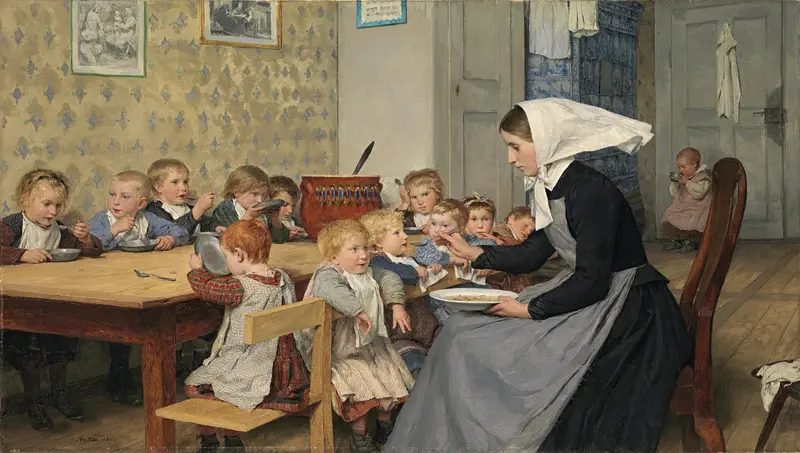
Die Kinderkrippe I
Albert Anker

L’instituteur et le pasteur
Albert Anker
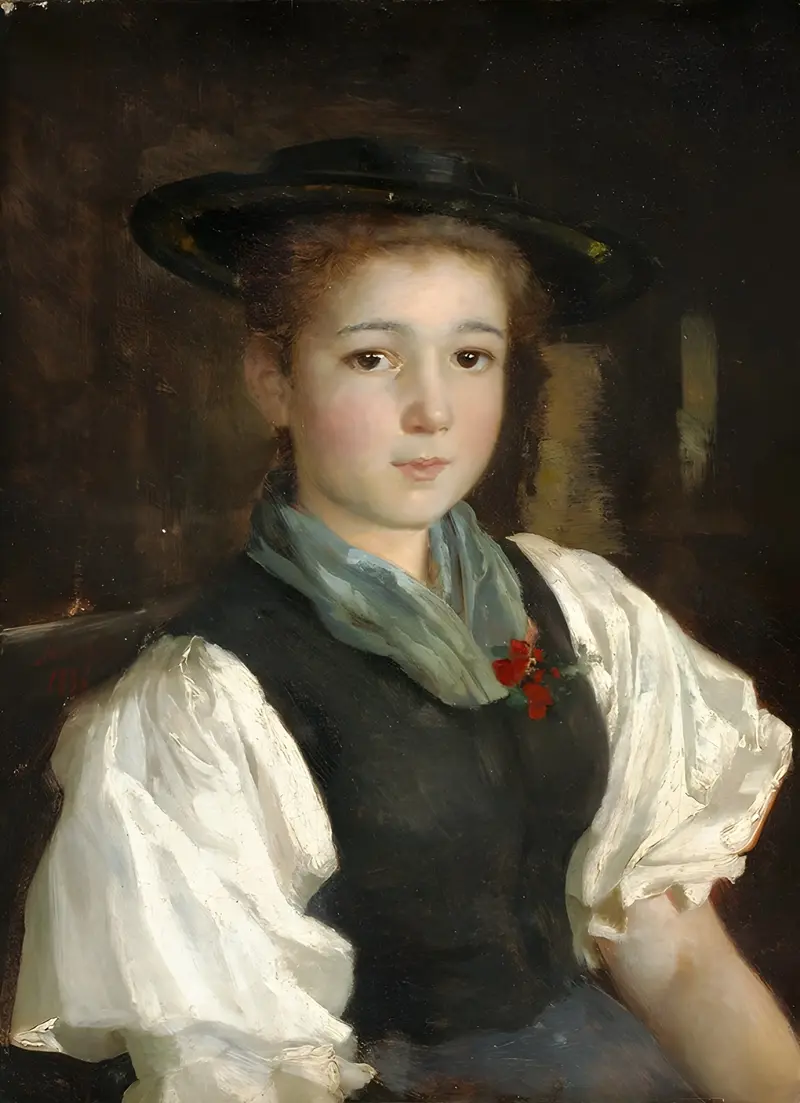
Bauernmädchen (Farm Girl)
Albert Anker
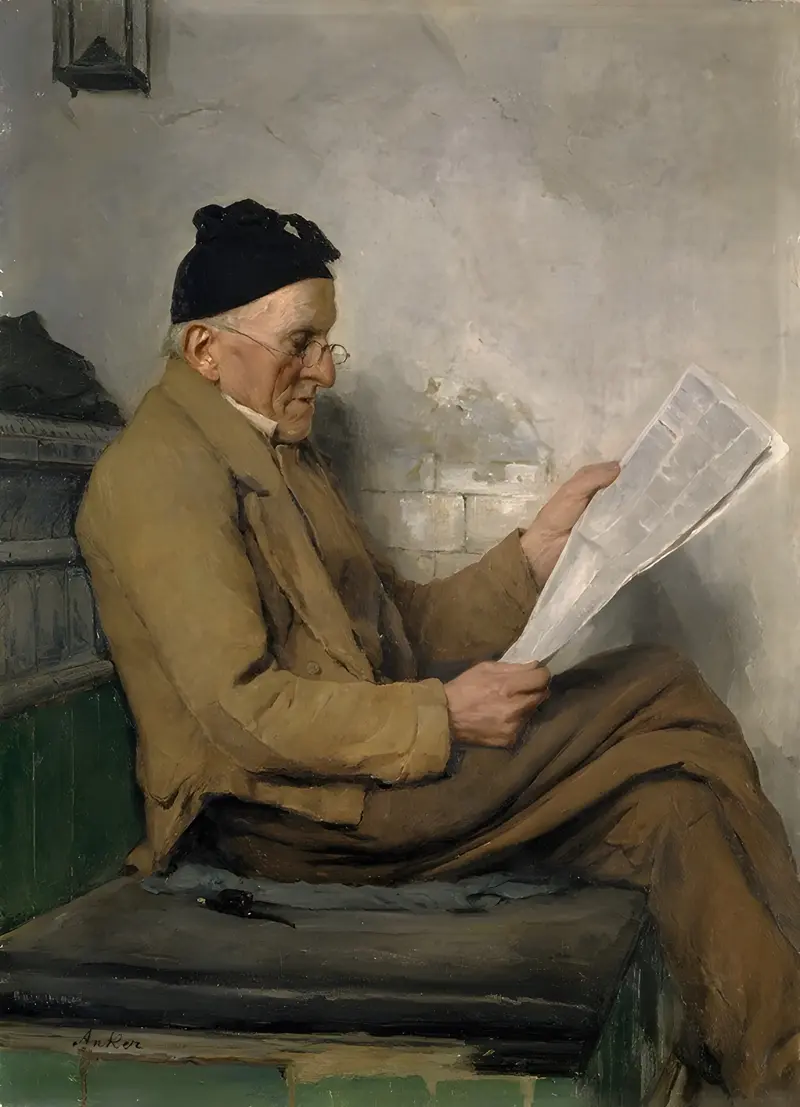
Farmer Reading on the Stove Bench
Albert Anker
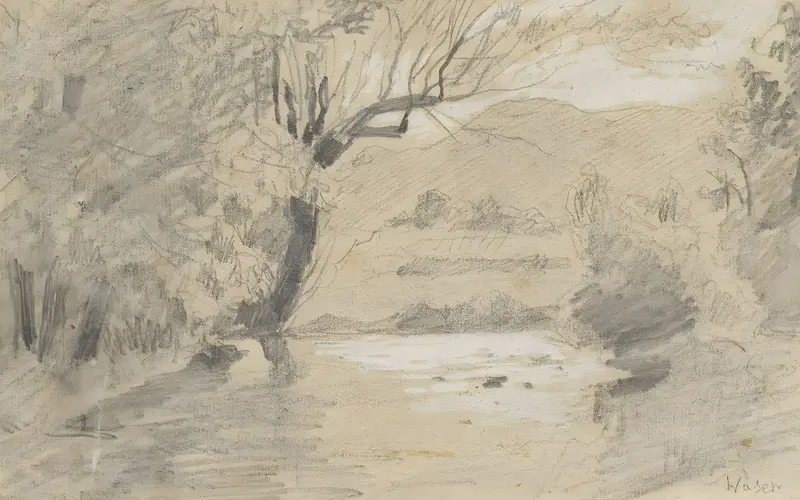
Flusslandschaft in Wasen (Emmental)
Albert Anker
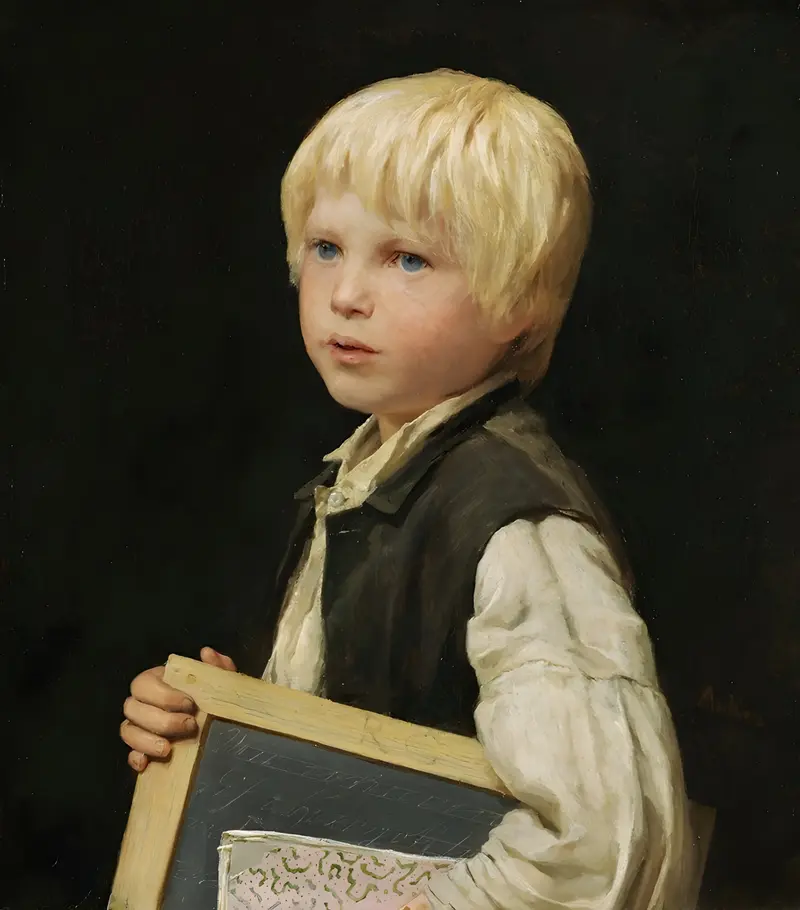
School Boy
Albert Anker
More Genre Scene Art

Banquet of the Officers of the St George Civic Guard
Frans Hals

Rembrandt and Saskia in the Scene of the Prodigal Son
Rembrandt van Rijn

Bal du moulin de la Galette
Pierre-Auguste Renoir

Quadrille at the Moulin Rouge
Henri de Toulouse-Lautrec

A Burial at Ornans
Gustave Courbet

When Will You Marry?
Paul Gauguin